

What if the security of your high-tech building relies on a technology that was technically bypassed back in 2008? Many residents in Singapore assume their encrypted office or condo fobs are uncopyable. It’s common to feel a sense of dread when you need a spare, fearing that a botched access card duplication attempt might leave you locked out entirely. You’re right to be cautious. Since the initial vulnerabilities in Mifare Classic chips were identified over 15 years ago, the gap between simple cloning and professional duplication has widened significantly.
We understand the frustration of carrying around a bulky original or worrying about damaging your only key. This guide helps you decode the technical reality behind RFID cloning so you can identify secure, professional services that won’t waste your time. We’ll explore the differences between common 125kHz and 13.56MHz systems to help you find a reliable specialist near Jalan Pemimpin. You’ll learn why compatibility is always subject to verification and how to avoid the pitfalls of incompatible clones. Please note that information is for general purposes only. Pricing and service scope vary by system. Contact Soxxi Master directly to confirm the latest compatibility and availability. All services are subject to verification and final confirmation.
Key Takeaways
- Understand the technical differences between LF and HF frequencies to determine the emulation potential of your specific RFID card or keyfob.
- Learn the truth behind common misconceptions, including why a professional access card duplication service will not damage your original microchip.
- Discover the multi-step verification process specialists use to analyze data and ensure a precise, high-quality backup for your condo or office.
- Identify why a physical service center and specialized diagnostic tools are essential for a reliable, accountable, and hassle-free experience in Singapore.
- Note that all information is for general purposes only; always contact a specialist to confirm compatibility and the latest service details for your specific system.
Demystifying Access Card Duplication: More Than Just a Spare
Access card duplication involves emulating specific Radio Frequency Identification (RFID) data from an existing source onto a new credential. In Singapore, this process has become a standard requirement for residents and professionals who navigate the city’s tech-forward infrastructure. As of 2024, the majority of new residential developments across the island utilize electronic access control rather than traditional mechanical locks. This transition toward Proximity card technology represents a fundamental shift in how we secure our homes and workplaces.
The process is more technical than simply cutting a piece of metal. It requires a deep understanding of signal frequencies and data protocols. We distinguish between “cloning,” which is an exact bit-for-bit data copy, and “emulation,” where a new device produces a signal compatible with the existing reader. The success of access card duplication depends on the specific chipset and encryption level used by the building’s security system. It’s a precise task that requires professional oversight to ensure the new card functions without interrupting the original system’s integrity.
Common Use Cases in Singapore
- Condominium Access: Multi-car households often require additional cards for lift and gate access to ensure all family members can move freely without sharing a single token.
- Office Security: Businesses frequently need backups for temporary staff or new employees, ensuring operational continuity.
- Gym and Facility Access: Users often seek to consolidate multiple bulky fobs into a single, more convenient credential, subject to compatibility with the facility’s reader.
The Specialist vs. The Hobbyist
Soxxi Master established its roots in Singapore in 2006. With an 18-year legacy as a pioneer in the industry, we’ve seen the evolution of access technology from basic 125kHz cards to complex encrypted systems. Professional equipment is essential for maintaining data integrity. Using unverified or low-quality cloning tools found online presents significant risks. These tools can sometimes lead to data corruption or even trigger a “block” on the building’s reader, potentially locking out the original user.
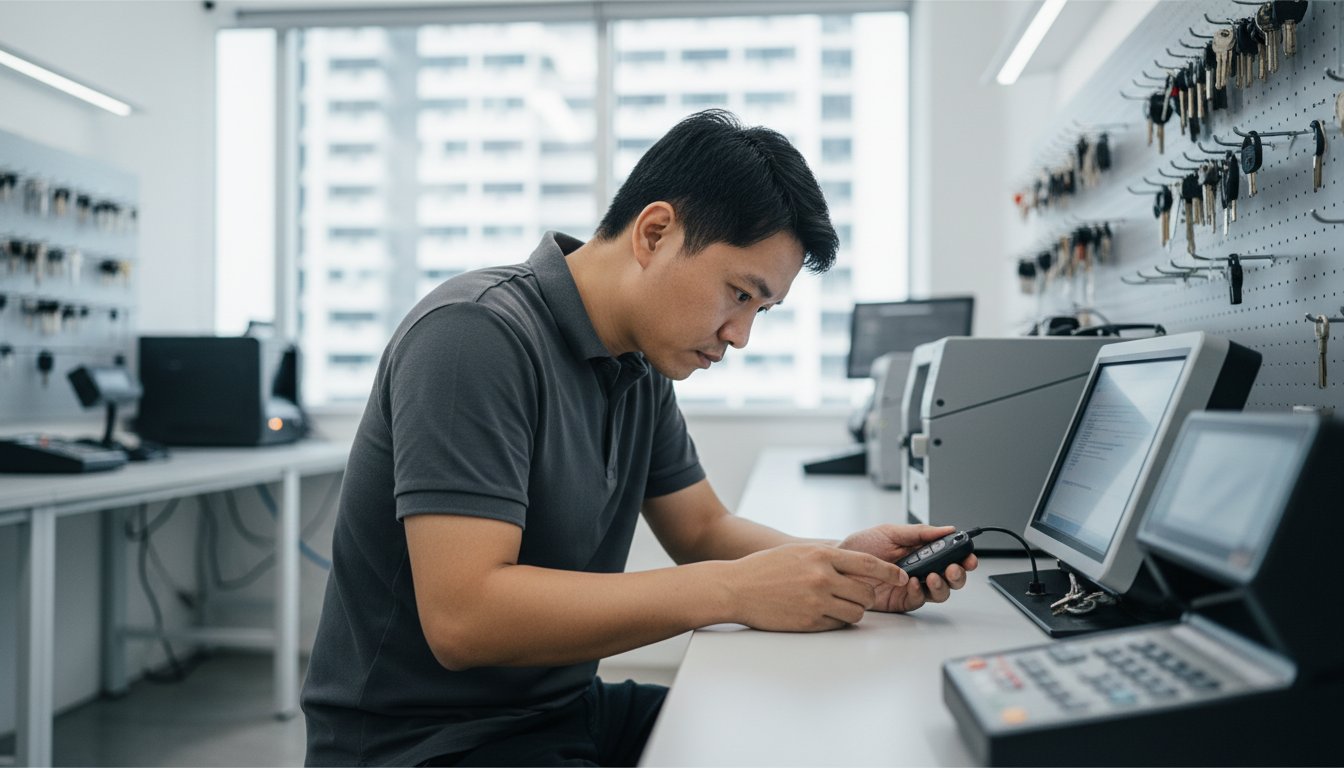
A specialist approach focuses on accuracy and system safety. Every access card duplication request we handle is treated as a technical assessment. We don’t rely on guesswork. Instead, we use precision diagnostic tools to identify the specific technology within your card before proceeding. This methodical process ensures that the duplicate is a reliable backup that won’t fail when you need it most. If you require a professional assessment, you can view our access card duplication services to understand the options available for your specific system.
Disclaimer: The information provided is for general purposes only. Details such as service scope and technical compatibility vary by system. All services are subject to verification and final confirmation. We advise customers to contact us directly to confirm the latest compatibility and availability before making decisions. Final confirmation is required before any service can proceed.
Understanding the Technology: RFID, Mifare, and Encryption
Most users in Singapore carry at least one RFID credential daily without realizing the complex engineering housed within that thin piece of plastic. An access card isn’t just a static ID tag. It consists of a microchip for data storage and a coiled copper antenna. When you hold your card near a reader, the reader’s electromagnetic field powers the chip, allowing it to transmit data wirelessly. This process is the foundation of access card duplication, but the success of the process depends entirely on the specific frequency and protocol used by your building’s system.
Low Frequency (125kHz) vs. High Frequency (13.56MHz)
Identifying your card type is the first step in the verification process. Low Frequency (LF) cards typically operate at 125kHz. These are often thicker “clamshell” cards or basic keyfobs used in older residential developments. They generally transmit a fixed, unencrypted 26-bit or 37-bit ID number. Because they lack complex security layers, they’re often straightforward to identify, though compatibility still depends on the specific chipset.
High Frequency (HF) cards operate at 13.56MHz. This category includes Mifare, DESFire, and HID iClass technologies commonly found in modern Singaporean offices and high-end condominiums. These cards are usually thinner and capable of two-way communication. The higher frequency allows for faster data transfer and the implementation of robust encryption. The hardware required for HF access card duplication is significantly more advanced than LF tools, as it must handle complex data structures and sector keys.
Encrypted Systems and Security Layers
Modern security systems don’t rely on a simple broadcast of an ID number. Instead, they use a “handshake” protocol. When the card meets the reader, they exchange encrypted packets to verify each other’s identity before any access data is shared. Advanced credentials like DESFire EV2 or EV3 use AES encryption to prevent unauthorized interception. This evolution from simple serial numbers to rolling codes and cryptographic keys has changed how specialists approach duplication.
Specialists must account for various security and privacy considerations when handling these chips. Certain high-security systems are subject to strict verification and might not be duplicable if they use proprietary “Elite” keys or locked sectors. Every system has unique configurations, and final confirmation of compatibility is always required before any service can proceed. If you’re unsure which technology your building uses, you can reach out to a specialist for a technical assessment of your current credential.
Disclaimer: This information is for general purposes only. Details like pricing and service scope may vary. Contact Soxxi Master directly to confirm the latest pricing, compatibility, and availability before making decisions. All services are subject to verification and final confirmation.
Myth vs. Reality: Debunking Access Card Misconceptions
Misunderstandings about access card duplication often lead to security concerns or technical frustration. Many Singapore residents assume the process is either dangerously easy or impossible. The truth sits in the middle. Expert verification is the only way to determine what’s possible for your specific building or office system.
- Myth 1: All access cards can be duplicated instantly. While some older 125kHz cards are copied in seconds, modern high-security systems require deep decryption. A 2024 report highlighted vulnerabilities allowing the instant cloning of RFID cards like the MIFARE Classic, but newer versions like DESFire EV3 are far more complex.
- Myth 2: Duplicating a card will damage the original chip. Professional duplication is a passive process. We read the data without altering the physical chip or its internal logic. It doesn’t “drain” the original card or shorten its lifespan.
- Myth 3: Management can automatically detect a duplicated card. Most standard readers only check if the card’s ID matches the authorized list. Unless the system uses advanced “anti-passback” logic or rolling codes, it won’t distinguish between the original and a high-quality duplicate.
- Myth 4: Generic duplicators found online work for all systems. Cheap devices often fail on the 13.56MHz encrypted sectors used by many Singaporean condominiums. Relying on these can lead to “ghost” cards that stop working after a single use.
The Reality of System Compatibility
Success depends entirely on chip architecture. While we’ve seen an increase in “unclonable” claims from manufacturers, security is a moving target. Many systems labeled as secure still have legacy protocols that allow for access card duplication when handled by a specialist. You can learn more about the technical nuances in our guide: Is it safe to clone your RFID access card?. Every outcome is subject to the specific firmware version of your reader.
Security and System Integrity
Professional duplication mimics the original signal without causing interference. At Soxxi Master, we use non-destructive testing to ensure the original card remains untouched. We don’t make “guaranteed” claims because every system in Singapore is unique. Instead, we prioritize technical verification. We analyze the frequency and encryption before proceeding. This methodical approach is why we’ve remained a trusted specialist for over 18 years. If a card isn’t compatible, we’ll tell you upfront rather than risking a faulty copy.
Disclaimer: This information is for general purposes only. Details like service scope and technical feasibility vary by system. Contact Soxxi Master directly to confirm the latest compatibility and availability for your specific card. All services are subject to verification and final confirmation.
The Professional Process: Verification and Precision
Achieving a seamless result in access card duplication requires a methodical approach that prioritizes technical accuracy over speed. At Soxxi Master, we follow a rigorous five step protocol to ensure every credential works reliably with your specific security system. This isn’t a simple “copy and paste” job; it’s a technical verification process designed to maintain the integrity of your building’s security protocols.
- Step 1: Visual Inspection. We examine the card or keyfob for specific model identifiers, manufacturer logos, or chassis numbers. These physical markers provide the first clues about the chipset and communication protocol used.
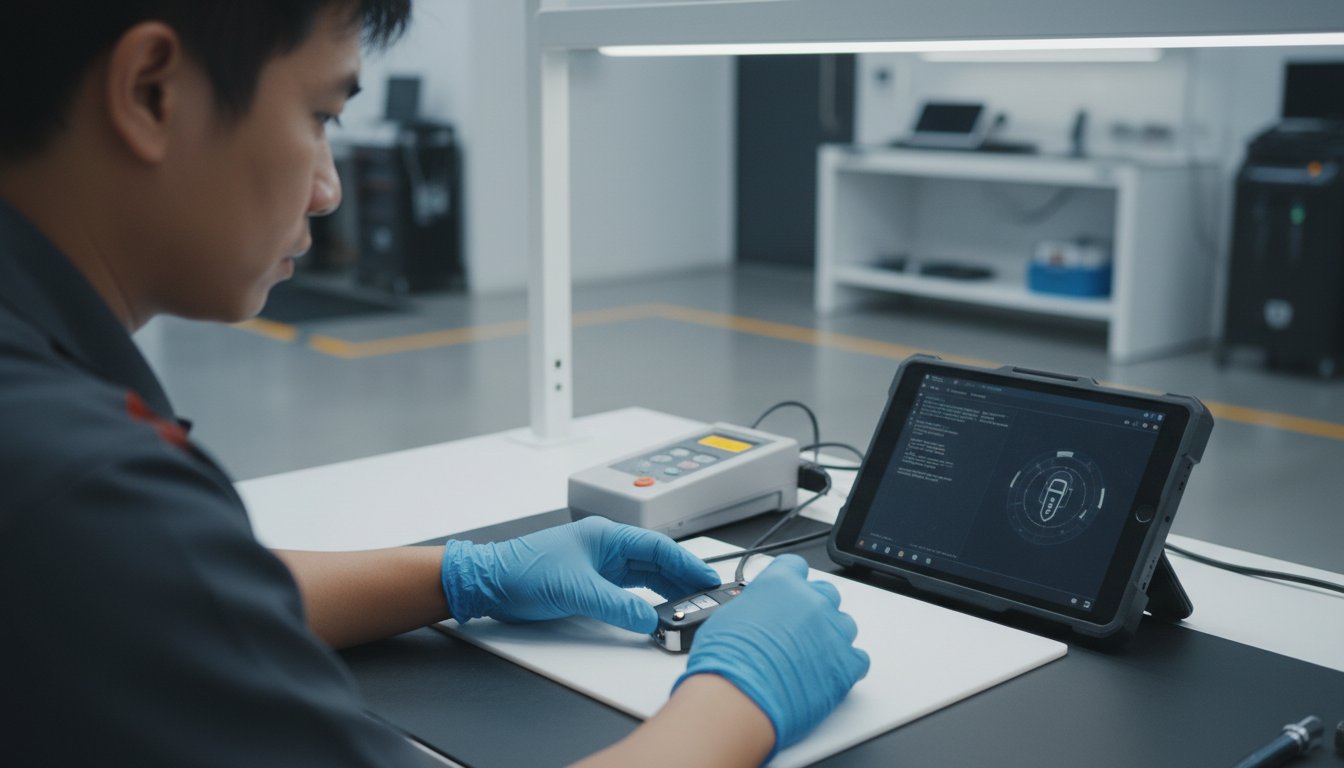
- Step 2: Frequency Analysis. Using specialized diagnostic tools, we identify if the card operates on Low Frequency (125kHz) or High Frequency (13.56MHz). This step is vital because using the wrong frequency will result in a non-functional duplicate.
- Step 3: Data Integrity Check. We analyze the encryption status of the credential. Depending on the model, some cards use simple ID numbers while others utilize complex encrypted sectors like those found in Mifare Desfire systems.
- Step 4: Precision Duplication. Once compatibility is confirmed, the data is written onto high-quality, durable credentials. We use premium chips that are designed to withstand the humidity and heat of the Singapore environment.
- Step 5: Final Verification. We perform a final scan to ensure the output signal matches the required parameters exactly. This ensures the reader at your office or condo recognizes the new card without delay.
Why Verification is Mandatory
Verification isn’t just a formality; it’s a necessity for security. Different systems in Singapore use varied protocols, and a visual match doesn’t always mean a technical match. We often ask clients to send photos of their cards via WhatsApp for a preliminary assessment. This helps us identify potential compatibility issues before you even visit our shop. If you need more than just RFID solutions, you can also explore our general key duplication services for your mechanical locks.
Form Factors: Cards, Fobs, and Stickers
Once the system compatibility is confirmed, you aren’t limited to the original shape of your credential. Many users prefer converting bulky ISO cards into convenient keyfobs or even small NFC stickers that can be attached to the back of a phone. These custom form factors are often more durable than standard cards, which tend to crack over time. If you are also looking to streamline your entry for vehicles, check out our auto gate remote duplication options to see how we can assist with your home or office perimeter security.
Ready to ensure your spare works every time? Contact our specialists for an accurate assessment and confirmation.
Disclaimer: Information provided is for general purposes only. Details like pricing and service scope may vary. We advise customers to contact Soxxi Master directly to confirm the latest pricing, compatibility, and availability before making decisions. All services are subject to verification and final confirmation.
Choosing Your Specialist: The Soxxi Master Advantage
Finding a reliable partner for access card duplication involves more than just searching for the nearest kiosk. Soxxi Master has established itself as “The Master of Key,” a title earned through a dual mastery of both traditional mechanical locksmithing and modern electronic security. Unlike mobile-only services that might disappear after a transaction, we maintain a permanent, physical service center at 37 Jalan Pemimpin. This brick-and-mortar presence provides customers with a clear point of accountability and a professional environment for technical testing.
We don’t believe in “hidden surprises” or sudden price hikes. Every engagement begins with an upfront technical assessment to determine exactly what your system requires. Our specialists evaluate the specific RFID frequency and encryption level of your card before any work starts. This methodical approach ensures that you understand the feasibility of the service immediately. If you’re unsure about your card’s type, you should contact our specialists for a preliminary compatibility check today.
The Pioneer in Singapore Key Services
With over 18 years of technical experience, Soxxi Master has grown alongside Singapore’s security landscape. We’ve spent nearly two decades refining our processes for both automotive transponders and complex RFID systems. We prioritize technical verification over loud marketing superlatives because we know that security is built on precision, not promises. Our commitment to accuracy is detailed in our Professional Key Duplication in Singapore guide, which serves as a benchmark for industry standards. We focus on delivering reliable results that match the original specifications of your access system.
Disclaimer and Service Scope
The information provided in this guide is for general informational purposes only. Every security system is unique; therefore, access card duplication services are always subject to final technical confirmation. Compatibility cannot be assumed and must be verified on-site at our service center or through the provision of specific system details like a chassis number for vehicle-related requests. We require a final confirmation of the system type and card encryption before any duplication service can proceed. Please contact us directly to confirm the latest service availability and compatibility requirements for your specific model, as these factors vary by system and manufacturer.
Secure Your Entry with Technical Precision
Navigating the complexities of RFID and Mifare encryption requires more than just basic tools; it demands a deep understanding of how different security layers interact. As a Singapore pioneer with 18 years of specialist experience, Soxxi Master focuses on technical accuracy and system integrity. We don’t believe in one-size-fits-all shortcuts. Instead, we rely on a rigorous verification process at our physical service center at Jalan Pemimpin to ensure every duplicate functions as intended. Getting your access card duplication right means looking past common myths and choosing a partner who understands the underlying technology.
Reliability comes from expert assessment, not guesswork. If you’re unsure about your specific card type, our team is ready to help you identify the right solution for your needs. We’re here to provide clarity and technical support so you can maintain seamless access. Ready to ensure your spare works when you need it most? Contact Soxxi Master via WhatsApp for a Compatibility Check today.
Disclaimer: This information is for general purposes only. Details like pricing and service scope vary depending on the system and model. Please contact us directly to confirm the latest pricing, compatibility, and availability before making decisions. All services are subject to verification and final confirmation.
Frequently Asked Questions
Can all condo access cards be duplicated in Singapore?
Not every condo access card in Singapore can be duplicated. While approximately 90% of systems using 125kHz or 13.56MHz technology are compatible, high-security encrypted systems often restrict unauthorized copying. Compatibility depends on the specific chip and encryption level of your card. Our specialists must verify your card’s technical specifications before we can confirm if a duplicate is possible.
Will duplicating my office card cause it to stop working?
Duplicating a standard office card usually won’t affect the original’s function. However, some advanced systems use anti-passback logic or rolling codes that might detect a cloned signal. If your workplace uses these specific security protocols, using a duplicate could lead to the card being flagged. We recommend checking your system type with us first to ensure a seamless experience.
How long does the access card duplication process typically take?
The access card duplication process is often completed within 10 to 15 minutes for standard cards. More complex encrypted chips may require additional time for data analysis and verification. Since every system varies, we suggest visiting our service center so our team can provide an accurate time estimate based on your specific card model and encryption type.
Do I need to bring my original card to the shop for duplication?
You’ll need to bring the original physical card to our shop for a successful duplication. Our equipment needs to read the data directly from the card’s internal chip to create an accurate copy. Without the physical card, we can’t verify the frequency or encryption protocols necessary for the service. This ensures the new card functions correctly with your specific reader.
Is it possible to copy a card if I only have a photo of it?
It’s not possible to duplicate an access card from a photograph. A photo only shows the external appearance, but the essential data is stored on a hidden internal chip. Our specialists require the actual card to scan the RFID or NFC signals. This physical verification is the only way to determine if your card is compatible with our duplication equipment.
What happens if the duplicated card does not work at my reader?
If a duplicated card doesn’t work at your reader, please bring both the original and the copy back to our service center. We’ll perform a technical diagnostic to identify the issue, as reader sensitivity or encryption updates can sometimes affect performance. Our resolution process is subject to verification of the system’s compatibility and our standard terms of service.
Can you duplicate encrypted HID iClass or Indala cards?
Compatibility for HID iClass or Indala cards depends on the specific encryption keys used by your building’s security system. Some older versions are manageable, while newer high-security configurations may be restricted. Our team uses specialized diagnostic tools to check these cards. We can only provide a final confirmation after a physical assessment of the card’s data structure.
Do you provide on-site access card duplication services?
We primarily perform access card duplication at our specialized service centers to ensure the highest level of accuracy and equipment stability. Having all our diagnostic tools in one place allows us to handle various frequencies and encryption types efficiently. If you have a bulk requirement, please contact us via WhatsApp to discuss potential arrangements tailored to your specific needs.
Disclaimer: This information is for general purposes only; details like pricing and service scope may vary. Contact Soxxi Master directly to confirm the latest pricing, compatibility, and availability before making decisions. All services are subject to verification and final confirmation. Compatibility must be verified using specific identifiers, such as a chassis number for vehicles or physical chip analysis for cards, and final confirmation is required before any service can proceed. Contact Soxxi Master for an accurate assessment and confirmation.