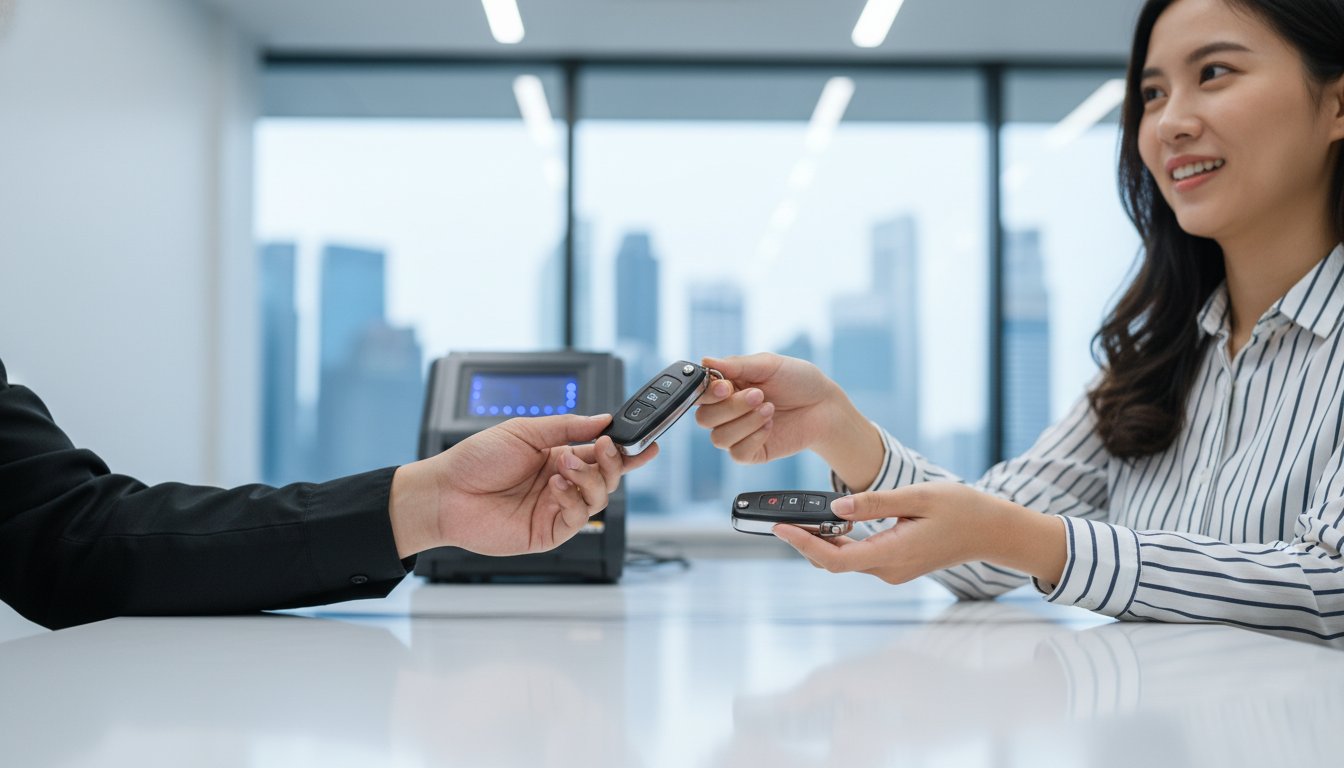


Last Tuesday, a driver in Orchard discovered their vehicle wouldn’t respond to the key fob just as they were rushing to a 9:00 AM meeting. We understand that intermittent signal loss or a sudden lack of response causes significant stress, especially when you’re concerned about high dealership replacement costs in Singapore. It’s natural to feel confused by modern smart key technology and how it interacts with your vehicle’s security system.
In this article, you’ll learn how to identify early warning signs of hardware failure and follow a professional maintenance routine to extend the lifespan of your current remote. We’ll provide a clear checklist to help you understand your device’s health and determine when professional intervention is necessary. This guide explains modern transponder systems, helping you maintain reliable vehicle access throughout 2026.
Please note that compatibility must be verified using your specific vehicle details, such as a chassis number, as final confirmation is required before any service. Information provided is for general purposes only; details like service scope may vary depending on the model and system. Contact Soxxi Master directly to confirm the latest compatibility and availability for your specific vehicle. All services are subject to verification and final confirmation.
Key Takeaways
- Understand the evolution of vehicle access technology to appreciate the technical complexity and security of modern transponder systems.
- Learn how to identify early warning signs of key fob failure, such as intermittent signal response, to avoid the inconvenience of a lockout.
- Differentiate between active and passive entry systems to better understand the specific maintenance and security protocols required for your vehicle.
- Follow a professional maintenance checklist designed to ensure reliable vehicle access through proactive prevention rather than reactive repair.
- Note that information is for general purposes; contact Soxxi Master to verify compatibility using your chassis number for final confirmation of service availability.
What is a Key Fob? Understanding Modern Vehicle Access
A key fob is a compact hardware device designed to provide remote and passive access to modern vehicles. While early automotive history relied on simple mechanical blades, the industry shifted significantly in the mid-1990s toward electronic security. Today, these devices are sophisticated control centers that communicate with your car using encrypted radio frequencies. They allow for seamless entry and ignition control without physical contact with a lock cylinder.
The evolution of vehicle access has moved from basic “clickers” to the current Remote keyless system. This technology uses a digital handshake to verify the user’s identity. A critical component of this setup is the immobilizer. This electronic security device prevents the engine from starting unless it recognizes the unique digital signature from the correct fob. It’s a standard feature in most vehicles registered in Singapore today, providing a robust layer of protection against unauthorized use. All functionality and feature availability are subject to compatibility with specific vehicle models and manufacturing years.
The Anatomy of a Modern Key Fob
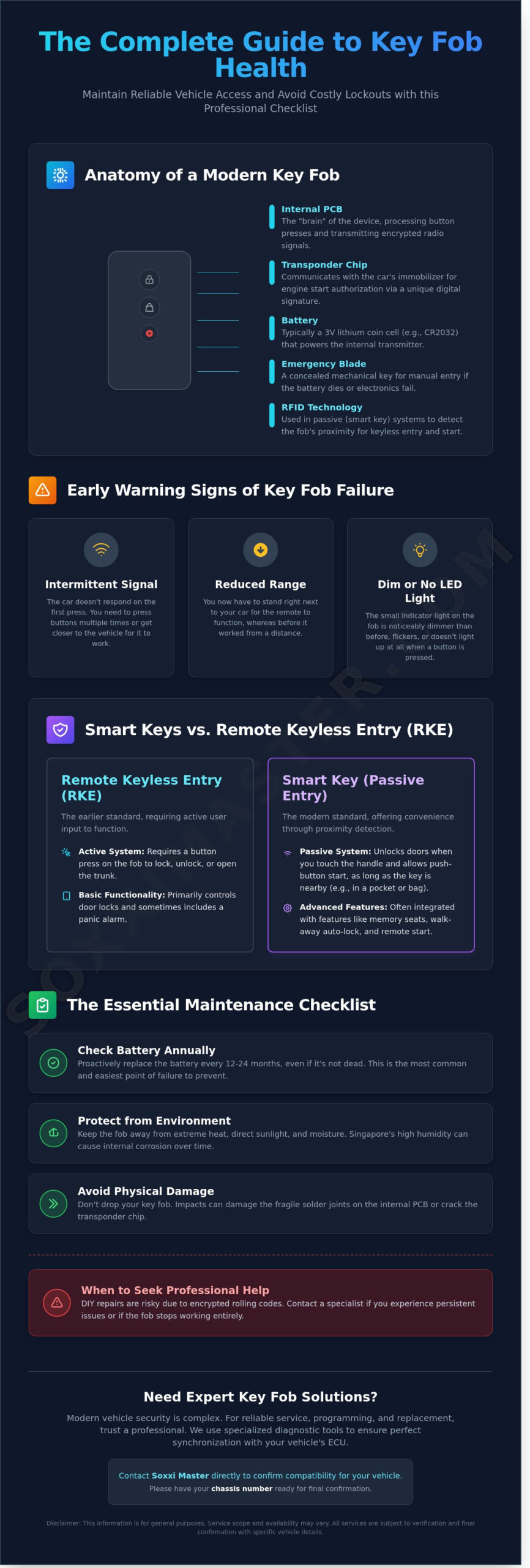
Understanding the internal structure of your device helps in maintaining its longevity. A standard unit contains several high-precision components:
- Internal PCB: The Printed Circuit Board acts as the brain, processing button presses and transmitting signals.
- Transponder Chip: This specialized chip communicates directly with the car’s immobilizer system.
- Battery: Usually a 3V lithium coin cell that powers the transmitter.
- Emergency Blade: A concealed mechanical key used for manual entry if the electronic system fails.
- RFID Technology: Used in passive entry systems to detect the fob’s proximity to the door handle.
Why Professional Knowledge Matters
Modern vehicle security is built on a foundation of encrypted signals and rolling codes. Every time you press a button, the system generates a new, unique code from billions of possible combinations. This prevents hackers from “sniffing” or replaying your signal to steal the vehicle. Because of this complexity, DIY attempts to program or repair these systems often lead to synchronization errors or permanent lockouts. In the Singapore market, where vehicle electronics are highly integrated, precision is non-negotiable.
It’s vital to use a transponder key specialist who possesses the correct diagnostic tools for your specific make and model. Professional verification ensures that the new hardware is correctly synced with the vehicle’s ECU without compromising existing security protocols. Compatibility must always be verified using specific vehicle details, such as the chassis number, before any service can proceed. For an accurate assessment and confirmation of your vehicle’s requirements, please contact Soxxi Master directly.
Disclaimer: This information is for general purposes only. Details like pricing and service scope may vary. We advise customers to contact Soxxi Master directly to confirm the latest pricing, compatibility, and availability before making decisions. All services are subject to verification and final confirmation.
Common Key Fob Issues and Early Warning Signs
Your key fob is a sophisticated piece of hardware that acts as the primary interface between you and your vehicle’s security system. Understanding how it fails is the first step toward avoiding a lockout. Many users overlook early warning signs, assuming a slight delay in response is just a minor quirk. In reality, these are often symptoms of hardware fatigue or environmental stress that require professional attention before a total failure occurs.
In Singapore, the environment plays a significant role in device longevity. With average humidity levels often exceeding 80%, internal components are susceptible to silent degradation. Moisture ingress can lead to microscopic corrosion on the circuit board, causing the device to behave erratically. If you notice you have to press a button multiple times or if the LED indicator looks dim, it’s time to investigate. You should also distinguish between a simple dead battery and a damaged transponder. While a battery issue stops all functions, a compromised transponder might let you unlock the doors but prevent the engine from starting, as the immobilizer cannot verify the security token.
Signal Interference and Range Problems
A sudden drop in operating distance is a classic red flag. While external factors like proximity to radio towers, large concrete structures, or heavy electromagnetic interference can temporarily block signals, a consistent loss of range usually points to an internal antenna issue or a weakening power cell. Modern key fob technology relies on precise frequency transmission; even a slight shift in the internal oscillator can cause the car to “ignore” the command. To test this, check the response time from various distances. If the lag is consistent regardless of your location, the hardware is likely failing. Always remember that final confirmation of any signal issue is subject to compatibility and verification with your specific vehicle details.
Physical and Internal Damage
Physical wear is often the most visible indicator of impending trouble. Cracked casings or buttons that lose their tactile “click” aren’t just cosmetic issues. They allow dust and sweat to reach the PCB, leading to short circuits. Using a bent or heavily worn key can also damage the ignition barrel or the internal contact points of the remote. If you spot signs of liquid ingress or visible corrosion around the battery terminal, it’s best to seek a professional key repair service rather than attempting a DIY fix which might permanently de-sync the unit.
- Stuck buttons that drain the battery by constantly transmitting.
- Internal rattles indicating a loose transponder chip or battery clip.
- Fob casings that no longer seal tightly, exposing the electronics to Singapore’s tropical air.
For an accurate assessment of your remote’s health, you can contact Soxxi Master to verify your specific model requirements. Our specialists require your chassis number to provide the most accurate guidance, as technical specifications vary by system and manufacturer.
Disclaimer: The information provided here is for general purposes only. Details such as service scope and technical compatibility may vary depending on the vehicle model and year. We advise customers to contact us directly to confirm the latest compatibility and availability before making decisions. All services are subject to verification and final confirmation.
Smart Keys vs. Remote Keyless Entry: Key Differences
Identifying the technology inside your key fob is the first step toward effective maintenance. While both systems eliminate the need to turn a physical blade in a door lock, they operate on different electronic principles. Remote Keyless Entry (RKE) is an active system, meaning it requires a deliberate action from the user. Smart keys are passive systems that rely on proximity sensors to communicate with the vehicle. Understanding these distinctions helps you manage expectations for battery life and service requirements.
Remote Keyless Entry (RKE) Basics
RKE systems represent the standard for many vehicles on Singapore roads. These units use a transmitter to send a radio frequency signal, usually at 315MHz or 433MHz, to a receiver inside the car. The system triggers only when you press a button. Common features include:
- ✅ Locking and unlocking doors from a distance.
- ✅ Remote boot or trunk release.
- ✅ Activation of panic alarms or “find my car” signals.
Maintenance for these remotes is generally straightforward. Because the transmitter only draws power during a button press, batteries often last through a 24-month cycle. However, physical wear on the tactile switches is common. If you find yourself pressing harder to get a response, the internal contact points might be degrading. We recommend a professional inspection to prevent total signal failure.
The Rise of Smart and Proximity Keys
Smart keys have transformed the driving experience by allowing for “hands-free” operation. These systems use Low Frequency (LF) antennas located throughout the vehicle to detect the key fob when it’s within a specific range, often one to two meters. Once detected, the car unlocks automatically when you touch the door handle and allows for a push-button start. This convenience comes with increased technical complexity.
Because the key and car are in constant communication, the battery drain is more significant than in RKE systems. Furthermore, these devices require highly specialized car key programming to sync with the vehicle’s immobilizer. This isn’t a simple duplication of a radio signal; it’s a multi-step authentication process that ensures the vehicle only responds to your specific encrypted code.
Security protocols vary significantly between the two. RKE systems use rolling codes to prevent hackers from intercepting and replaying your unlock signal. Smart keys use even more advanced bidirectional encryption. Every time you approach the car, a unique “challenge” is sent to the key, which must provide the correct “response” to grant access. This level of security makes duplication a precise task that varies by system type.
Replacement and duplication are never “one size fits all” procedures. At Soxxi Master, we draw on 18 years of experience to handle these delicate electronics. Every service is subject to verification. We require vehicle details, such as the chassis number or VIN, to confirm compatibility before we begin. This ensures that the hardware and software we provide align perfectly with your car’s specific security module.
Disclaimer: This information is for general purposes only. Details like pricing and service scope may vary depending on the model and system. We advise customers to contact Soxxi Master directly to confirm the latest pricing, compatibility, and availability. All services are subject to verification and final confirmation.
The Essential Key Fob Maintenance Checklist
Most drivers only think about their key fob when it stops working. This reactive mindset leads to high-stress situations and unexpected downtime. Adopting a proactive maintenance routine ensures your vehicle remains accessible. Prevention is always more efficient than emergency recovery. Based on 18 years of technical experience in Singapore, we’ve seen that consistent care extends the life of electronic components significantly.
Monthly and Annual Maintenance Steps
- ✅ Monthly Casing Care: Wipe down the exterior with a dry, lint-free microfiber cloth. Skin oils and environmental debris accumulate around button edges. If left uncleaned, these particles can jam the physical switches or seep into the internal board.
- ✅ Annual Battery Inspection: Open the casing annually to check for battery swelling or leakage. In Singapore’s high humidity, which often exceeds 80%, internal corrosion can happen faster than in drier climates. If you notice any white powder or casing deformation, the battery needs immediate replacement to protect the circuit board.
- ✅ Mechanical Blade Testing: Don’t ignore the emergency mechanical key. Test it in the door lock every six months. Mechanical locks can seize if they aren’t used for 365 days or more. A small drop of specialist lubricant helps maintain smooth operation, but avoid standard oils that attract dust.
The Professional Backup Strategy
Waiting for an “all keys lost” scenario is a high-risk strategy. When you lose your final working key, the recovery process becomes significantly more complex. It often involves deeper access to the vehicle’s security system. Smart owners prioritize getting duplicate car keys while they still have a functional original. This ensures a seamless transition if your primary remote fails.
Store your spare fobs in a cool, dry environment. Avoid keeping them in the glove box or center console. The extreme heat inside a parked car in Singapore can degrade battery chemistry and damage sensitive transponder chips. A dedicated drawer at home is the most reliable choice. All duplicate services are subject to compatibility, which we must verify using your vehicle details.
Final confirmation of any service requires an on-site assessment. We recommend providing your chassis number so our specialists can verify the exact system requirements for your specific model. This prevents errors and ensures the replacement or duplicate works perfectly with your immobilizer.
Contact Soxxi Master for an accurate assessment and confirmation of your key needs.
Disclaimer: This information is for general purposes only. Details like pricing and service scope vary depending on model and system type. All services are subject to verification and final confirmation. Please contact Soxxi Master directly to confirm the latest pricing, compatibility, and availability before making decisions.
Professional Key Fob Solutions at Soxxi Master
Soxxi Master began its journey in 2006, establishing itself as a pioneer in Singapore’s automotive security sector. Over the last 18 years, we’ve seen the key fob evolve from a simple remote into a sophisticated piece of encrypted hardware. Today’s vehicle security systems require a level of precision that goes beyond basic cutting. We focus on technical excellence to ensure your replacement or spare works seamlessly with your car’s immobilizer system, avoiding the risks associated with unverified components.
Our Verification and Accuracy Process
Our team doesn’t believe in guesswork. Every inquiry we handle starts with a thorough verification process. We often request your vehicle’s chassis number to confirm the exact part number and frequency required. This step is vital. Even the same car model can have different security configurations depending on the year of manufacture or the specific region it was built for. This methodical approach ensures we provide solutions without hidden surprises or technical mismatches.
For owners facing a total loss of access, we offer specialized all keys lost solutions for various vehicle makes, though the scope of work remains subject to system compatibility. Our goal is to provide a reliable outcome by matching the right technology to your specific vehicle rather than using generic parts that may fail after a few months of use.
Getting Started with Soxxi Master
Getting your security issues resolved is straightforward and efficient. We’ve refined our workflow into three clear stages to respect your time and ensure accuracy:
- Consultation: You share your vehicle details and the specific issue you’re facing.
- Verification: Our specialists check compatibility and part availability based on your chassis number.
- Execution: Once confirmed, we perform the fabrication or programming with professional-grade equipment.
You can reach us via WhatsApp for a quick assessment. Sending a clear photo of your current remote helps us identify the correct key fob variant for your specific model. To speak with our team directly, you can contact our specialists at Jalan Pemimpin to arrange a professional assessment and receive final confirmation before any service begins.
Ensure Your Vehicle Access Stays Reliable Through 2026
Maintaining your key fob ensures your vehicle remains accessible and secure as automotive technology evolves. Regular checks on battery health and signal strength help you avoid sudden failures. While basic care is helpful; professional diagnostics are essential for complex smart keys and transponder systems. As a pioneer in Singapore’s automotive key replacement industry with 18 years of experience, Soxxi Master provides reliable solutions with no hidden fees or surprises.
Every vehicle has unique requirements. Compatibility must be verified using your chassis number; final confirmation is required before any service begins. Information provided here is for general purposes only; details like pricing and service scope vary depending on the model. You should contact us directly to confirm the latest pricing, compatibility, and availability before making decisions. All services are subject to verification and final confirmation.
Contact Soxxi Master for a professional key fob assessment to ensure your system is running perfectly. It’s the easiest way to stay mobile and stress-free on the road.
Frequently Asked Questions
Can I replace my own key fob battery?
You can replace a key fob battery yourself if the casing allows for easy access. Most units use standard lithium coin cells like the CR2032 or CR1632. However, some modern fobs are ultrasonically welded and require professional tools to open without cracking the plastic housing. If you’re unsure, it’s safer to let a specialist handle it to avoid damaging the delicate internal transponder chip or circuit board.
Why is my key fob not working even after a battery change?
Your key fob might fail after a battery change because the synchronization between the remote and the vehicle’s receiver has been lost. This often happens if the battery was dead for an extended period. In these cases, the system requires professional re-pairing using diagnostic equipment. Other times, the issue stems from worn tactile switches on the internal PCB which require a technical repair rather than just a fresh power source.
Is it possible to duplicate a smart key for any car model?
Duplication is possible for many vehicles, but it’s always subject to system compatibility. Certain high-security encryption methods used by specific manufacturers may limit duplication options for independent providers. It’s essential to verify your vehicle’s details with our team first. Our specialists use advanced diagnostic tools to determine if your specific smart key can be successfully cloned or programmed to your car’s immobilizer system.
What should I do if my key fob is water-damaged?
Remove the battery immediately to stop the flow of electricity and prevent a permanent short circuit. Avoid the common myth of using rice; instead, bring the unit to a professional for an ultrasonic cleaning. Even if it looks dry, minerals in the water cause corrosion on the circuit board over time. A specialist can assess the damage and determine if the electronics are salvageable or require a full replacement.
How long does it typically take to duplicate a key fob?
The time required for duplication varies significantly by system and the specific programming steps involved. Some straightforward transponder keys are completed within 30 to 45 minutes. More complex smart keys for luxury or European models might take longer due to the data decryption process. We provide a specific time estimate once we’ve verified your vehicle’s security configuration and ensured all necessary components are ready for programming.
Why does Soxxi Master require my car’s chassis number?
We require the chassis number to ensure 100% accuracy when identifying the correct parts for your vehicle. Car manufacturers frequently update key frequencies and transponder types even within the same model year. By checking the chassis number against our database, we confirm compatibility before any work begins. This methodical approach prevents errors and ensures the replacement key fob functions perfectly with your car’s specific security modules.
Can a broken key fob casing be repaired without replacing the whole unit?
Repairing a broken casing is often possible if the internal electronics are still working. We can transfer your original circuit board into a high-quality replacement shell to restore its look and physical function. This service is depending on model availability and the condition of the internal components. It’s an efficient way to fix cracked housings or worn buttons without the need for a completely new programmed unit.
Is a specialist better than a car dealer for key fob replacement?
A specialist often provides a more streamlined and efficient experience compared to a traditional car dealer. We focus exclusively on automotive keys and security, which allows us to maintain a broad range of diagnostic tools for various brands. Our approach prioritizes accurate verification and professional reliability. While dealers are an option, many Singaporean drivers choose a specialist for our transparent process and technical expertise in handling complex immobilizer systems.
Disclaimer: This information is for general purposes only. Details like pricing and service scope vary depending on model and system requirements. Contact Soxxi Master directly to confirm the latest pricing, compatibility, and availability before making decisions. All services are subject to verification and final confirmation.