


In Singapore’s humid weather, keeping an ABUS lock clean and limiting water ingress are practical parts of routine care. To understand how to maintain an ABUS lock in humid weather, wipe away moisture and dirt, avoid harsh cleaning chemicals, and use suitable weather seals around doors and windows to help protect the lock’s internal components. These simple checks can help reduce the chance of corrosion or sticking.
It makes sense to focus on the lock when you notice dampness, but the surrounding area matters too. Maintaining an ABUS lock in humid weather also means adapting care to where it is used and how much rain reaches it. This guide explains how weather seals help limit water entry, what to use when cleaning a lock, and which common products to avoid. You’ll also learn what to inspect so your routine suits your lock type.
Key Takeaways
- Inspect door and window seals for gaps or wear, since limiting water entry can help protect a lock’s internal components.
- Use gentle cleaning methods to remove moisture and loose dirt, and avoid harsh chemicals and oil-based lubricants.
- Pay attention to signs of rust or sticking, and tailor routine care to the type of lock and its exposure to damp conditions.
- For bicycle security, Soxxi Master offers ABUS bicycle locks; contact Soxxi Master for an assessment of your needs.
Weather seals and preventing water ingress
In Singapore, rain and humid air can expose door locks to moisture. A weather seal around the door or window helps limit water seepage before it reaches the lock or surrounding hardware. It can also reduce dust entering through gaps, supporting protection against both moisture and debris without obstructing the lock’s normal use.
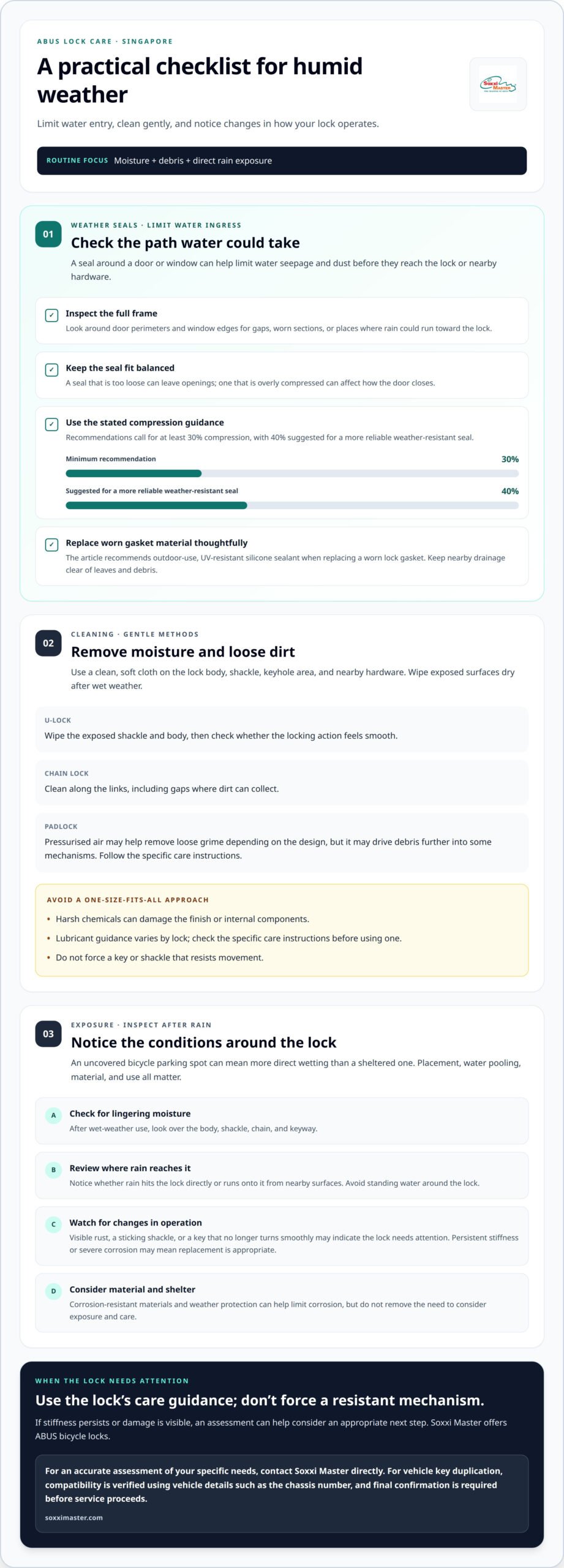
Inspect the seal where the door meets its frame. Look for gaps, worn sections, or places where rainwater can run towards the lock. A seal that is too loose may leave openings; one that is overly compressed can affect how the door closes. Recommendations call for at least 30% compression, with 40% suggested for a more reliable weather-resistant seal.
- Check the frame: Inspect the full door perimeter and window edges for gaps that could channel water indoors.
- Replace worn gasket material: Use outdoor-use, UV-resistant silicone sealant when replacing a worn lock gasket.
- Keep drainage clear: Remove leaves or debris around the doorway so water does not collect beside the lock.
To help prevent rust on an ABUS lock’s shackle and body, reduce direct rain exposure, keep nearby seals in good condition, and dry visible moisture with a cloth. For outdoor use, corrosion-resistant materials and weather protection can help limit corrosion.
Look for visible rust, a sticking shackle, or a key that no longer turns smoothly. These signs may indicate that the lock needs attention. Severe corrosion or persistent jamming may mean replacement is appropriate.
ABUS Singapore warranty or maintenance coverage for corrosion damage depends on the applicable terms for the lock. Check the product’s warranty information to understand whether its condition and corrosion cause are covered.
Cleaning locks during humid weather
Singapore’s humid air and sudden showers can leave moisture and grime on exposed locks. Wipe the lock body, shackle, keyhole area, and nearby hardware with a clean, soft cloth. Regularly cleaning these surfaces helps remove residue before it builds up around moving parts.
Tailor the cleaning method to the lock type. For a U-lock, wipe the exposed shackle and body, then check that the locking action feels smooth. For a chain lock, clean along the links, including gaps where dirt can collect. On a padlock, pressurised air may help remove loose dirt and grime, depending on the lock design; however, it may drive debris further into some mechanisms. Wipe the exterior dry and follow the care instructions for the specific lock.
- Skip harsh chemicals: They can damage a lock’s finish or internal components.
- Check care instructions before using lubricants: Guidance on oil-based lubricants varies by lock, so follow the instructions for your specific lock.
- Inspect after cleaning: Look for persistent sticking, visible rust, or resistance during locking.
If a lock feels jammed, consult the care instructions for your specific lock before using a lubricant. Don’t force a key or shackle that resists movement. Lock designs differ, so follow care suited to your specific lock rather than applying one routine to every type.
For persistent stiffness or damage, explore lock repair and maintenance support to consider an appropriate next step.
How does humidity and rain affect ABUS locks in Singapore?
Singapore’s humid conditions keep outdoor locks exposed to moisture between rain showers. A lock mounted on a bicycle parked in an uncovered area faces more direct wetting than one kept under shelter. Repeated damp exposure can encourage corrosion, while moisture and debris around moving parts may contribute to sticking.
Both material and placement matter. Locks made with materials designed to withstand high moisture levels can help resist corrosion and maintain function in damp conditions. However, material choice does not eliminate the need to consider how much rain reaches the lock, whether water collects around it, and how often it is used. A sheltered parking spot can reduce direct exposure, and standing water around the lock should be avoided.
- After wet-weather use: Check the lock’s body, shackle, chain, and keyway for lingering moisture or visible changes.
- Review its position: Notice whether rain hits the lock directly or runs down nearby surfaces onto it.
- Watch its operation: Pay attention to new resistance when opening or locking, rather than forcing the mechanism.
- Consider the material: For outdoor use, corrosion-resistant materials and weather protection are useful features to look for.
These checks help distinguish ordinary exposure from signs that the mechanism may need attention. A lock that operates smoothly after rain is different from one that develops persistent stiffness or visible corrosion. Note where the lock is stored, whether it gets directly wet, and what changes during use. This context can help identify whether exposure, debris, or a developing mechanical issue is affecting performance.
Soxxi Master: ABUS bicycle locks
Soxxi Master offers ABUS locks, including bicycle locks for riders considering security for their bike. Think about where you park and how much direct rain the lock may encounter. These details help frame your choice and care routine.
If a lock remains stiff or shows damage, seek an assessment rather than forcing the mechanism. For vehicle key duplication, Soxxi Master verifies compatibility using vehicle details such as the chassis number, with final confirmation required before service proceeds.
For an accurate assessment of your needs, contact Soxxi Master.
Keep your next step simple
Knowing how to maintain an ABUS lock in humid weather helps make routine care part of how you store and use it. For a bicycle lock, consider its usual exposure and note any changes in operation after use. These observations can help you decide whether routine care is enough or an assessment would be useful.
For related key and access needs, Soxxi Master offers Car & Motorcycle Key Duplication, RFID Access Card Cloning, and an All Keys Lost Solution. Vehicle compatibility is verified using details such as the chassis number, and final confirmation is required before service proceeds. This is relevant if your next step involves a vehicle key rather than lock maintenance.
For an accurate assessment and final confirmation of your needs, contact Soxxi Master. If you’re considering how to maintain an ABUS lock in humid weather for your own routine, describing its use and condition can help frame your enquiry.
Frequently Asked Questions
How to clean and dry an ABUS lock after exposure to rain or humidity?
Wipe the exterior with a clean, soft cloth, then let the lock dry in a sheltered, ventilated place before storing it. Avoid heating the lock directly, as this may affect its finish or components. If moisture remains around the keyway or moving parts, don’t force the key. Let the area dry, then check whether the lock works normally.
What lubricant is recommended for ABUS lock cylinders and shackles?
Choose a lubricant suited to the specific lock mechanism, following the product’s care instructions. A suitable high-quality lubricant may help loosen jammed parts, but cylinders and shackles may need different care. Apply it only where the instructions allow, and use a small amount so excess product doesn’t collect dirt around the mechanism.
Which lubricants should be avoided on ABUS locks?
Depending on the lock and lubricant, oil-based products may attract dust or contribute to wear over time. For example, residue around a bicycle-lock keyway may trap grit during everyday use. Don’t substitute household oils or apply lubricant indiscriminately. Follow the care instructions for the specific lock and use only a product they recommend.
How often should an ABUS lock be lubricated in humid weather?
There’s no single maintenance interval that suits every ABUS lock. Follow the care instructions for its specific type, and assess its operation after exposure to rain or heavy use. Lubrication may be relevant if a mechanism becomes stiff, but it isn’t a substitute for removing surface dirt or addressing visible corrosion. Avoid applying lubricant automatically during every cleaning.
Can ABUS locks be used outdoors in Singapore year-round?
An ABUS lock’s suitability for year-round outdoor use depends on its design, materials, and exposure to rain and humidity. For an exposed bicycle parking area, consider whether the lock is intended for outdoor conditions and whether its materials are designed to resist moisture. A sheltered location can reduce direct weather exposure, but it doesn’t replace appropriate lock care.