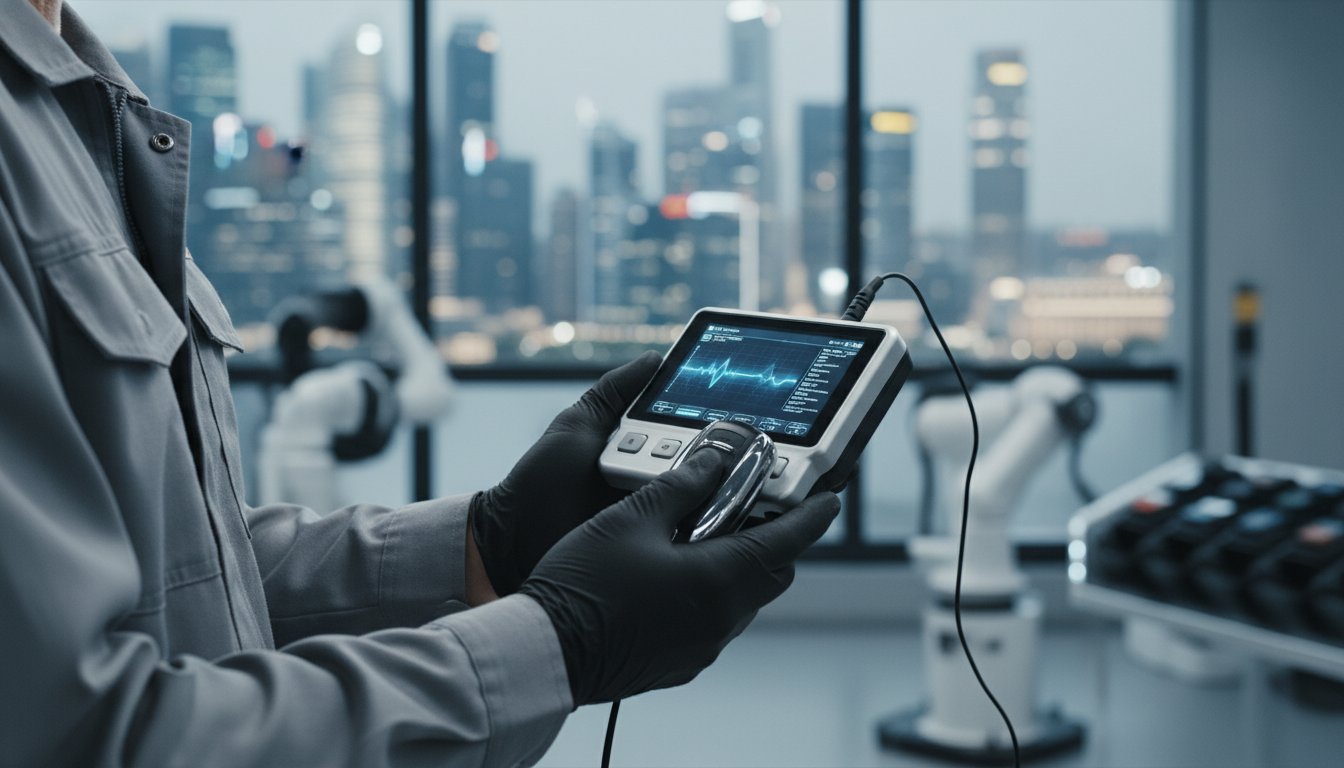


A car key that physically fits your ignition but fails to start the engine isn’t just a minor inconvenience; it’s a clear sign that your vehicle’s security system is functioning correctly. You might feel frustrated or even stranded when a duplicate key doesn’t work, especially if you’re unsure whether the fault lies with the remote or the internal chip. It’s common to worry that your vehicle’s security could be compromised during a repair. Professional transponder key programming singapore services address these anxieties by focusing on technical verification and precision rather than just cutting metal.
This guide will help you understand the technical requirements and security protocols involved in modern automotive key services. We’ll explain why providing specific vehicle details, like a chassis number, is necessary to confirm compatibility before any work begins. You’ll gain a clear preview of the professional process required to ensure a functional spare that starts your engine reliably, though the specific method always depends on your vehicle model. This structured approach helps you move from confusion to a secure, working solution.
Key Takeaways
- Learn why the electronic pairing between your key’s microchip and the engine control unit is the most critical step in vehicle security.
- Understand the “handshake” process where encrypted digital codes are exchanged to allow your engine to start reliably.
- Realize that professional transponder key programming singapore requires precise data verification, such as your chassis number, to ensure system compatibility.
- Discover why physical key cutting is only half the solution and why your immobiliser system will reject a key that hasn’t been electronically verified.
- Gain insights into the specialist verification protocols used to ensure every replacement key meets the specific technical requirements of your vehicle model.
Understanding Transponder Key Programming for Modern Vehicles
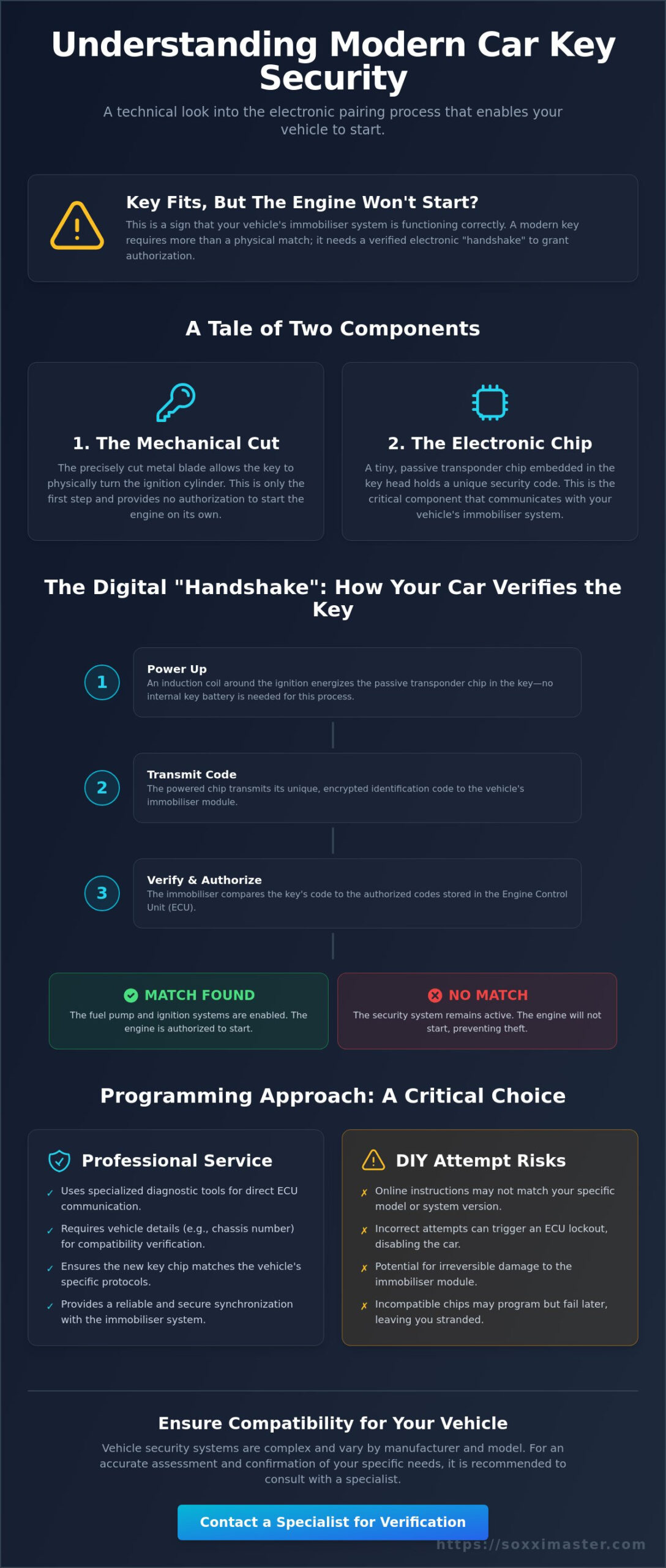
Transponder key programming singapore is a specialized electronic process that pairs a unique microchip inside your key to the vehicle’s engine control unit (ECU). While the physical blade of the key allows you to turn the ignition cylinder, the transponder chip provides the digital authorization required to start the engine. Since the late 1990s, nearly every vehicle on Singapore’s roads has utilized an electronic immobiliser system as a primary theft deterrent. This system acts as a digital gatekeeper, ensuring that only a key with the correct encrypted code can disarm the security measures and allow fuel to flow to the engine.
The Difference Between Transponder Keys and Remote Fobs
Many drivers confuse the transponder with the remote entry buttons. Drivers should understand that a key can contain a transponder chip even if it doesn’t have buttons for locking or unlocking doors. In many standard keys, the transponder is a passive component. It doesn’t require an internal battery to function. Instead, it receives a small burst of energy from an induction coil located near the ignition lock. This power allows the chip to transmit its unique ID to the car’s computer. Programming is essential; without this electronic handshake, the vehicle won’t recognize the key, even if the mechanical cut is perfect.
Why DIY Programming is Generally Not Recommended
Attempting to program modern keys using generic instructions found online carries significant risks. Vehicle security systems vary by system and model. What works for one car might not work for another. Incorrect programming attempts can lead to a lockout state, where the ECU temporarily or permanently disables the ignition system. Professional service involves using specialized diagnostic tools that interface directly with the vehicle’s OBD-II port. These tools ensure that the new chip is compatible with the specific frequencies and protocols used by your manufacturer.
Accuracy is our priority. We don’t assume compatibility based on appearance alone. Every assessment begins with a verification of your vehicle’s specific details, such as the chassis number. This methodical approach ensures that the original car remote keys or spare transponders provided are a technical match for your vehicle’s security architecture. For an accurate assessment and confirmation of your specific needs, please contact Soxxi Master to speak with a specialist.
The Technical Role of Immobiliser Systems and Transponder Chips
The relationship between the key and the car begins the moment you insert the blade into the ignition or bring a smart key into range. A small induction coil located around the ignition lock creates an electromagnetic field. This field provides the necessary power to the passive transponder chip inside your key head. Because the chip is passive, it requires no internal battery to send its data. This ensures the key remains functional for years without the need for power maintenance, providing a reliable starting experience every time.
Once the chip is powered, a digital “handshake” occurs. This is a complex exchange of encrypted information between the key and the vehicle’s immobiliser module. Modern vehicle security systems frequently utilize “rolling codes” to enhance protection. These codes change with every successful start, making it nearly impossible for unauthorized devices to replicate the signal. This technical layer is why transponder key programming singapore is more than just a duplication task; it’s a security synchronization that requires specialized equipment to execute correctly.
The immobiliser module serves as the final gatekeeper. It won’t allow the fuel pump or ignition system to engage unless it receives the exact code it expects. If the handshake fails, the car remains stationary. This system is highly effective at preventing traditional theft methods like hot-wiring. If you’re experiencing issues with your current setup, you can explore our key duplication services to see how we verify these complex electronic components before proceeding with any programming work.
Types of Transponder Technology
Transponder chips aren’t universal. Older vehicles often use fixed codes, while modern models use sophisticated crypto-chips. Manufacturers like Honda, Toyota, and BMW each develop proprietary protocols. Some systems require a “master key” to authorize new additions, while others need direct access to the vehicle’s ECU via the diagnostic port. The technology has evolved from basic ID chips to proximity systems that authorize the vehicle automatically as you approach.
Common Signs of a Transponder Programming Issue
A programming failure is usually easy to spot if you know what symptoms to look for. You might see a flashing security light or a “key not detected” message on the dashboard. The engine might crank but fail to start, or it may cut out immediately after firing. These signs indicate that while the physical key works, the electronic authentication has failed. For an accurate assessment and confirmation of your specific needs, please contact Soxxi Master to speak with a specialist.
Why Physical Key Cutting is Only Half the Solution
A perfectly cut key blade is the foundation of vehicle access, yet it’s only the first step in a multi-stage process. Professional key fabrication involves using high-precision machinery to replicate the exact mechanical bitting of your original key. This ensures the key turns smoothly in the door locks and ignition cylinder without causing internal wear. However, for vehicles manufactured after the late 1990s, this mechanical match is insufficient on its own. Without the correct electronic pairing, the immobiliser system will view the new key as a security threat and prevent the engine from starting.
The electronic side of the process is where transponder key programming singapore becomes essential. Depending on the vehicle model and the specific security system in place, specialists use different methods to authorize the new key. While the mechanical cut provides the physical “match,” the programming provides the digital “permission.” Specialists performing transponder key programming singapore must ensure the electronic chip is perfectly integrated with the physical blade to ensure long-term reliability.
Cloning vs. Diagnostic Programming
Cloning involves reading the digital ID from your working key and writing an identical copy onto a new chip. This is an efficient solution for many models, and it can often be done without the vehicle being present. Diagnostic programming is a more complex procedure. It involves connecting a specialized computer to the vehicle’s OBD-II port to register a new, unique key ID directly into the car’s memory. This method is often necessary for modern smart keys and proximity systems, where the vehicle must verify the specific hardware before granting access.
The Importance of Quality Key Shells
The physical housing of your key does more than just hold the components together. A high-quality key shell ensures that the transponder chip is positioned correctly in relation to the induction coil. If a shell is cracked or made from inferior materials, it can interfere with the signal strength; this often leads to intermittent starting issues. Professional-grade chips and integrated shells offer better long-term reliability than generic alternatives. They’re designed to withstand the daily vibrations and temperature changes common in Singapore’s environment. For an accurate assessment and confirmation of your specific needs, please contact Soxxi Master to speak with a specialist.
Essential Verification Steps for Successful Key Programming
Professional transponder key programming singapore isn’t a “one size fits all” service. It begins with a strict verification of vehicle ownership. This step protects the vehicle’s security. It ensures that only authorized individuals receive access. Specialists require specific documentation to confirm that the person requesting the service is the rightful owner. This protocol is a hallmark of a professional service provider who prioritizes security over convenience. Without this verification, there’s a risk that unauthorized keys could be introduced into the vehicle’s system, compromising its long-term safety.
The Chassis Number, or Vehicle Identification Number (VIN), is the most critical piece of data for any technical assessment. It serves as the unique digital blueprint for your car. It identifies the specific immobiliser protocol used by the manufacturer. Even cars of the same make and model can use different chips depending on their production date. Manufacturers often update security algorithms mid-cycle. This means a car produced in early 2024 might use a different encryption level than one produced later that year. Providing the VIN allows the specialist to verify the exact hardware requirements before any work begins.
Vehicle origin plays a significant role in compatibility, especially in a market like Singapore. Japan-spec parallel imports often operate on different radio frequencies compared to export-spec models sold through local authorized dealers. For example, some systems might operate on a 315MHz frequency while others use 433MHz. Attempting to program the wrong frequency will result in a failure of the remote functions, even if the transponder chip starts the engine. This is why an accurate assessment is required before a final confirmation can be provided. It avoids the frustration of incompatible hardware. It ensures a smooth service experience.
Information Required for an Accurate Assessment
To provide a precise assessment, several details are needed from the vehicle owner. Having these ready helps the specialist determine the correct transponder key programming singapore protocol for your specific situation. Required information includes:
- Exact make, model, and year of manufacture: This narrows down the potential security systems used.
- The full Chassis Number (VIN): This is usually found on the dashboard, door pillar, or vehicle log card.
- The current status of your keys: Clearly state if you need a spare key or if you are facing an all keys lost solution scenario.
Providing these details upfront ensures that the hardware prepared is a technical match for your vehicle’s architecture. Final confirmation is always required before any service can proceed to ensure total accuracy.
Security and Data Integrity
Specialists utilize secure, authorized diagnostic software to communicate with the vehicle’s computer. During the programming process, it’s often advisable to clear any old or lost keys from the vehicle’s memory. This prevents lost keys from being used to start the engine, effectively “revoking” their access. It’s a vital security step. A professional process ensures that new programming doesn’t interfere with your existing working keys, maintaining the integrity of the entire immobiliser system.
You can learn more about our specialized automotive security services to understand how we maintain your vehicle’s data integrity throughout this technical process. Our focus remains on accuracy and verification to provide a reliable outcome for every client. For an accurate assessment and confirmation of your specific needs, please contact Soxxi Master to speak with a specialist.
Professional Transponder Solutions at Soxxi Master
Soxxi Master operates as a specialist in the intricate field of automotive security. We provide technical solutions for modern transponder key systems. Our approach is built on a foundation of technical accuracy and conservative service assessments. We understand that vehicle owners in Singapore require reliable access to their transport. Whether you use standard keys or advanced original car remote keys, our team applies a methodical process to ensure every electronic pairing is successful. We prioritize the integrity of your vehicle’s security architecture above all else.
Facing a situation where no working key exists is a high-pressure scenario. The all keys lost solution requires a deeper level of technical intervention than simple duplication. This process involves direct communication with the vehicle’s immobiliser system to reset security parameters and introduce new authorized IDs. Because this task is complex, final confirmation of the procedure is always required after we verify your specific vehicle details. We don’t rely on guesswork; we use verified data to restore your vehicle’s functionality safely and efficiently.
Our Methodology for Key Programming
We use precision diagnostic equipment to manage the “handshake” process discussed earlier in this guide. This ensures that the data integrity of your vehicle’s engine control unit remains intact. Our focus is on long-term reliability. We avoid temporary workarounds or unverified chips that might compromise your car’s security over time. Visiting our Jalan Pemimpin location allows us to perform a full diagnostic assessment. This physical check is the only way to confirm that the hardware and software are a perfect match for your car. This structured approach reinforces our image of efficiency and clarity for every client.
Next Steps for Your Vehicle Security
Maintaining a functional, programmed spare key is a vital part of responsible vehicle maintenance. It prevents the stress and higher complexity of a total loss situation. You can initiate a consultation through our digital messaging channels to provide your vehicle details for a preliminary check. This allows our specialists to review your chassis number and model year before you visit. Remember that all transponder key programming singapore services are subject to compatibility and physical verification. We prioritize doing the job correctly the first time to ensure your engine starts reliably. Final confirmation is always required before any service can proceed.
For an accurate assessment and confirmation of your specific needs, please contact Soxxi Master to speak with a specialist. Our team is ready to provide the professional guidance needed to secure your vehicle’s access system.
Securing Your Vehicle with Professional Programming
A reliable car key is more than just a piece of cut metal; it’s a sophisticated electronic device that must sync perfectly with your vehicle’s computer. You’ve learned that successful transponder key programming singapore depends on a precise digital handshake and thorough verification of your vehicle’s chassis number. This methodical approach ensures that your immobiliser system recognizes the new key without compromising your car’s data integrity. Whether you’re seeking a spare for maintenance or require a complex All Keys Lost solution, the focus remains on technical accuracy and long-term reliability.
Professional specialists use advanced diagnostic equipment to bridge the gap between mechanical fabrication and electronic programming for various makes and models. This expertise provides the assurance that your vehicle remains secure and functional. Final confirmation is always required before any service can proceed to ensure the hardware matches your specific system. Contact our specialists for an accurate assessment of your transponder key needs. We’re here to help you restore your vehicle’s security with confidence and precision.
Frequently Asked Questions
Can I program a transponder key myself if I buy it online?
DIY programming is generally not possible for most modern vehicles because the process requires specialized diagnostic equipment that interfaces with the car’s computer. Attempting to bypass these security protocols can lead to an ECU lockout; this often requires a complex and expensive reset at a workshop. Professional transponder key programming singapore ensures that the digital handshake is executed safely and correctly without risking your vehicle’s electronic integrity.
How long does the transponder key programming process usually take?
The time required for programming varies significantly depending on the vehicle model and the specific security protocol involved. Most standard duplication tasks can be completed within 30 to 60 minutes once the physical key is fabricated. Complex situations, such as an All Keys Lost scenario, may require more time for deep system access and verification. We recommend a full diagnostic assessment at our workshop for a more precise timeline.
Do I need to bring my car to the shop for transponder programming?
Bringing your vehicle to the specialist is usually necessary for successful diagnostic programming. The specialized equipment must connect directly to the vehicle’s OBD-II port to register the new key ID into the immobiliser’s memory. While some older fixed-code chips can be cloned from an existing key without the car, modern proximity and smart keys require the vehicle’s physical presence for final synchronization and verification.
What happens if the transponder chip in my key stops working?
If the transponder chip fails, your vehicle’s engine won’t start even if the physical key turns in the ignition. You’ll likely see a security warning light or a “key not detected” message on your dashboard. In these cases, the chip must be professionally assessed to determine if it needs reprogramming or if a total replacement is required. It’s a common sign that the electronic handshake is no longer functioning correctly.
Is it possible to program a used key from another car to my vehicle?
Programming a used key from another vehicle is often not possible because many modern transponder chips are permanently “locked” to the original vehicle’s VIN. Once a chip is paired with a specific car, it cannot be easily cleared or reused for a different one. Compatibility varies by system; however, we generally recommend using new, unprogrammed chips to ensure the highest level of reliability and security for your vehicle.
What information do I need to provide for a transponder key quote?
You need to provide the exact make, model, and year of manufacture to receive an accurate assessment. The most critical piece of information is the Chassis Number (VIN), which allows specialists to identify the specific transponder protocol and frequency required. Additionally, you should specify if you have a working key available or if you’re facing a situation where all keys are lost. Final confirmation is always required before any service proceeds.
Will programming a new key delete the existing keys from my car?
Programming a new key doesn’t automatically delete your existing keys unless the specialist intentionally performs a “clear memory” procedure. This step is often recommended if you’ve lost a key and want to ensure it can no longer be used to start the engine. During a standard spare key duplication, the new ID is simply added to the list of authorized keys. The specific process depends on the vehicle’s security architecture and specific model requirements.
Does a transponder key require a battery to start the car?
A standard passive transponder chip doesn’t require a battery to start the engine because it’s powered by an induction coil in the ignition. The battery in your key fob is typically only used for remote functions like locking or unlocking doors. However, some modern smart keys or proximity systems may require battery power to transmit the authorization signal. For an accurate assessment and confirmation of your specific needs, please contact Soxxi Master to speak with a specialist.