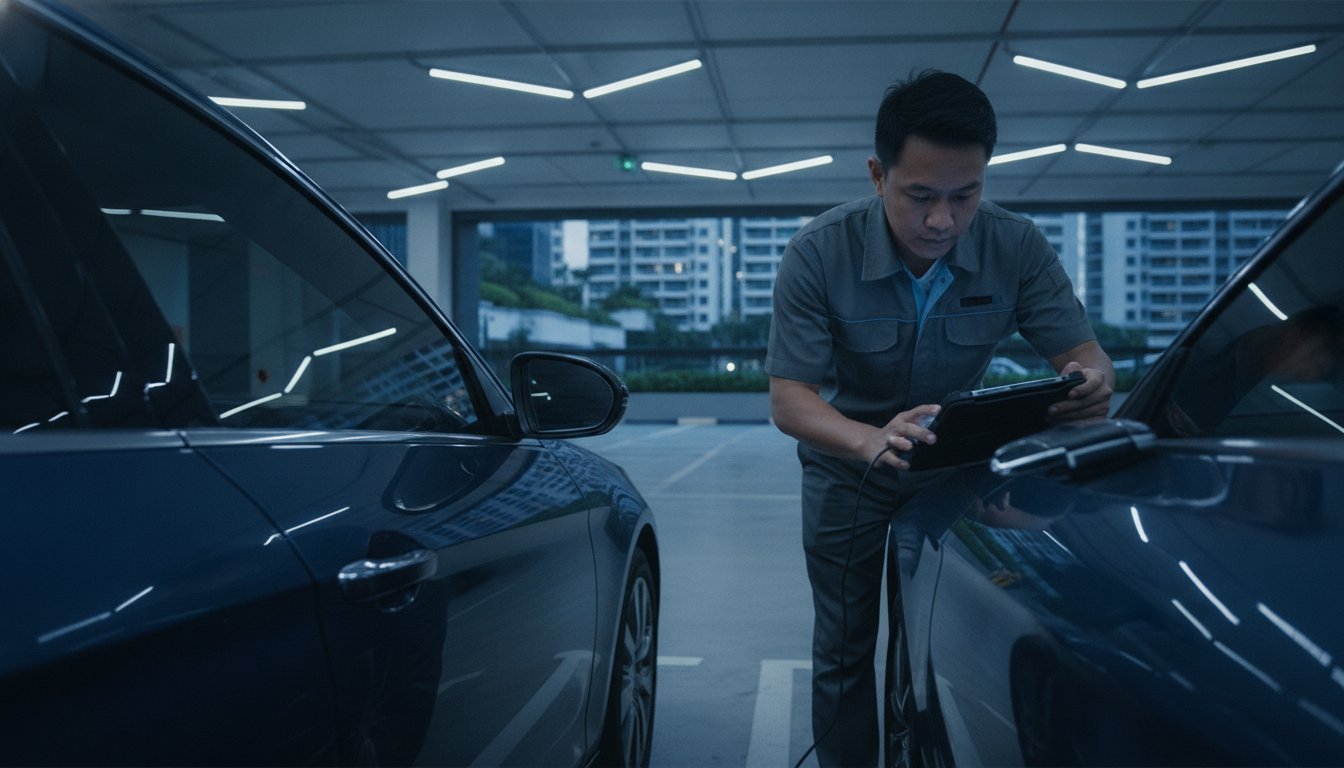


Imagine you’re finishing a long day, only to find yourself stranded in a multi-story car park because your vehicle won’t start. It’s a high-pressure situation that many drivers face when they encounter a car key not detected in Singapore. You’ve likely tried the usual tricks, like holding the fob closer to the sensor or even swapping the battery, yet the engine remains silent. It’s incredibly frustrating to feel locked out of your own vehicle, especially when you’re worried about the steep replacement costs often quoted by authorized agents.
We agree that modern vehicle security should provide peace of mind, not technical headaches. This article explains why smart key systems fail and how professional diagnostics can restore your vehicle’s functionality without the need for unnecessary dealer expenses. You’ll learn about the technical root causes of detection failure, the importance of frequency verification, and how a specialist assessment at a technical hub like Jalan Pemimpin offers a reliable path back to the driver’s seat. We focus on a verification-first methodology to ensure that any restoration is precise and tailored to your specific vehicle’s electronic profile.
Key Takeaways
- Learn how Singapore’s high humidity and cabin heat can impact the structural integrity and electronic performance of your vehicle’s smart key.
- Identify the primary technical reasons for a car key not detected in Singapore, including communication gaps between the transponder and the immobiliser system.
- Determine whether your key requires a full replacement or if a professional restoration of the internal PCB and casing can resolve the issue.
- Understand the importance of a verification-led approach that utilizes your vehicle’s chassis number to ensure accurate diagnostic results.
- Discover how a methodical assessment at a specialized technical hub like Jalan Pemimpin offers a reliable alternative to standard dealer replacements.
Environmental and Urban Factors Affecting Key Detection in Singapore
Singapore’s tropical environment presents specific challenges for modern vehicle access systems. While smart keys offer convenience, their internal electronics are susceptible to the city-state’s relentless heat and moisture. When a car key not detected in Singapore becomes a recurring issue, the cause is often found within the physical components of the remote itself rather than a simple programming error. Understanding how local environmental factors degrade these sensitive devices is the first step toward a permanent solution.
Humidity and Electronic Corrosion
The high ambient humidity in Singapore acts as a silent catalyst for electronic failure. Moisture ingress occurs when microscopic water droplets penetrate the key’s casing, settling on the printed circuit board (PCB). This leads to oxidation on critical battery contacts and micro-switches, creating high resistance that prevents the remote from drawing power effectively. Persistent tropical humidity creates conductive bridges between PCB traces, leading to parasitic battery drain or short circuits that eventually kill the remote. This process is often gradual, meaning the key might work intermittently before failing completely.
Heat-Induced Casing and Component Stress
Vehicles parked in open-air car parks are exposed to extreme thermal cycles. Inside a car, temperatures can climb rapidly, causing the plastic transponder housings to expand and contract. This mechanical stress often results in “cold solder joints,” where the connection between a component and the circuit board becomes brittle and cracks. Such fractures interrupt the communication required for how smart key systems operate, especially during the crucial “handshake” with the vehicle’s immobiliser.
Beyond internal damage, the external seals of the key fob degrade under UV exposure. Rubberised buttons often become sticky or lose their tactile response, allowing even more contaminants to enter the housing. To address these physical failures, a targeted assessment of original car remote keys is necessary to determine if the internal electronics can be salvaged through professional cleaning and resoldering. This methodical approach prioritises the integrity of the original components over unnecessary full replacements.
Urban Signal Interference and Early Indicators
Singapore’s high-density urban landscape is saturated with radio frequency (RF) signals from mobile networks, Wi-Fi routers, and industrial equipment. In certain “dead zones,” these signals can overpower the weak transmission from a degraded key fob. Drivers should look for early warning signs before a total failure occurs. A noticeable reduction in operating range or the need to press buttons multiple times are clear indicators of range degradation. Addressing these symptoms early at a technical hub like Jalan Pemimpin can prevent the high-pressure situation of a car key not detected in Singapore error appearing when you are in a rush. Professional diagnostics can isolate whether the issue is environmental interference or a hardware fault requiring technical restoration.
Technical Root Causes: Why Your Vehicle Stops Detecting the Smart Key
When the dashboard displays a “car key not detected Singapore” warning, many owners assume the battery is dead. While a flat battery is a common culprit, technical failures often lie deeper within the electronic circuitry. A smart key functions through a complex “handshake” protocol between the key’s transponder and the vehicle’s immobiliser system. If this communication is interrupted, the engine won’t start. This protocol relies on precise timing and encrypted rolling codes that must align perfectly for the vehicle to grant access.
The Anatomy of a Smart Key Failure
Inside every smart key is a copper antenna coil. This component is responsible for detecting the low-frequency signals sent by the car’s proximity sensors. If the coil is damaged or its solder joints are compromised, the key cannot “hear” the car’s request to identify itself. This differs significantly from a battery issue; a transponder hardware failure will prevent the car from starting even if the remote buttons still lock and unlock the doors. Micro-switch failure can also occur when the physical buttons on the PCB wear out, preventing physical inputs from triggering the necessary electronic signals.
Physical impact is a frequent but overlooked cause of failure. Dropping your key fob on hard Singapore pavements can cause micro-fractures in the Printed Circuit Board (PCB). These cracks are often invisible to the naked eye but lead to intermittent detection issues. Over time, these fractures expand, eventually resulting in a total loss of signal. This damage often results in a car key not detected Singapore error that requires a deep technical diagnostic to resolve. Identifying these hidden fractures early can sometimes allow for a repair rather than a full replacement.
Immobiliser System Misalignment
Sometimes the hardware is intact, but the software protocol fails. This is known as transponder chip desynchronization. It can occur due to sudden voltage spikes in the vehicle’s electrical system, often during a jump-start, or if the car’s Engine Control Unit (ECU) “loses” the rolling code sequence. Restoring this link requires adherence to strict automotive industry standards to ensure the security system remains uncompromised. These standards guide the diagnostic procedures used to verify that the key and vehicle are communicating on the correct frequencies without interference.
Re-establishing this connection is not a DIY task. It requires specialized diagnostic equipment to resync the key to the immobiliser safely. Understanding what is a transponder key and how it interacts with your car’s security helps in identifying why professional intervention is necessary. If you are experiencing persistent detection lag or intermittent errors, it is advisable to seek a technical assessment at a specialized hub to confirm the integrity of your security system.
Diagnostic Framework: When to Repair vs. When to Replace
Deciding between a technical restoration and a full replacement requires a methodical assessment of the key’s internal health. When faced with a car key not detected in Singapore, the immediate reaction shouldn’t be to discard the unit. Many detection failures are rooted in minor component fatigue that a specialist can address. By prioritizing a professional diagnostic framework, drivers can often avoid the high costs associated with a complete security system overhaul. This approach ensures that every attempt is made to salvage the original electronics before moving toward a replacement.
A simple casing or button restoration is frequently sufficient to solve detection lag. If the internal transponder is still broadcasting a stable signal but the plastic housing is cracked or the buttons are unresponsive, a refurbishment can restore functionality. However, there are limits to what a repair can achieve. If PCB corrosion from moisture ingress has reached a point where the copper traces are delaminated, a reliable, long-term repair is no longer feasible. A specialist assessment at a hub like Jalan Pemimpin isolates these issues, preventing the situation from escalating into an “all keys lost” scenario which is significantly more complex to resolve.
Criteria for Successful Remote Repair
Technical hubs use specialized equipment to test frequency output and signal stability under diagnostic conditions. This verifies if the key is adhering to the rolling code protocols that define how remote entry systems work. The condition of the transponder chip and its mounting on the board are also evaluated. For remotes affected by water damage, restoration is subject to a detailed assessment of the internal oxidation levels. If the core logic remains intact, professional cleaning and resoldering may restore the connection.
Choosing a Secure Replacement Path
When a repair is not viable, choosing a secure replacement path is critical for vehicle security. Original electronics are consistently preferred over unverified third-party clones, which may lack the necessary encryption standards or frequency stability. A verification-led approach requires the vehicle’s chassis number to ensure correct part compatibility before any programming begins. This ensures that the Original Car Remote Keys provided are specifically designed for your vehicle’s model and year. Final confirmation of compatibility is always required before a service can proceed to ensure a functional vehicle start.
The Specialist Verification and Restoration Process
A methodical diagnostic screening is the first step to isolate whether a fault lies within the key hardware or the vehicle’s onboard computer. When you encounter a car key not detected in Singapore, the source of the problem isn’t always obvious. Our technical team begins by assessing the signal strength and frequency stability of the existing remote. This initial phase ensures that we don’t perform unnecessary repairs if the issue is actually a depleted vehicle battery or a blown fuse in the immobiliser circuit.
Accuracy depends on specific data. We require the vehicle’s chassis number (VIN) to retrieve system-specific information. This verification-led approach is essential because security protocols and radio frequencies vary significantly between vehicle makes and production years. By using the VIN, we ensure that any replacement components or reprogramming steps are perfectly compatible with your vehicle’s original factory specifications. This level of precision prevents the electronic conflicts that often occur with generic, unverified solutions.
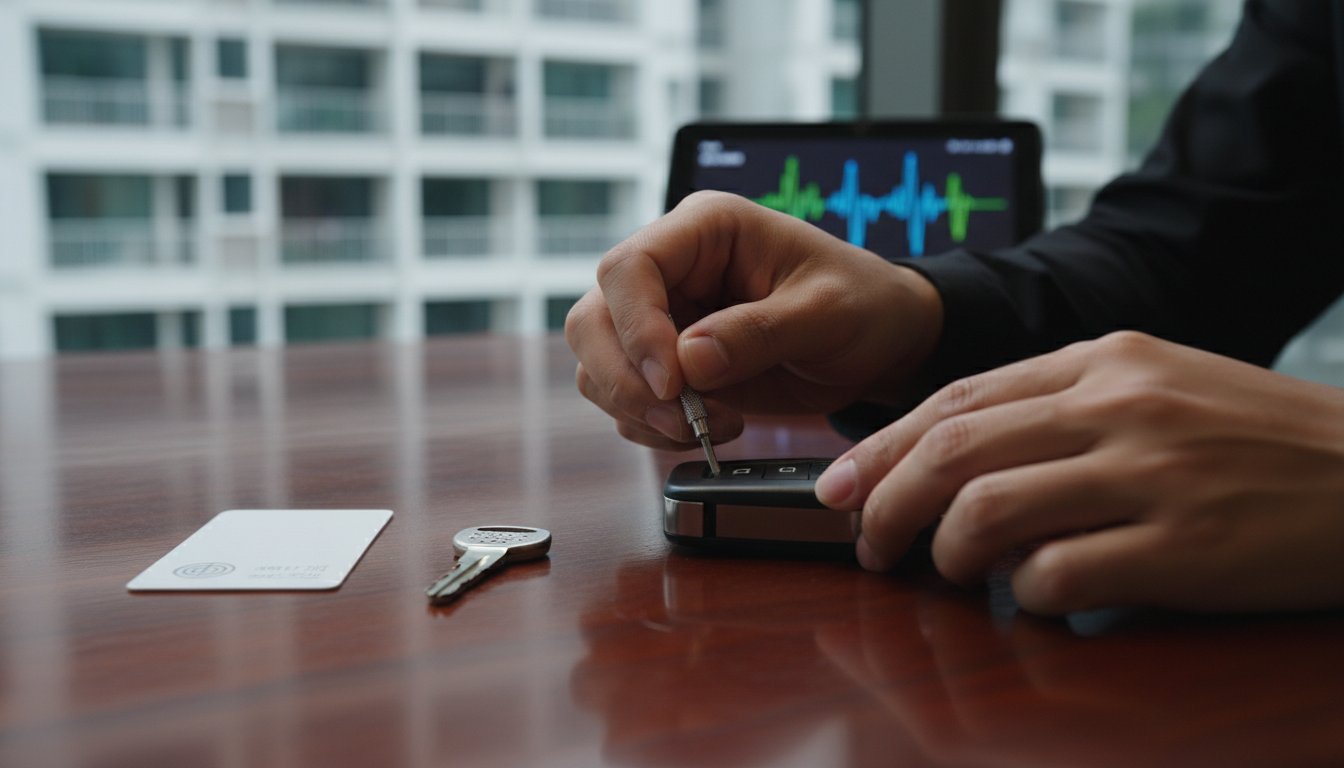
Once the fault is isolated to the key, the restoration moves to a microscopic level. Disassembly allows our experts to inspect internal electronic components for signs of fatigue that are invisible to the naked eye. We look for hairline fractures in the solder joints and tiny traces of oxidation on the PCB. After physical repairs are complete, the key undergoes reprogramming and synchronization with the vehicle’s immobiliser system to re-establish the secure “handshake” required for ignition.
Security and Accuracy Protocols
Expertise in modern vehicle access requires strict adherence to security standards. We prioritize a verification-first methodology, which includes checking the vehicle’s Log Card and the owner’s NRIC before proceeding with technical services. This ensures that all work remains within legal and safety frameworks. We utilize specialized hardware for frequency matching and ECU handshakes, ensuring that the repaired or duplicated key functions exactly like the original. This methodical process helps maintain the integrity of your vehicle’s anti-theft system, which is a mandatory standard for all cars registered in Singapore.
Final Quality Assurance and Range Testing
The restoration process isn’t complete until the key passes a series of rigorous tests. We perform range testing to ensure the proximity detection radius meets factory expectations. This is crucial for keyless-go systems where the vehicle must detect the key within a specific distance to allow the engine to start. We also verify all secondary functions, such as the trunk release and panic alarms, to ensure a complete restoration of service. Finally, battery load testing is conducted to confirm the remote’s reliability in Singapore’s challenging heat. If you’re experiencing intermittent detection issues, you can submit your vehicle details for a professional assessment and confirmation of your needs.
Restoring Security and Access with Soxxi Master
Soxxi Master has served as a pioneer in Singapore’s automotive key industry for decades. Our primary technical hub at Jalan Pemimpin is specifically equipped to handle the most complex electronic failures. When drivers face a car key not detected Singapore error, they need more than a simple battery swap. They require a methodical assessment that prioritizes technical integrity. We focus on accurate diagnostics rather than marketing superlatives to ensure your vehicle’s security remains uncompromised. Our history as an industry leader allows us to manage even the most intricate immobiliser challenges with confidence.
Why a Specialist Matters for Modern Smart Keys
Modern proximity systems are essentially small, sensitive computers. DIY attempts or using unauthorized tools can lead to permanent immobiliser lockouts or corrupted software. General key shops often lack the specialized diagnostic hardware required to interface with modern Engine Control Units (ECUs) safely. A specialist understands the nuances of frequency stability and encrypted handshakes. Our approach to Professional Duplicate Car Keys in Singapore involves rigorous testing to match factory standards. This ensures that every key we restore or duplicate functions reliably under local conditions, providing you with long-term peace of mind.
Comprehensive Access Solutions in Singapore
Our expertise extends beyond automotive needs to cover a wide range of modern access requirements. We provide comprehensive solutions for residential and commercial access, including auto gate remote duplication and RFID access card cloning. This consultative approach helps owners understand their specific systems, whether they’re dealing with a single car key or a multi-device access setup. We believe in transparency and take the time to explain the technical failure to our clients, ensuring they’re informed before any service begins.
For those in high-pressure situations where all original keys are missing, we offer a specialized All Keys Lost Solution. This process involves decoding the vehicle’s locks and generating new transponder data from scratch. It’s a complex procedure that requires mastery of both mechanical and electronic domains. We don’t assume compatibility; instead, we verify every detail using your vehicle’s chassis number to ensure a functional start.
If you’re currently dealing with a car key not detected Singapore issue, don’t wait for a total system failure. A professional assessment can often resolve detection lag before it becomes a costly emergency. We encourage you to contact Soxxi Master for an accurate assessment and final confirmation of your specific vehicle needs.
Restore Your Vehicle Access with Professional Diagnostics
Understanding why a car key not detected Singapore error occurs is the first step toward a reliable solution. We’ve explored how tropical humidity and urban interference can degrade sensitive PCB components, often leading to intermittent signal failure. Rather than attempting unverified DIY fixes that risk permanent immobiliser lockouts, a methodical diagnostic approach ensures your vehicle’s security remains intact. Each assessment is subject to compatibility and requires specific vehicle details, such as a chassis number, for final confirmation.
Soxxi Master stands as a pioneer in the local automotive key industry, focusing on technical integrity and verification-led restoration. Our technical hub at 37 Jalan Pemimpin is specifically equipped to handle complex transponder and immobiliser systems. We prioritize accuracy by using vehicle-specific data to ensure any service matches original factory standards. Whether you need a simple casing restoration or a complex electronic resync, our experts provide a secure and efficient path back to the road.
Contact Soxxi Master for a professional assessment of your car key detection issues and an accurate confirmation of your vehicle’s needs. We’re here to help you regain access with confidence.
Frequently Asked Questions
Can a car remote be repaired if it has been submerged in water?
Repairing a water-damaged remote is possible, but it is strictly subject to a technical assessment of the internal oxidation levels. If the core logic remains intact, professional ultrasonic cleaning and resoldering can often restore functionality. However, if the circuit board traces have delaminated due to prolonged moisture exposure, a replacement may be necessary to ensure long-term reliability and vehicle access.
How long does a professional diagnostic for ‘key not detected’ issues take?
A standard diagnostic screening typically takes between 30 to 60 minutes at our Jalan Pemimpin technical hub. This timeframe allows our specialists to isolate the fault to either the key’s hardware or the vehicle’s immobiliser system. More complex electronic issues or intermittent signal failures may require additional time for a deep microscopic inspection of the PCB components to ensure an accurate restoration.
Why do I need to provide my car’s chassis number for a remote assessment?
Providing your vehicle’s chassis number is essential for retrieving system-specific data and ensuring part compatibility. Because security protocols and radio frequencies vary by model year and production batch, this verification prevents technical conflicts. We use this information to confirm that any repair or duplication adheres to the original factory specifications of your vehicle before any service proceeds.
Can you fix a smart key if the buttons have physically fallen off?
Yes, we can restore smart keys where buttons have physically detached by replacing the external casing or resoldering new micro-switches onto the PCB. This is a common physical failure caused by Singapore’s heat degrading the rubber seals and plastic components. Restoring the housing often solves the issue without needing to replace the expensive internal electronics, provided the circuit board is undamaged.
Is it possible to start my car if the key is not being detected?
Most vehicles have an emergency start procedure, such as holding the smart key directly against the start button or a specific steering column sensor. While this may provide a temporary solution for a car key not detected Singapore error, it does not address the underlying hardware fault. You should seek a professional diagnostic immediately to prevent the risk of being permanently stranded in a car park.
Will repairing my remote compromise my vehicle’s security system?
Professional repairs do not compromise your vehicle’s security system when performed using specialized hardware and factory-standard protocols. We prioritize technical integrity and verify ownership through NRIC and Log Card checks before any service. This ensures the repaired key maintains its original encrypted handshake with the vehicle’s immobiliser, keeping your anti-theft protection fully functional as required by local regulations.
What is the difference between a battery change and a transponder repair?
A battery change only restores the power supply for the remote’s transmitter, while a transponder repair addresses the internal logic and communication coil. If you encounter a car key not detected Singapore warning even with a fresh battery, the issue likely resides in the transponder chip or antenna coil. These sensitive components require specialized soldering and diagnostic tools to restore the encrypted communication with the engine.
Are smart keys for European cars harder to repair than Asian models?
European models often utilize more complex encryption and rolling code sequences compared to many Asian models, but repairability depends on the specific system architecture rather than the country of origin. Our hub is equipped with diagnostic tools for both regions. While the technical protocols differ, the methodical approach to verification and restoration remains consistent to ensure the security of the vehicle’s immobiliser system.