

Your car key is no longer just a piece of shaped metal; it’s a sophisticated security computer engaged in a high-stakes digital conversation with your vehicle’s engine. It’s understandable to feel frustrated when a replacement costs more than a traditional key or anxious when you’re facing an “all keys lost” situation. You want to ensure your vehicle remains secure without compromising its complex electronic systems. In this guide to smart key programming explained, we’ll demystify the technology behind the encrypted handshake that keeps your car safe and functional.
Professional synchronization is vital because it involves more than just a simple software sync. We’ll look at why specialists must verify specific vehicle details, such as the chassis number, before any programming work can proceed. You’ll gain a clear understanding of the data required for precise verification and why choosing a dedicated expert over a DIY approach protects your investment. This overview covers the essential steps for maintaining modern vehicle security in Singapore’s evolving automotive market.
Key Takeaways
- Understand the digital “handshake” between the transponder chip and the vehicle’s ECU that prevents unauthorized engine starts.
- Discover why smart key programming explained as a specialist service involves precise data extraction and the use of professional diagnostic equipment via the OBD-II port.
- Learn why verification through specific vehicle details, such as the chassis number, is a mandatory step to confirm compatibility before any service begins.
- Recognize the security risks of using unverified keys and the importance of choosing high-quality components to maintain your vehicle’s electronic reliability.
Understanding the Technology: What Happens During Smart Key Programming?
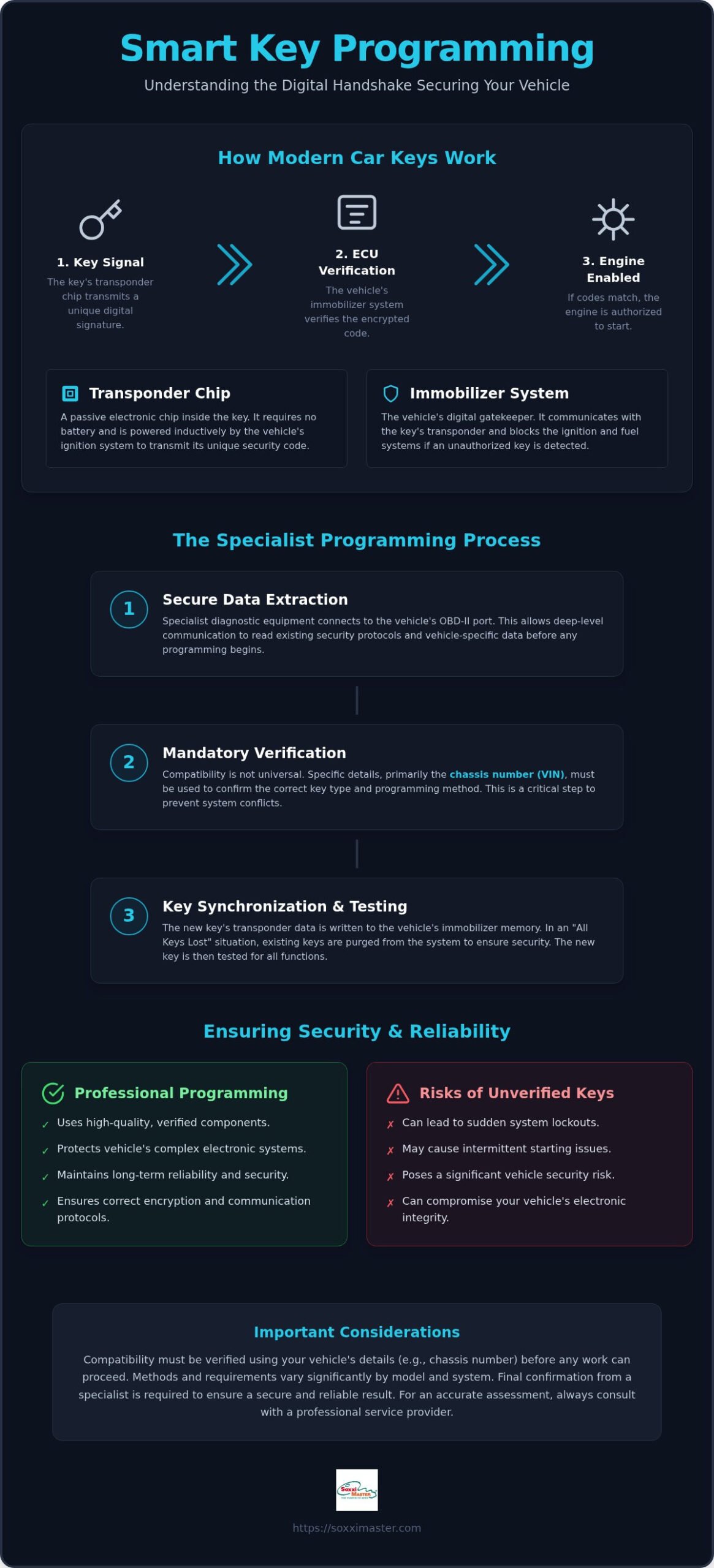
To have smart key programming explained accurately, you must view it as the electronic pairing of a unique transponder chip to the vehicle’s Engine Control Unit (ECU). When you attempt to start your car, the immobilizer system initiates a secure handshake process. It verifies the digital signature of the key before allowing the engine to start. Modern systems enhance this protection through rolling codes. These change the encryption key every time the remote is used, which prevents unauthorized parties from intercepting and reusing the signal. Understanding what a smart key is helps clarify why this encrypted dialogue is the foundation of contemporary vehicle security.
The Role of Transponder Chips and Immobilizer Systems
The transponder chip is a passive component that operates without a battery. It draws power through induction from the ignition coil or start button area to transmit its data. While the electronic signature is vital, precision key cutting must be paired with this programming for a complete security solution. The immobilizer acts as the primary digital gatekeeper, blocking the ignition if the correct code isn’t detected. Utilizing original car remote keys often provides the most reliable integration, though specific results vary by system and manufacturer requirements.
Because every vehicle’s electronic architecture is unique, compatibility must be verified using specific vehicle details, such as the chassis number. Final confirmation from a specialist is required before any service can proceed to ensure the system remains secure and functional. For an accurate assessment of your vehicle’s requirements, you can contact Soxxi Master directly to discuss your specific needs. This verification-first approach protects your vehicle’s electronics while ensuring a seamless programming process.
The Specialist Programming Process: Syncing Your Key to the Vehicle
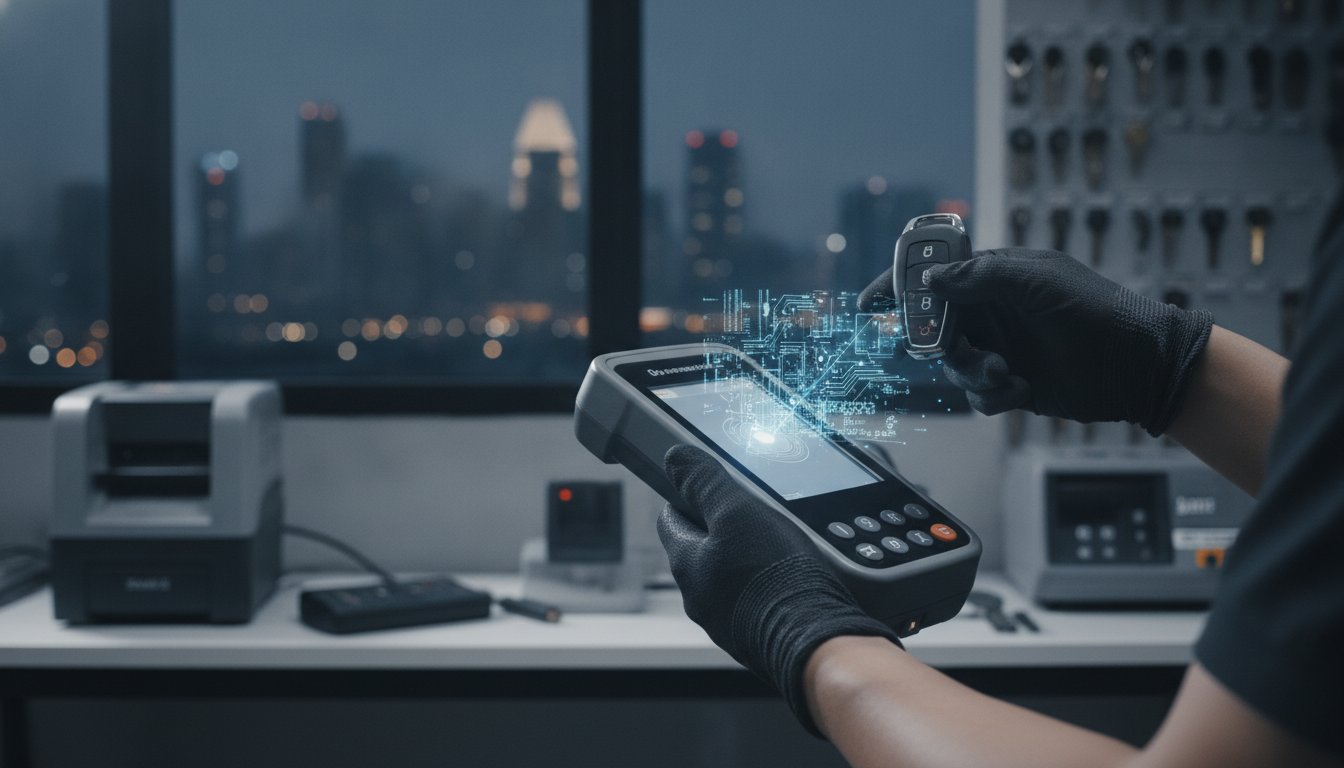
The professional workflow for vehicle synchronization begins with secure data extraction. Unlike basic handheld scanners used for minor diagnostics, specialist equipment communicates directly with the vehicle’s onboard computer through the OBD-II port. This allows the specialist to read existing security protocols before writing new transponder data to the system. This is how smart key programming explained in a professional context differs from basic duplication; it’s a deep-level interaction with the vehicle’s software. In high-pressure situations like an all keys lost solution, the process becomes more complex. It involves resetting the immobilizer memory to accept new credentials while purging the lost ones. This is a critical step in ensuring security and reliability for your vehicle’s electronic system.
Verification and Compatibility: Why One Size Does Not Fit All
Every vehicle is unique. Compatibility must be verified using specific vehicle details, such as the chassis number, before any work begins. The programming method varies significantly by vehicle system and manufacturer requirements. You can’t apply a universal fix to every car or motorcycle because the software layers are highly specific. Final confirmation by a specialist is required before any service can be initiated to ensure system integrity and prevent potential lockouts or intermittent starting issues. It’s why smart key programming explained by a professional always emphasizes verification over speed. If you’re unsure about your specific model, contacting a specialist for a direct assessment is the safest way forward.
Ensuring Security and Reliability Through Professional Programming
Using unverified “blank” keys from unknown sources poses a significant threat to your vehicle’s electronic integrity. These components often fail to meet strict encryption standards, which can lead to sudden system lockouts or intermittent starting issues that leave you stranded. This risk highlights why smart key programming explained through a specialist lens emphasizes quality over shortcuts. Utilizing original car remote keys or high-quality equivalents ensures that your vehicle’s warranty remains intact while maintaining peak security.
Professional programming acts as a conservative security measure. It’s designed to protect the long-term health of your car’s electronics by ensuring new data writes don’t conflict with existing system protocols. Every procedure requires strict verification using specific vehicle details, such as the chassis number, to ensure compatibility before any work proceeds. This methodical approach prevents the software corruption often associated with amateur attempts or low-quality equipment.
Beyond Cars: The Complexity of Motorcycle Smart Key Systems
Motorcycle smart key systems present their own set of challenges. These units often operate on different frequencies and utilize distinct encryption protocols compared to passenger cars. Specialized bike key programming frequently requires direct access to the motorcycle’s ECU or immobilizer box, making it a highly technical task. Riders should always seek a specialist who understands the unique mechanical and electronic constraints of two-wheelers. Because these systems are delicate, a methodical verification process is essential. If you’re facing a key issue with your car or motorcycle, contact Soxxi Master directly for an accurate assessment and final confirmation of your specific needs.
Securing Your Vehicle with Expert Synchronization
Modern vehicle security relies on a precise digital dialogue between your key and the car’s computer. This complex technology requires a specialist approach to ensure your transponder chip and ECU are perfectly synchronized. By prioritizing a verification-first approach and using specialist equipment for both car and motorcycle systems, you protect your vehicle from electronic failure and unauthorized access. Having smart key programming explained highlights why verifying compatibility through your chassis number is a mandatory step for maintaining system integrity. As a pioneer in automotive key replacement, Soxxi Master focuses on precision to deliver reliable results. Professional support ensures your car remains secure and functional.
Final confirmation of your specific needs ensures a seamless experience. Your vehicle’s security is a long-term investment that deserves the highest level of technical expertise.
Frequently Asked Questions
Can I program a smart key myself at home?
Programming a modern smart key at home is not recommended because it requires specialist diagnostic equipment. These tools must communicate directly with the vehicle’s ECU via the OBD-II port. This ensures the smart key programming explained in this guide is performed securely. Attempting a DIY solution often leads to system lockouts or software corruption, which compromises the vehicle’s long-term electronic health.
How long does the smart key programming process typically take?
The time required for programming varies significantly based on the vehicle’s specific system. While many synchronizations are handled efficiently, some manufacturers require more complex data extraction protocols. A specialist focuses on precision to ensure the digital handshake is stable and reliable. You’ll receive a final confirmation of the expected duration once your vehicle’s details have been verified by a professional.
What information do I need to provide for smart key programming?
You need to provide specific vehicle details to ensure compatibility before any service proceeds. This includes the make, model, year, and the chassis number. This verification is a mandatory step to protect the integrity of your vehicle’s security system. A specialist will use this information to determine the correct transponder frequency and encryption protocol required for successful synchronization.
What happens if I lose all my smart keys?
If all keys are missing, a specialist provides an all keys lost solution by resetting the immobilizer memory. This process deletes the data for the lost keys and programs new credentials into the ECU. It’s a complex procedure that requires specialized tools to interface with the vehicle’s computer. For an accurate assessment, contact Soxxi Master directly for final confirmation of your specific needs.