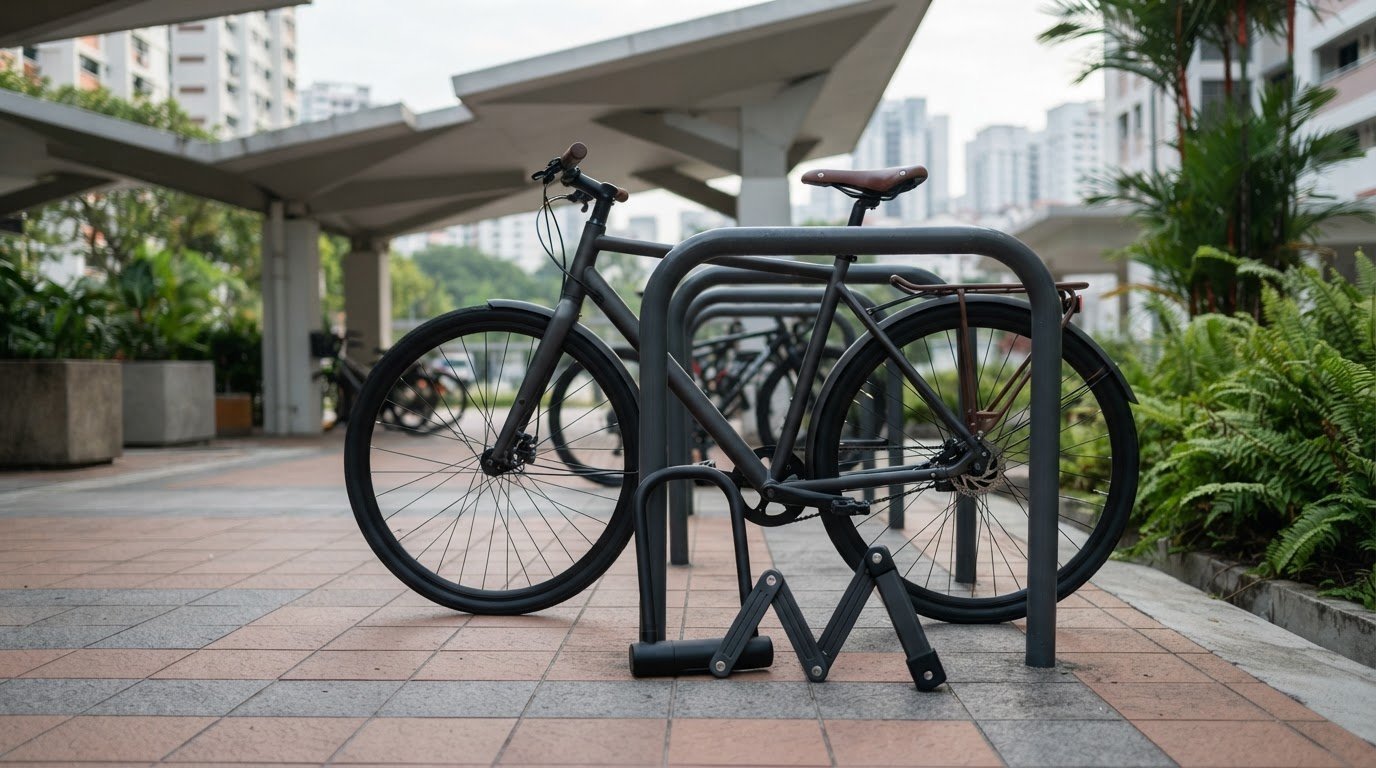


An ignition lock alone isn’t enough to secure an e-scooter. To secure an e-scooter in Singapore, use a physical lock, such as a folding lock, and park in a designated space, such as a bicycle rack or yellow box. Don’t leave the scooter where it obstructs or inconveniences others.
Choose a lock that’s practical to carry and long enough to secure your scooter to a suitable fixed point. A folding lock is one compact option. Park carefully to keep walkways and shared spaces clear.
This guide covers how to choose and use a folding lock, where to park, and what to consider when securing your e-scooter. Follow a simple routine each time you leave it unattended to reduce theft risk.
Key Takeaways
- Pair an e-scooter’s ignition lock with a physical lock for an added layer of security.
- Consider how a folding lock fits your scooter and your usual parking routine.
- Choose a designated bicycle parking facility and position the scooter so it doesn’t obstruct others.
- Review Singapore’s parking rules before leaving your scooter in a shared public space.
1. How do you secure your E-Scooter?
At a bicycle parking facility, choose a rack that lets you lock the scooter’s frame, not just a wheel. Pass a physical lock through the frame and rack, and engage the ignition lock as an extra deterrent. A folding lock can make this easier to do consistently. Leave the scooter stable and clear of walking routes.
Secure removable parts separately. If the battery is designed to be removed, take it with you when practical. Don’t leave detachable accessories on the scooter, and never force a lock through wiring, brakes, or battery components.
Theft risk is higher when a scooter is left unattended in an exposed or poorly observed spot. Choose a visible bicycle parking facility, avoid leaving it unattended longer than necessary, and note its identifying details. If it’s stolen, report it promptly to the police. Provide the make, colour, identifying details, last known location, and when you noticed it missing.
At home, store the scooter indoors without blocking an exit. In a shared HDB corridor, don’t leave it where it obstructs or inconveniences residents.
Lock prices depend on the design, materials, and features.
For a physical option, ABUS bicycle locks in Singapore are available through Soxxi Master.
Consider investing 10% of an e-scooter’s value in security; use a key ignition lock together with a secure physical lock, because the key lock alone is not very useful.
2. Folding locks for e-scooters
A folding lock has linked rigid sections that unfold around the scooter and a fixed parking point. It can be easier to carry than a bulky lock, but it needs enough reach. When learning how to secure an e-scooter in Singapore, make sure the lock fits around both the frame and a suitable rack without straining its joints.
Consider your scooter’s frame shape and where you usually park. A thick stem, wide rack, or awkward gap can make some locks hard to position. Choose one that closes without pressing against cables, brakes, the battery housing, or moving parts. Don’t lock only a removable component.
At a bicycle rack, position the scooter so the lock can reach both the frame and the rack. Keep the lock body off the ground and avoid leaving enough slack for the scooter to move freely. Follow the manufacturer’s instructions for closing and securing the joints. A folding lock is a physical deterrent, not a substitute for careful parking or the ignition lock.
Inspect the lock before each ride. Look for stiff joints, damaged sections, or a mechanism that won’t close properly. Keep the key or access method separate from the locked scooter, and carry the folded lock securely so it won’t interfere with steering. Your setup depends on the scooter’s frame and parking point, both central to how to secure an e-scooter in Singapore.
Match the lock’s reach and handling to your scooter and parking routine. Explore physical lock options for e-scooters when considering your setup.
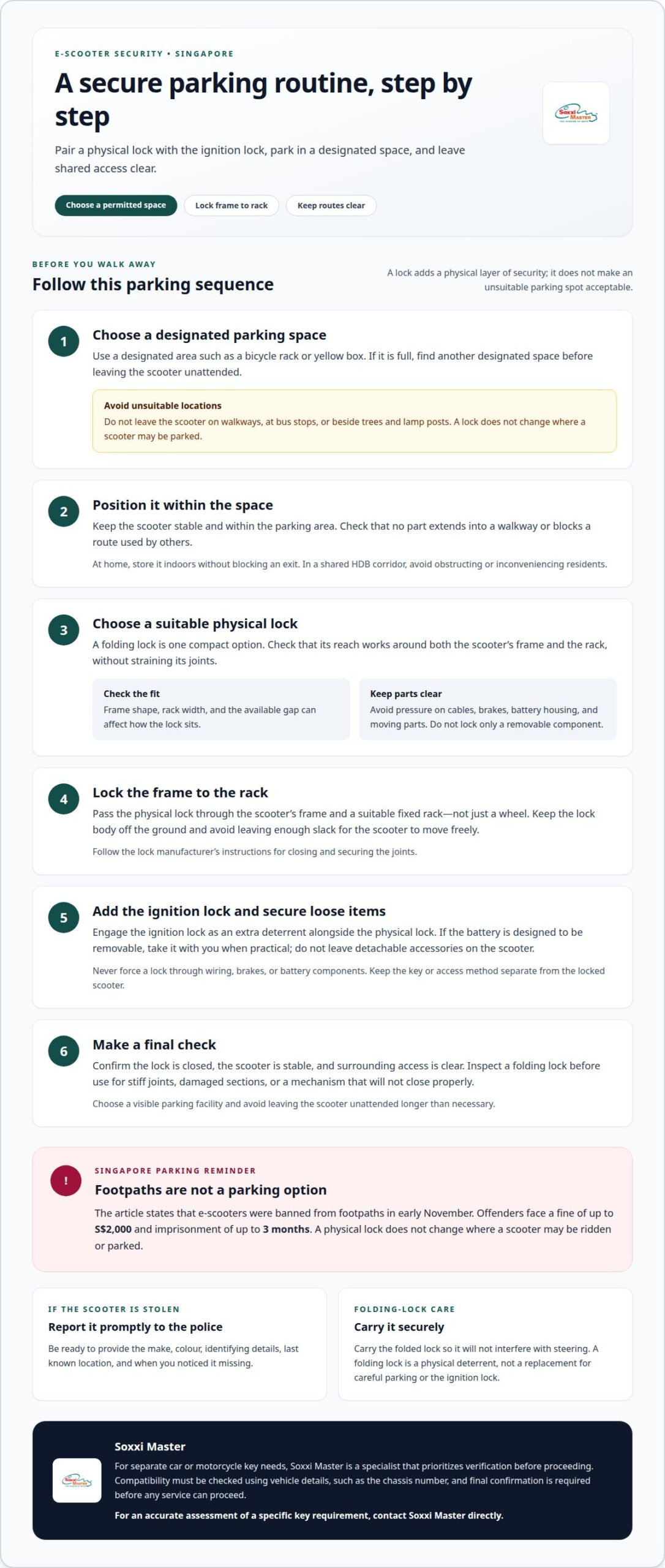
3. What are Singapore’s current rules for parking and securing a personal mobility device (PMD) e-scooter?
In Singapore, park e-scooters in designated spaces, such as yellow boxes or bicycle racks. When considering how to secure an e-scooter in Singapore, remember that using a lock doesn’t make an unsuitable parking spot acceptable. Keep the scooter within the parking area and leave surrounding access clear. Before walking away, check that it won’t block a route or inconvenience others.
Don’t park on walkways, at bus stops, or beside trees and lamp posts. These locations can obstruct people using shared spaces. Use a designated bicycle parking facility instead. If it’s full, find another designated space rather than locking the scooter to nearby street furniture. Keep shared access routes clear near residential areas, too.
Singapore banned e-scooters from footpaths in early November. Offenders face a fine of up to S$2,000 and imprisonment of up to 3 months. A physical lock doesn’t change where a device may be ridden or parked. Knowing how to secure an e-scooter in Singapore includes parking only in an appropriate place, not leaving it on a footpath.
Make parking part of your routine: choose a designated space, position the scooter without obstructing others, then lock it to a suitable rack. Check that no part extends into a walkway. If there’s no space at a yellow box or rack, find another designated parking space before leaving the scooter unattended.
In Singapore, don’t park e-scooters on walkways, at bus stops, or beside trees and lamp posts. If a potential spot falls into one of these categories, continue to a designated parking area. Position the scooter within the space and make sure it doesn’t extend into a route used by others. Choosing a suitable location first, then securing the scooter, helps keep access clear.
Soxxi Master
Soxxi Master offers ABUS bicycle locks as a physical-lock option for riders planning an e-scooter security routine. Choose a lock that suits your scooter’s frame and usual parking point, then follow Singapore’s designated-parking guidance. A lock complements careful parking, but doesn’t replace it.
If you also need a car or motorcycle key, Soxxi Master provides key duplication. Compatibility is assessed using vehicle details, such as the chassis number, and final confirmation is required before service proceeds.
For an accurate assessment of your needs, contact Soxxi Master.
Make your next parking stop a secure one
Make security part of your travel routine, not an afterthought. As your routes and parking habits change, review whether your setup still works for the places where you leave your scooter. A consistent routine is a practical way to apply what you’ve learned about how to secure an e-scooter in Singapore.
For a separate key or access need, Soxxi Master can assess the requirement and recommend a suitable service.
Choose a routine you can follow consistently for greater peace of mind on your travels.
Frequently Asked Questions
How do you secure your E-Scooter?
A practical way to secure an e-scooter in Singapore is to use a physical lock alongside its ignition lock. Before leaving, remove valuables and detachable accessories, switch off the scooter, and check that the lock is properly closed. If it has a built-in alarm or electronic lock, activate it as an extra layer of security. Keep the lock key separate from the scooter.
What types of locks are best for securing an e-scooter against theft?
No single lock suits every scooter and parking setup. Folding locks are convenient to carry; a U-lock or chain lock may suit riders whose usual parking point has enough space. Compare how each type fits around your scooter and the rack, and consider how easily you can carry it along your route. A physical lock complements careful parking, but doesn’t replace it.
How do you lock an e-scooter to a fixed object safely without damaging it?
Choose a sturdy rack and a solid part of the scooter’s frame, then position the lock without pulling or twisting the scooter. A soft sleeve at the lock’s contact points can help reduce scuffing. Keep the lock clear of painted panels, moving parts, and controls. Before leaving, gently check that the scooter is stable and the lock isn’t pressing against any components.