

Imagine standing at a service counter with your car remote in hand, wondering if you will make it to your next appointment or if you are about to lose your entire afternoon. It is a common frustration for drivers in Singapore who face the uncertainty of technical compatibility and the fear of lengthy, unexplained wait times. You likely understand that having a spare is essential for security, yet the process often feels like a black box of technical jargon and varying timelines.
This guide clarifies the process by answering the critical question: how long does it take to duplicate a car key? You will discover the realistic timeframes for different vehicle technologies, from basic mechanical blades to complex proximity smart keys. We explain why professional verification is necessary for modern immobiliser systems and how specialist equipment ensures accuracy. By the end of this article, you will have a clear expectation of the time required to secure your vehicle, though the exact duration is always subject to the specific requirements of your car model and system.
Key Takeaways
- Learn why duplication times vary from 15 minutes to over an hour based on the specific mechanical and electronic complexity of your vehicle.
- Discover how the type of transponder chip and manufacturer security protocols influence how long does it take to duplicate a car key for your specific model.
- Understand the professional multi-step process, from precision mechanical decoding to the essential verification of vehicle details like the chassis number.
- Identify why high-security luxury brands and “all keys lost” scenarios require additional time for secure data handshakes and software synchronization.
- See how choosing a specialist with an extensive inventory of original car remote keys can offer a more efficient alternative to the traditional dealership model.
Understanding the General Timeline for Car Key Duplication
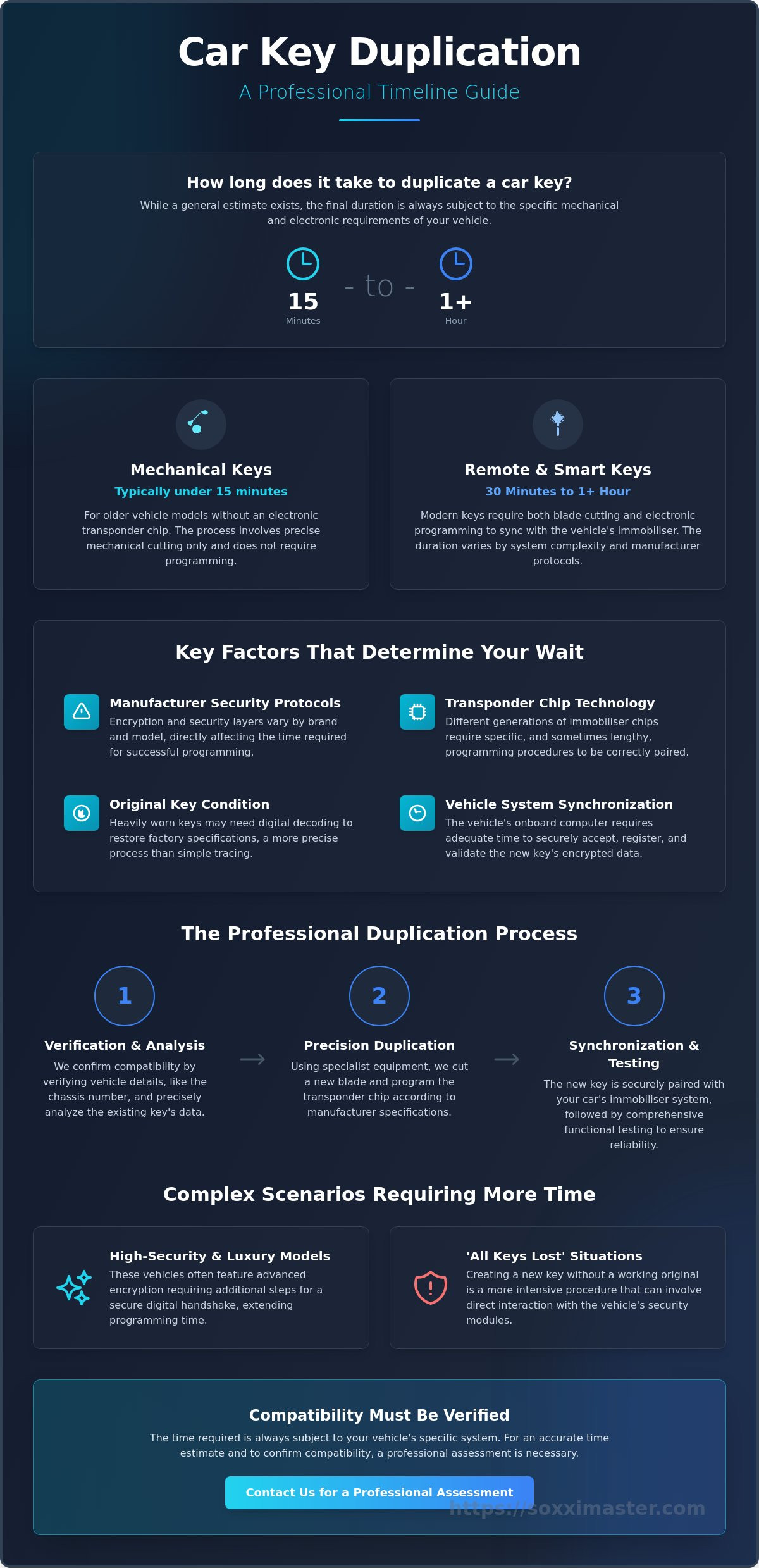
Many drivers ask, how long does it take to duplicate a car key when they’re squeezed for time. While a general timeframe often spans from 15 minutes to over an hour, providing a single, definitive answer is technically impossible for modern vehicles. This variation exists because your vehicle isn’t just secured by a piece of metal; it relies on a sophisticated electronic access system. Every manufacturer uses different security layers, meaning the time required depends heavily on the specific technology inside your key.
A key distinction lies between simply “cutting” a blade and “duplicating” a complete access system. Mechanical cutting involves replicating the physical grooves, but modern duplication requires a digital handshake with the car’s immobiliser. As modern key designs have evolved, the process has moved from simple locksmithing to advanced electronic programming. Having a working key on hand significantly streamlines this process. It provides the necessary data for a specialist to clone or program the new unit efficiently, whereas starting from scratch without a working key is a far more intensive procedure.
Mechanical Keys vs. Remote Fobs
Traditional metal keys represent the quickest duplication process. If your vehicle uses a basic mechanical design without an internal transponder chip, a specialist can often complete the task in under 15 minutes. These older models rely purely on physical patterns. However, most cars produced in the last two decades include transponders or remote fobs. These require an additional layer of frequency syncing and data encryption. While the physical cut is fast, the electronic synchronization adds time to ensure the vehicle recognizes the new hardware. The duration varies by system and the complexity of the encryption used by the brand.
The Role of the On-Site Specialist
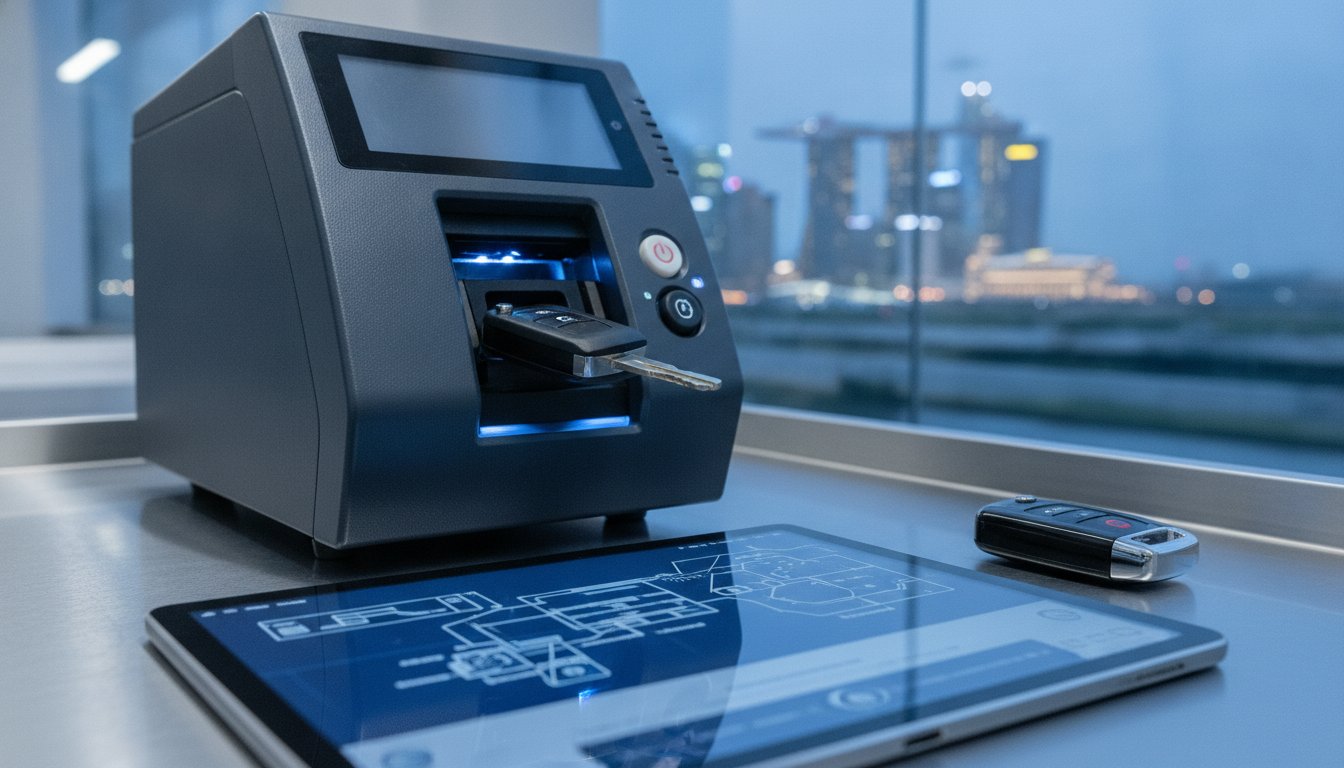
Visiting a dedicated workshop at 37 Jalan Pemimpin often results in a more efficient experience than relying on generalists. A professional environment is equipped with specialized machinery designed for immediate decoding and precision cutting. This setup allows for a streamlined workflow where identification, cutting, and programming happen in one location. Having a vast inventory of components and diagnostic tools on hand minimizes delays. This ensures the technical requirements of your specific car model are met with accuracy. Final confirmation of the time required is always subject to a verification of your vehicle details to ensure full compatibility.
Factors That Determine How Long Your Duplicate Takes
The physical profile of your key is merely the first layer of security. When asking how long does it take to duplicate a car key, the answer depends significantly on the invisible electronic architecture of your vehicle. Modern immobiliser systems require a precise data synchronization between the key and the engine control unit. This “handshake” varies by manufacturer. Some brands utilize straightforward protocols that resolve quickly, while others involve complex encryption that demands more processing time. Several factors influence the overall duration of your visit:
- Manufacturer Security Protocols: Different brands use varying levels of data security and encryption algorithms.
- Software Synchronization: The time required for the vehicle’s computer to accept and store new programming data.
- Hardware Verification: Ensuring the chosen blank matches the exact frequency and chip type required for your system.
The physical state of your existing key also plays a role in the timeline. A heavily worn blade requires a specialist to decode the original factory depths using precision software rather than simple tracing. This ensures the new key functions smoothly without damaging your ignition barrel. Additionally, the availability of specific key blanks and the latest software versions for newer models can influence the process. While most common models are supported immediately, rarer systems might require additional verification steps. You can review a Consumer Reports key fob replacement guide to see how these professional factors impact the industry standard for replacements.
Transponder Chip Programming Times
A transponder key contains a microchip that communicates with your car’s anti-theft system. This requires a digital “pairing” process so the car recognizes the key as authorized. You can learn more about transponder key technology to understand the specifics of this security layer. Depending on the model, some chips can be cloned directly in minutes. Others require a direct connection to the vehicle’s OBDII port to write the new key data into the car’s memory, which naturally extends the duration of the service. These steps are essential to ensure the vehicle starts reliably every time.
Smart Keys and Proximity Systems
Proximity keys, often associated with “Keyless Go” or push-to-start systems, are the most sophisticated options available. Because these keys constantly communicate with the vehicle’s sensors, the duplication process often takes 30 to 60 minutes, subject to compatibility. A specialist must ensure the new proximity signal is correctly calibrated. In many cases, it’s also necessary to clear old or lost key data from the system to maintain the security of your vehicle. For an accurate assessment of your specific vehicle’s needs, you can consult with a specialist who can verify your system type and provide a realistic timeline for your model.
The Professional Car Key Duplication Process Step-by-Step
A professional duplication isn’t a simple matter of pressing a button. It’s a methodical, technical sequence designed to ensure your vehicle remains secure while providing a perfectly functional spare. When drivers ask how long does it take to duplicate a car key, they’re often surprised by the precision required at each stage. The process begins with a thorough assessment. A specialist must identify the exact key blank and transponder type required for your specific vehicle. This involves verifying technical details, such as the chassis number, to ensure the new hardware is fully compatible with your car’s existing security architecture.
Every step in this sequence adds to the total duration, but this structure is what guarantees reliability. You can find additional context on these stages in Edmunds’ guide to key fob replacement, which highlights why professional oversight is preferable to unverified alternatives. Once the correct blank is identified and verified, the specialist moves into the mechanical and electronic phases of the build.
Decoding and Cutting the Blade
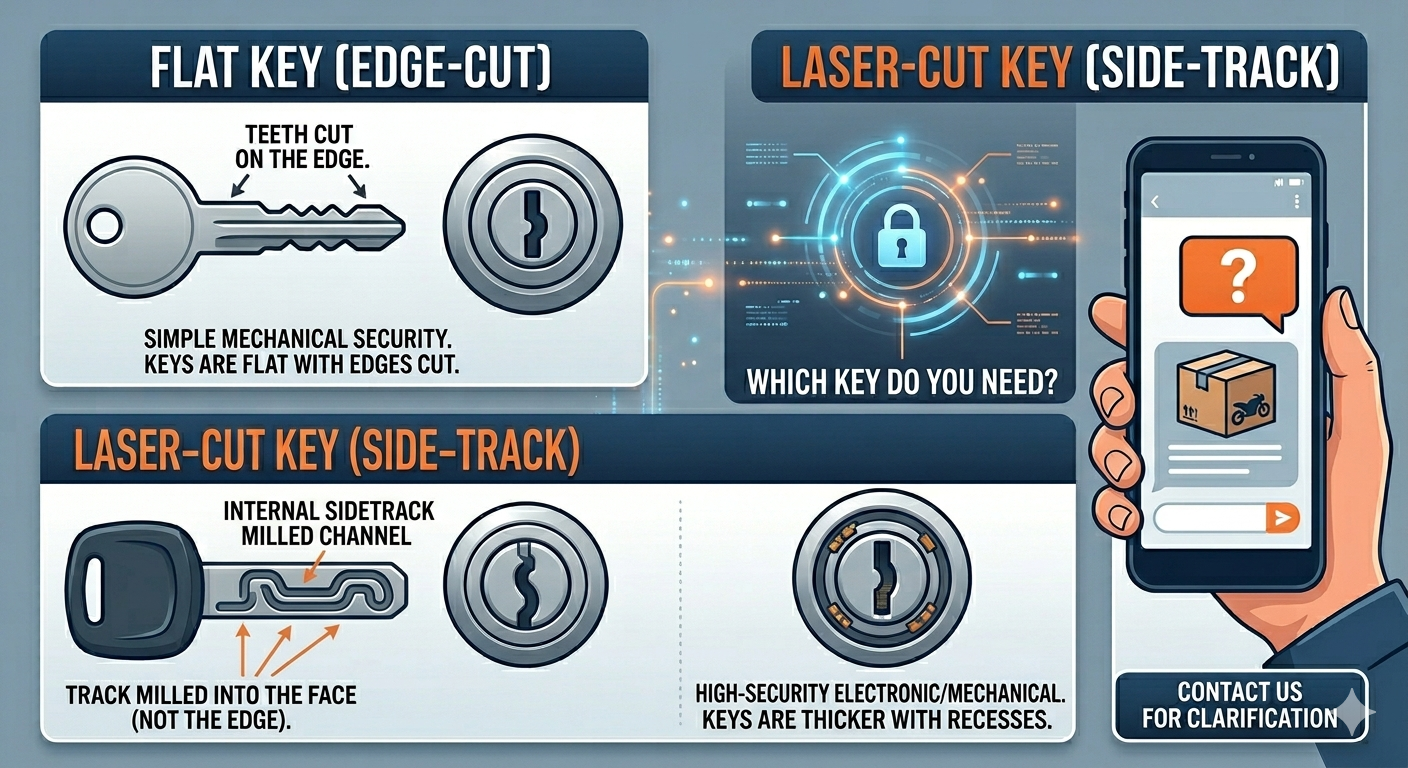
Modern duplication relies on high-precision automated CNC machines rather than manual tracing. If your original key is worn or damaged, a specialist uses software to “decode” the original factory specifications. This allows for professional key fabrication that returns the blade to its “like-new” state. This precision is vital. A poorly cut key might turn the lock initially but can cause significant, expensive damage to your ignition cylinder over time. The mechanical phase typically takes about 10 to 20 minutes, depending on the complexity of the blade profile, such as laser-cut or high-security sidewinder designs.
ECU and Immobiliser Programming
The electronic phase is where the key is actually “introduced” to your vehicle. A specialist connects diagnostic equipment to the vehicle’s OBDII port to establish a secure link with the Engine Control Unit (ECU). During this stage, the vehicle’s computer must accept a new security token. This is the most critical part of the process; without successful programming, the key might unlock the doors but it won’t start the engine. The time required for this data transfer varies by system. Some manufacturers build in mandatory security wait times to prevent unauthorized access, which can extend the programming phase by 15 to 30 minutes.
Final verification is the concluding step. The specialist tests the new key in the door locks, the ignition, and verifies all remote functions, such as trunk release or proximity entry. This ensures that every feature works exactly as intended before you leave the workshop. For an accurate assessment of your specific needs and a confirmation of compatibility, we encourage you to contact Soxxi Master for a professional consultation.
Why High-Security Models and ‘All Keys Lost’ Scenarios Take Longer
When you lose every working key for your vehicle, the technical challenge shifts from simple replication to a complete system recovery. This situation, known as an “All Keys Lost” scenario, is significantly more intensive than a standard duplication. One of the primary reasons drivers ask how long does it take to duplicate a car key in these circumstances is the extensive verification required. In a professional Singaporean workshop, security is the priority. A specialist must verify legal ownership through chassis number checks and identification before accessing the vehicle’s security data. This ensures that the recovery process is both legal and secure, protecting the vehicle owner from unauthorized access.
The timeline for these advanced services is often extended because the specialist must “communicate” with the car’s computer without an existing authorization token. This requires deep system access that isn’t necessary during a routine spare key creation. If you find yourself in this high-pressure situation, you can explore our solutions for all keys lost scenarios to understand how a specialist restores access to your vehicle.
The Complexity of ‘All Keys Lost’
Creating a key from scratch requires a specialist to decode the mechanical lock cylinders and the electronic immobiliser simultaneously. Because there is no original key to clone, the specialist must reset the immobiliser system to accept entirely new security codes. This process effectively “re-keys” the vehicle’s digital brain. Depending on the model, this can involve removing specific modules or using advanced diagnostic interfaces to write new data. These recovery services are highly technical and typically take longer than a standard duplication, with the duration varying by system and vehicle age.
Brand-Specific Security Protocols
High-security models, particularly from German or Japanese luxury brands, often feature built-in security wait times within their software. These protocols are designed to deter theft by forcing a mandatory delay during the key authorization process. Some systems require a connection to specialized servers to verify the new security token before the car will start. Specialist workshops utilize high-end diagnostic tools to manage these protocols as efficiently as possible. While these tools streamline the “handshake” between the key and the ECU, the manufacturer’s programmed delays remain a factor in the final turnaround time. For a definitive assessment of your vehicle’s security requirements, contact a Soxxi Master specialist to verify compatibility and receive a realistic service timeline.
Choosing a Specialist vs. a Dealer for Faster Turnaround
The logistical path for a car key replacement varies significantly between a dealership and a specialist workshop. Most dealerships operate on an “order and wait” model. Because they typically don’t cut or program keys on-site for every model, they must request a pre-cut or blank key from a central warehouse or overseas facility. This process is often subject to international shipping timelines and administrative processing, which can lead to extended wait times. For a driver who needs a functional key immediately, these logistical hurdles can be a significant inconvenience.
A specialist workshop like Soxxi Master operates on an “on-site” model. By maintaining a vast inventory of original car remote keys, the need for external ordering is minimized. The logistical differences between these two providers directly impact how long does it take to duplicate a car key for the end user. While a dealer might measure the turnaround in days or weeks, a specialist focuses on completing the technical work during your scheduled visit, subject to the complexity of the vehicle’s encryption. This focus on immediate availability and technical precision provides a more consistent experience for drivers who cannot afford to be without their vehicle for long periods.
Choosing a pioneer in the automotive key industry ensures that the process is handled with a level of expertise that generalists or kiosks cannot match. A specialist focus results in more reliable outcomes because the technicians deal exclusively with the intricacies of vehicle access systems. This specialized knowledge is essential for navigating the varied security protocols used by different manufacturers without compromising the vehicle’s electronic integrity.
The Convenience of On-Site Service
A dedicated workshop environment provides the necessary infrastructure to resolve multiple security needs simultaneously. For many residents in Singapore, this means the ability to handle gate remote duplication and car key programming in a single trip. This streamlined approach avoids the frustration of visiting multiple vendors for different access systems. Our commitment remains focused on technical accuracy and verified results rather than making rushed marketing promises that ignore the technical realities of modern vehicle security. Every service is performed with precision equipment to ensure the hardware functions exactly like the original.
Verification and Professional Peace of Mind
Accuracy begins with a thorough assessment before any work commences. We require specific vehicle details, such as the chassis number, to provide an accurate time assessment for your specific model. This verification step is essential because compatibility is never assumed and must be confirmed through official data. A professional assessment ensures that the hardware and software used are the correct match for your vehicle’s immobiliser system. This methodical approach provides peace of mind, knowing that the duplication is handled by an established authority. For a precise evaluation of your vehicle’s requirements, we encourage you to contact our team for a consultation and final confirmation of your needs.
Securing Your Vehicle with Professional Precision
Understanding the technical layers of your vehicle helps set realistic expectations for service times. Whether you require a simple mechanical spare or a complex proximity smart key, the process is defined by security protocols and precise programming. You now have a clearer answer to how long does it take to duplicate a car key based on your specific vehicle technology and the expert steps required for verification. It’s a balance of mechanical craftsmanship and digital synchronization.
As Singapore’s pioneer in automotive key duplication, Soxxi Master utilizes specialist diagnostic equipment for all major car brands to ensure accurate results. Our workshop is conveniently located at 37 Jalan Pemimpin, where we prioritize verification and technical mastery. Because every vehicle system is unique, final confirmation is always subject to compatibility and your specific vehicle details. We don’t rely on guesswork; we rely on precision and verified data.
Contact Soxxi Master for an accurate assessment of your car key needs and let our experienced team provide the security solution you require. We look forward to assisting you with professional expertise and dependable service.
Frequently Asked Questions
How long does it take to duplicate a transponder key?
Duplicating a transponder key typically takes between 30 and 60 minutes. This duration includes the precision mechanical cutting of the blade and the electronic pairing of the microchip to your vehicle’s immobiliser. While the physical cut is fast, the digital synchronization ensures the car recognizes the key as authorized. Final timing depends on the specific encryption level of your vehicle’s security system and the hardware required.
Can I get a car key duplicated if I don’t have the original?
You can obtain a new key through an “All Keys Lost” solution even without the original provided you have the necessary documentation. This process is more intensive as it involves decoding the vehicle’s locks and resetting the immobiliser system. We require specific verification, such as your chassis number and proof of ownership, before proceeding. Because this requires deep system access, the timeframe is longer than a standard duplication and varies by model.
Why does the car dealer say it takes a week to get a new key?
Dealers often rely on an “order and wait” model where keys are requested from a central warehouse or overseas facility. This administrative and shipping process can result in a week-long delay. In contrast, a specialist maintains an extensive inventory of blanks and utilizes on-site diagnostic equipment. This allows for a more efficient turnaround, though the exact duration is always subject to the technical requirements of your car’s software and system compatibility.
Is it faster to duplicate a key for a Japanese car versus a European car?
Duplication times often vary by manufacturer protocols rather than just the country of origin. Some Japanese models utilize straightforward security handshakes that resolve quickly. Many European luxury brands incorporate mandatory security wait times into their software to deter unauthorized access. When asking how long does it take to duplicate a car key, remember that high-security encryption will naturally extend the programming phase regardless of the brand’s origin or style.
How long does car key programming take via the OBDII port?
Programming via the OBDII port generally takes 15 to 30 minutes once the connection is established. This phase involves the specialist tool communicating with the Engine Control Unit to write new security data. Some vehicles have built-in delays that require the system to remain active for a set period before accepting a new token. This step is critical for ensuring the key actually starts the engine rather than just unlocking the doors or trunk.
Does duplicating a smart key take longer than a remote key?
Duplicating a smart key with proximity functions typically takes longer than a standard remote key. These systems require sophisticated calibration to ensure the sensors accurately detect the fob’s position for push-start functions. The process often lasts between 30 and 60 minutes, subject to compatibility. This time also includes clearing any old or lost key data from the vehicle’s memory to maintain your car’s security integrity and prevent unauthorized access.
Can I wait at the shop while my car key is being duplicated?
You are welcome to wait at our professional workshop located at 37 Jalan Pemimpin while the work is completed. Our facility is equipped with specialized machinery to handle the process on-site, which avoids the need for multiple visits. While you wait, our specialists perform the necessary decoding, cutting, and programming. We prioritize accuracy over rushed results to ensure your new key functions perfectly before you leave the workshop premises.
What information do I need to provide for a faster service?
Providing your vehicle’s make, model, year, and chassis number allows for a much faster and more accurate service assessment. This information helps us verify technical compatibility and ensure the correct key blank is in stock before you arrive. When considering how long does it take to duplicate a car key, having these details ready minimizes the initial assessment phase. Final confirmation of the service requirements and compatibility is always required before any work begins.