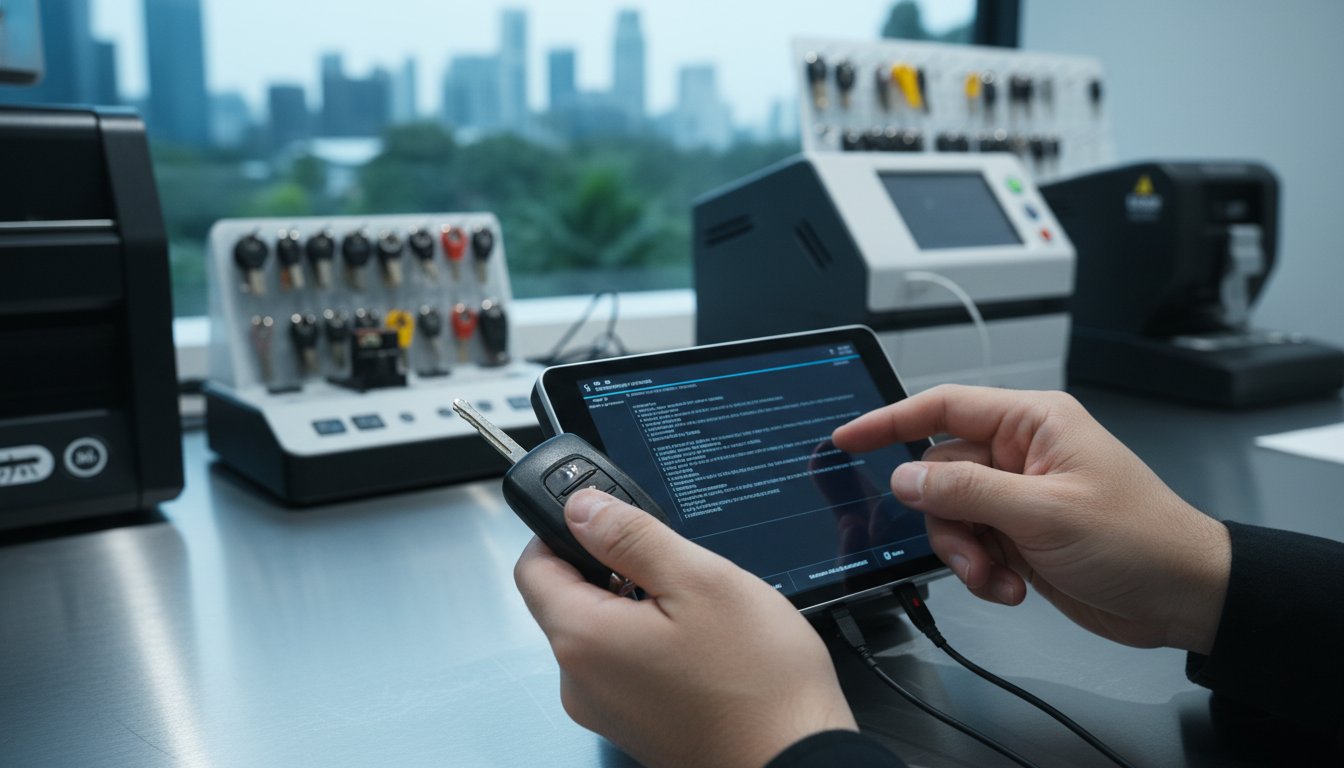


According to a 2026 HID report, approximately 90% of access systems using 125kHz or 13.56MHz technology remain compatible with professional duplication services. Even so, many residents still face exorbitant management fees and long waiting times for a simple spare fob. It’s frustrating when strict “no duplication” policies ignore your practical daily needs. Learning how to convince condo management to allow card duplication requires moving the conversation away from simple convenience and toward a framework of verified security and technical compatibility.
This guide provides a professional roadmap for navigating these restrictions by understanding the underlying technology of your access system. You’ll learn how to present a verification-first case to the MCST, highlighting why professional duplication is a secure and efficient alternative. We’ll explore the importance of technical assessments for encrypted systems and how to obtain a spare card without breaching your condo bylaws. By following this logical approach, you can bridge the gap between building security and your personal access requirements.
Key Takeaways
- Understand why management committees prioritize estate security and how to address their concerns regarding access card liability professionally.
- Learn how to convince condo management to allow card duplication by aligning your request with building bylaws and presenting a case for verified security.
- Identify the technical differences between standard RFID and encrypted Mifare systems to understand the duplication feasibility for your specific card.
- Recognize the operational risks of using unregulated cloning services and why professional-grade hardware is essential for maintaining system stability.
- Discover why a technical assessment is required to verify compatibility and ensure the integrity of your building’s access control system before proceeding.
Understanding the Security Concerns of Condo Management and MCSTs
The Management Corporation Strata Title (MCST) operates under a strict mandate to preserve the safety and privacy of all residents. When you consider how to convince condo management to allow card duplication, you must first acknowledge that their resistance isn’t personal. It’s structural. Management views every access point as a potential vulnerability. They rely on access control systems to manage who enters common areas like gyms, pools, and lift lobbies. An unauthorized card represents a gap in their oversight. If an incident occurs, the management’s primary liability is the failure to maintain a secure perimeter. This is why they prefer a closed loop where they are the sole providers of access media.
Beyond physical entry, auditing is a major concern. Modern systems log every interaction. Management uses these logs to investigate disputes or security incidents. There’s a persistent fear that third-party cards might use non-standard RFID frequencies that could potentially interfere with reader hardware or corrupt the database. While professional RFID access card cloning uses high-quality chips, management often lacks the technical background to distinguish between a professional service and a low-grade copy. They see any card not issued by their office as an untraceable liability.
The Liability Framework in Singapore Condos
In Singapore, the Building Maintenance and Strata Management Act (BMSMA) provides the legal backbone for condo bylaws. These rules often grant the MCST exclusive rights to issue and control access cards. If a security breach happens because of a duplicated card, the legal fallout for the management can be severe. They prioritize centralized control to minimize these risks. Understanding this framework helps you frame your request not as a demand for convenience, but as a request for a verified, secure solution that respects their duty of care.
Common Misconceptions Management Holds
Management often holds several technical misconceptions. Many believe all duplicated cards are inherently less secure or “hackable.” They assume that third-party providers bypass necessary encryption layers, such as those found in MIFARE DESFire systems. Another common fear is that a duplicate will bypass the system’s logging capabilities. In reality, a precise clone behaves exactly like the original. However, addressing these fears with facts is key to a successful negotiation. It’s about showing that professional standards match their own security requirements. For an accurate assessment of your card’s technology, you should contact Soxxi Master to confirm compatibility before approaching your MCST.
The Technical Reality of Modern Access Card Security
Understanding the technical architecture of your entry system is a vital step when learning how to convince condo management to allow card duplication. Most Singapore condominiums utilize either Radio Frequency Identification (RFID) or MIFARE technology. While these credentials might look identical on the outside, the internal logic differs significantly. A simple “clone” often refers to copying a basic serial number, but a professional duplication involves replicating the specific data structure required for the reader to authenticate the card. High-quality duplication ensures the card interacts with the system exactly as the original intended, maintaining the audit trail that management relies on for security.
Low Frequency vs. High Frequency Systems
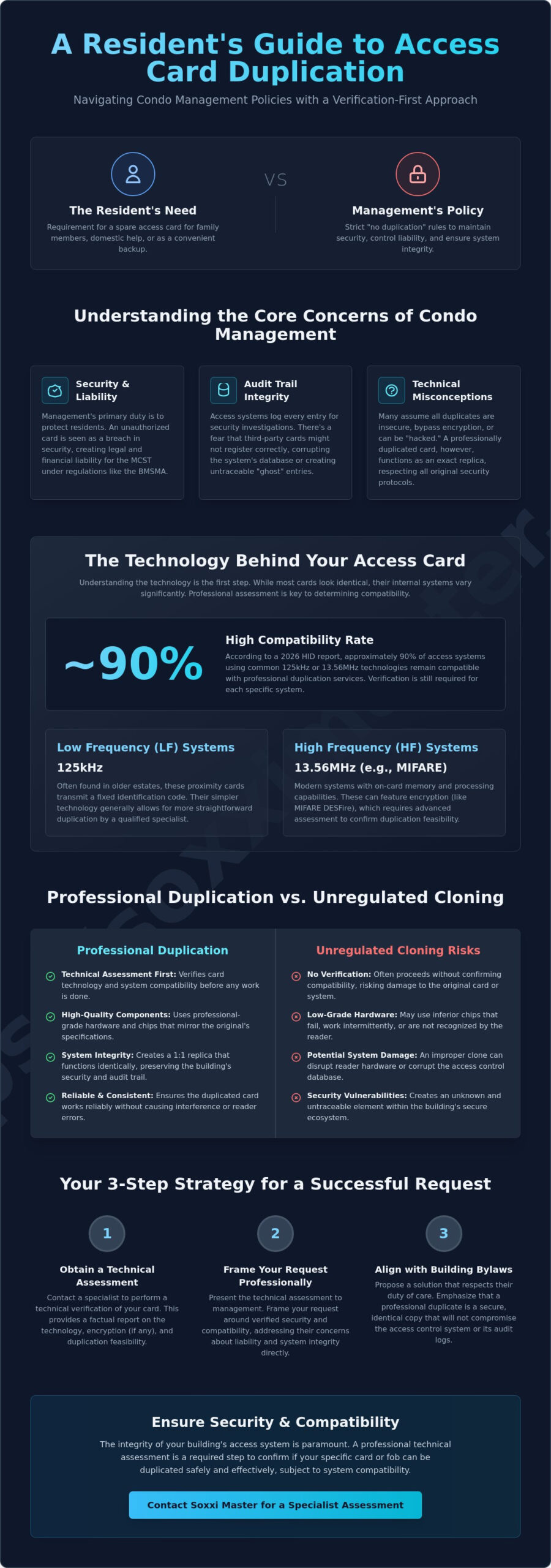
Older estates often use 125kHz Low Frequency (LF) systems. These are basic proximity cards that transmit a fixed code. Modern developments have moved toward 13.56MHz High Frequency (HF) systems, commonly known as MIFARE. These cards are essentially mini-computers with their own memory and processing power. The system identifies each card through a Unique Identifier (UID). Professional equipment is necessary to read these frequencies accurately. Without it, signal integrity is lost; the card might work intermittently or fail to log entry correctly. This technical precision is what separates a specialized service from a generic copy.
Encryption and Data Integrity
Security is maintained through encryption layers, particularly in advanced systems like MIFARE DESFire. These cards use secure sectors to protect data from unauthorized access. When you seek a professional access card duplication, the goal is to match the exact Integrated Circuit (IC) type. This ensures the reader recognizes the card as a legitimate credential rather than a foreign object. Compatibility is never assumed; it must be verified against the specific system requirements of your building.
Many management concerns stem from the well-documented vulnerabilities of RFID cards when handled by unregulated tools or low-grade hardware. Using the wrong chip type can cause “card collisions” where the reader becomes confused by multiple signals. Professional duplication avoids this by using stable, high-grade chips that mirror the original’s electrical characteristics. This stability is a strong point to raise with your MCST. It demonstrates that your request isn’t just about getting a spare; it’s about maintaining the technical health of the building’s infrastructure. If you’re unsure which system your condo uses, you can contact our specialists for a technical verification and assessment of your specific card.
Effective Strategies to Request Additional Access Cards
Navigating the administrative hurdles of an MCST requires a shift in strategy. Instead of viewing the management office as an obstacle, treat the interaction as a professional negotiation. Start by reviewing your Tenancy Agreement or the specific condo bylaws that govern access media. Many residents assume that a “no duplication” policy is absolute. However, condo association policies on key FOBs often allow for exceptions when a clear necessity is demonstrated. Whether you need a spare for an elderly family member, a domestic helper, or simply an emergency backup, documenting these needs is the first step in how to convince condo management to allow card duplication.
Preparation is key to a successful request. Before approaching the office, prepare a formal letter or email that outlines your specific requirements. Focus on accountability. State clearly who will hold the card and for what purpose. This removes the fear of untraceable users that many management teams harbor. If you can show that you’re willing to take full responsibility for the additional card, you move the conversation from a policy violation to a managed security exception. This professional approach distinguishes you from residents who might try to bypass the system entirely.
Framing the Argument: Safety and Necessity
Safety is a powerful motivator for any management committee. If you have elderly family members residing with you, frame your request around “Emergency Access.” Explain that a spare card ensures they can be reached quickly in a medical crisis. You can also use the “Wear and Tear” argument. Constant use degrades the internal antenna of a card over time. By using a professionally made duplicate for daily tasks, you preserve the original issued by the office. This demonstrates foresight and a desire to protect building-issued property. It also highlights the reliability of professional services without relying on management’s often lengthy administrative cycles.
Transparency as a Negotiation Tool
Management fears the unknown. You can alleviate this by offering complete transparency. Propose a “Verification First” approach where you bring the card to the security office for registration. Offer to provide the serial number generated during the RFID access card cloning process so they can update their database. This ensures that even a duplicate remains within their tracking system. Suggesting a trial period also shows you’re confident that the technology won’t interfere with their readers. This level of accountability is often enough to secure a formal waiver. For a professional assessment of your specific card type and its compatibility with these strategies, you can contact Soxxi Master for expert guidance.
Professional Duplication vs. Unregulated Cloning Risks
Residents researching how to convince condo management to allow card duplication often encounter entry-level cloning devices sold on e-commerce platforms. While these gadgets claim to copy any card, they frequently use unstable chips that lack proper voltage regulation. Using unverified hardware carries a significant risk of “bricking” your original card. This happens when the cloner sends an incompatible signal that permanently corrupts the card’s internal data. A professional specialist helps mitigate these risks by performing a thorough technical assessment before any work begins. They verify the internal data structures and chip logic to confirm the process is safe for your original media.
The Specialist Advantage
Expert key duplication services utilize specialized equipment designed to handle various encryption layers. Unlike generic cloners, precision tools can verify the exact frequency and modulation required for your specific condo system. This technical accuracy helps the duplicate operate seamlessly with existing readers. Specialists also prioritize the physical durability of the access media. Professional-grade fobs use high-quality antennas and robust casings, which can help ensure the duplicate remains functional under daily wear and tear. Testing the duplicate against the original frequency is a standard part of the professional process, ensuring the signal strength is optimal for your system.
Avoiding System Conflicts
Improperly duplicated cards often cause “card read errors” at gate readers or lift lobbies. These errors occur when the reader detects a signal that doesn’t match its expected digital signature. In some cases, a poor-quality clone can cause signal interference that affects the reader’s performance for other users. Professional providers follow established key fabrication standards to help ensure every duplicate is a functional match. Maintaining this level of technical integrity is vital for estate security. It provides a strong argument when speaking to your MCST, as it shows you’re committed to using solutions that won’t disrupt the building’s hardware. For a reliable assessment of your card’s technology, submit an inquiry to Soxxi Master to verify compatibility and confirm a stable duplication process.
Navigating the Process with Soxxi Master’s Specialist Services
Soxxi Master operates with a focus on technical precision and estate security. We understand that residents require reliable access solutions that respect building infrastructure. When you are researching how to convince condo management to allow card duplication, having a professional assessment from a specialist is an essential resource. We provide the technical clarity needed to show your MCST that a duplicate is a stable, high-quality credential, subject to system compatibility. Our approach prioritizes accuracy, ensuring residents can demonstrate that the duplication process maintains the integrity of the original system.
Our expertise covers various formats beyond standard cards, including key fobs and gate remote duplication. By utilizing specialized diagnostic tools, we identify the specific chip logic and frequency used by your system. This level of detail is vital for maintaining the audit trail required by management. We aim to match the physical and electronic characteristics of the new media to the original, which helps alleviate common concerns regarding reader interference or hardware corruption. This methodical verification helps bridge the gap between resident convenience and management security requirements.
Our Professional Verification Protocol
Our verification process follows a structured sequence to ensure technical accuracy. First, we analyze the Integrated Circuit (IC) and the operating frequency of your existing card to determine duplication feasibility. Next, we evaluate encryption levels, which is always subject to compatibility with the specific reader’s security layers. Finally, we perform a precision replication designed to mirror original performance, depending on the specific model and system requirements. This protocol ensures that compatibility is never assumed but is verified at every stage.
Next Steps for Your Condo Access
Securing a spare card requires a methodical check of your building’s current technology. If you are learning how to convince condo management to allow card duplication, start by gathering verified data about your access media. Our team is available to perform a technical check to see if your specific system is supported. Final confirmation depends on specific system details and the physical presence of the original media for assessment. Contact Soxxi Master for a professional assessment to verify your access card needs and confirm the best path forward for your specific system.
Secure Your Condo Access Professionally
Navigating MCST policies requires a balance of technical knowledge and transparent communication. By focusing on accountability and the high standards of professional duplication, you can address management’s security concerns directly. It’s about proving that a verified duplicate maintains system integrity rather than compromising it. Understanding the underlying technology ensures you don’t fall victim to the risks of unverified cloning hardware that can corrupt your original access media.
Learning how to convince condo management to allow card duplication becomes much simpler when you lead with a verification-first approach. As Singapore’s pioneer in automotive and access key solutions, Soxxi Master provides the expertise in high-security RFID and Mifare encryption needed for such precision tasks. We prioritize precision verification to ensure system compatibility, though final results always depend on your specific system details. Our goal is to provide a secure, reliable solution that respects your building’s bylaws while meeting your practical needs.
Get a Professional Access Card Assessment Today
Taking the right steps now ensures you have the access you need without compromising your estate’s security standards. We’re here to help you navigate the technical side of your condo access requirements with confidence and expert support.
Frequently Asked Questions
Is it illegal to duplicate my condo access card in Singapore?
Duplicating an access card isn’t a criminal offense in Singapore, but it’s usually a breach of your condominium’s internal bylaws. These rules exist to help the MCST maintain estate security and control access to common areas. Before you seek a duplicate, it’s advisable to check your tenancy agreement or the specific regulations set by your management office regarding additional access media.
Can management find out if I am using a duplicated card?
Standard card readers generally can’t distinguish between an original card and a high-quality professional duplicate. However, advanced systems that utilize rolling codes or specific encrypted sectors might flag anomalies. Management can also identify unusual usage patterns during regular system audits, which might lead to the deactivation of both the original and the duplicate card depending on the system’s capabilities.
Will a third-party card damage the condo’s card reader?
Professionally duplicated cards use the same passive RFID technology as originals and won’t cause physical damage to the readers. The risk of reader interference or “card read errors” typically comes from low-grade chips found in unregulated DIY cloners. Professional specialists ensure the duplicate matches the original’s frequency and electrical characteristics, maintaining the stability of the building’s reader hardware.
What should I do if my condo management refuses to issue more cards?
If management denies your request, the best approach for how to convince condo management to allow card duplication is to present a case based on necessity. Provide clear reasons, such as the need for emergency access for elderly family members or a domestic helper. By offering to have the duplicate verified and registered by the security office, you show a commitment to building safety rather than bypassing it.
How long does the professional duplication process take?
The time required for duplication varies by the complexity of the card’s technology. A standard RFID card can often be processed within a few minutes, while encrypted high-frequency cards may take longer for a full technical assessment. This efficient process is designed to minimize your waiting time while ensuring the highest level of accuracy and system compatibility for your specific card type.
Can all types of condo cards be duplicated?
Not every access credential can be duplicated. While many standard systems are supported, high-security proprietary systems or those using advanced encryption may restrict duplication. Final confirmation depends on a technical assessment of your specific card. This verification process ensures that any service provided remains compatible with your estate’s reader hardware and avoids potential system conflicts.
What is the difference between an RFID card and a Mifare card?
The primary difference lies in the operating frequency and data storage capabilities. Standard RFID usually refers to 125kHz low-frequency cards that transmit a simple ID number. MIFARE cards operate at 13.56MHz and feature internal memory and encryption layers. Because of their advanced security features, MIFARE cards require more sophisticated equipment for successful duplication and verification compared to basic low-frequency cards.
Do I need to bring my original card for the duplication process?
Yes, you must provide the original card so the specialist can read the specific data required for duplication. The process involves a precision scan of the existing credential to ensure the new card mirrors the original’s performance exactly. This physical verification is a critical part of ensuring that the duplicate will work reliably with your condo’s access control system without causing reader errors.