


Salt air can affect ordinary metal locks exposed to marine conditions. For boats in Singapore, marine-grade padlocks and stainless steel hardware are options for outdoor fittings. Choose marine-grade padlocks for boats in Singapore based on their location and exposure, not the label alone.
It’s understandable to want a lock suited to a yacht or boat environment. But marine-grade doesn’t mean maintenance-free, and the lock’s materials and exposure matter. Marine-grade padlocks for boats in Singapore are most useful when their intended use matches the fitting and conditions.
This guide explains how salt air affects boat locks, what stainless steel hardware offers and what to consider when choosing a padlock for a boat or yacht. It also covers practical ways to keep exposed hardware serviceable.
Key Takeaways
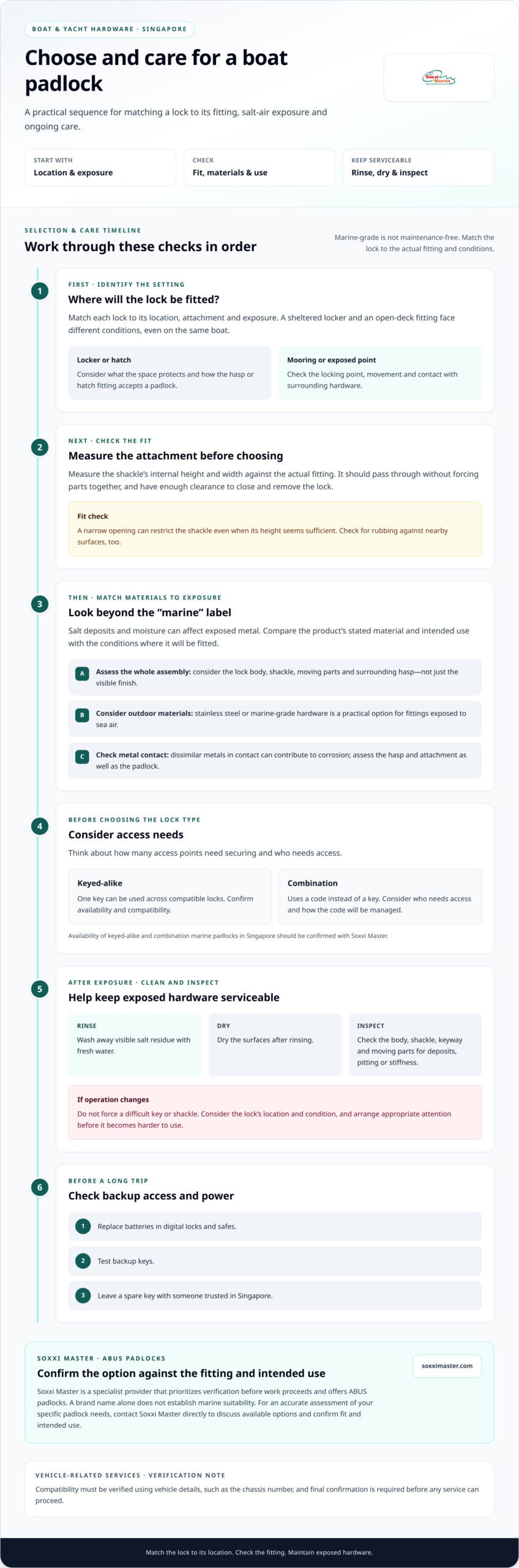
- Before a long trip, replace batteries in digital locks and safes, test backup keys, and leave a spare key with someone trusted in Singapore.
- Salt air can contribute to corrosion on exposed lock components, so consider the conditions around the boat when choosing and maintaining a padlock.
- For outdoor locks exposed to sea air, stainless steel or marine-grade hardware is recommended at Sentosa Cove.
- Soxxi Master offers ABUS padlocks. Contact Soxxi Master directly for an assessment of your needs and final confirmation before proceeding.
Locks and safes on yachts and boats
Boat security involves more than the cabin door. Match each lock to its location, fitting and exposure.
Locker, Hatch, and Mooring Uses
Boat lockers may hold tools or personal gear, while hatches protect access to enclosed spaces. Mooring equipment has different fittings and movement, so check the locking point and how a padlock will sit before choosing hardware. A safe also needs secure placement and accessible backup access. Before a long trip, boat owners in Singapore are advised to replace digital-lock and safe batteries, test backup keys, and leave a spare key with someone trusted.
Availability of keyed-alike and combination marine padlocks in Singapore should be confirmed with Soxxi Master. Keyed-alike locks use one key across compatible locks; combination models use a code instead of a key. Consider how many access points need securing and who needs access. ABUS padlocks in Singapore offer a relevant starting point for considering padlock options. For vehicle-related services, compatibility must be verified using vehicle details such as the chassis number, with final confirmation before work proceeds. Contact Soxxi Master for an assessment.
Shackle Size and Clearance
Choose a shackle that passes through the locker hasp, hatch fitting or mooring attachment without forcing the parts together. Measure the shackle’s internal height and width against the fitting, and leave enough clearance to close and remove the lock. A narrow opening can restrict the shackle even if its height seems sufficient. Measure the actual fitting before choosing a padlock.
These are lockout figures, not a quote for supplying or fitting boat hardware. Sea-air exposure also makes the material and placement of outdoor locks important.
Salt-air corrosion of marine locks and padlocks
Salt deposits and moisture can affect exposed metal, so material choice matters for boat hardware. Choose marine-grade padlocks for boats in Singapore to suit the lock’s location and stated intended use. Consider the body, shackle and moving parts, not just the visible finish. Stainless steel or marine-grade hardware is a practical option for outdoor fittings exposed to sea air.
Security, weather resistance and value are separate considerations. Security depends on the lock’s construction and how it fits the hasp. Weather resistance depends on the materials and exposure, while value comes from matching those qualities to the job. A sheltered locker and an open-deck fitting face different conditions, even on the same boat.
For saltwater exposure, compare the manufacturer’s stated material and intended use rather than relying on a “marine” label alone. Marine-grade padlocks for boats in Singapore should also fit the existing attachment. Check the shackle and body against the fitting before selecting a lock.
After exposure, wipe away visible salt residue and inspect the body, shackle and keyway for buildup or restricted movement. If the key becomes difficult to turn, don’t force it, as this can make access harder. Consider the lock’s location and condition when deciding whether it needs attention.
For outdoor use, consider ABUS padlock options alongside the fitting and exposure conditions.
Stainless steel and marine-grade outdoor hardware
For outdoor locks exposed to sea air in Singapore, stainless steel or marine-grade hardware is a practical option. This matters for lockers, deck fittings and other exposed points, where salt deposits and moisture can affect metal over time. Consider the lock body, shackle and surrounding hasp together, not just the padlock.
Stainless steel is a practical material for exposed marine hardware, but the label alone doesn’t determine whether a lock is suitable. Check the product’s stated intended use and whether its dimensions fit the attachment. A sheltered locker and an exposed hatch face different conditions, even on the same boat. Choose hardware to suit its actual location.
Check how the padlock meets the boat’s existing fittings. Dissimilar metals in contact can contribute to corrosion, so assess the hasp and attachment as well as the lock. Make sure the shackle closes without rubbing against nearby surfaces. A poor fit can make the hardware awkward to operate and wear the contact points.
Inspect exposed hardware during routine boat checks. Rinse away visible salt residue with fresh water, dry the surfaces, and check for deposits, pitting or stiffness. Pay attention to the keyway and moving parts. If operation changes, don’t force the key or shackle. Arrange appropriate attention before the lock becomes difficult to use.
Consider padlock options for outdoor use.
For saltwater exposure, consider stainless steel or marine-grade hardware. Check the product’s stated intended use and the conditions where it will be fitted.
Soxxi Master: ABUS padLocks
Soxxi Master is a specialist provider that prioritizes verification before work proceeds. It offers ABUS padlocks for readers considering a padlock for boat lockers or outdoor fittings. Choose based on the fitting, shackle clearance, exposure and the lock’s stated intended use. A padlock’s brand alone doesn’t establish marine suitability, so match its specifications to where it will be used.
For vehicle key services, Soxxi Master verifies compatibility using vehicle details, such as the chassis number. Final confirmation is required before any service can proceed.
If you’re considering an ABUS padlock for a boat, contact Soxxi Master to discuss your needs.
Plan Your Next Locking Decision
Before choosing marine-grade padlocks for boats in Singapore, consider how each lock will be used over time. A frequently opened locker may call for a different practical choice from a fitting accessed only occasionally. Keep the location and access needs in mind, then choose hardware suited to the fitting and exposure.
Soxxi Master also provides Car & Motorcycle Key Duplication, RFID Access Card Cloning and an All Keys Lost Solution. For vehicle-key services, compatibility must be verified using vehicle details, such as the chassis number, and final confirmation is required before work proceeds. This verification-first step helps ensure the request is assessed against the relevant vehicle details.
Frequently Asked Questions
What makes a padlock marine grade and corrosion resistant for boat use?
A marine-suitable padlock has materials and construction intended for exposure to moisture and salt. Consider internal components as well as the visible body: a corrosion-resistant exterior alone doesn’t show how well the keyway or moving parts will hold up. For a locker near the waterline, review the manufacturer’s stated use and care guidance before choosing a lock.
How should I maintain a boat padlock to prevent corrosion and jamming?
Follow the padlock maker’s care instructions and use only products recommended for that lock. Keep the key clean, and don’t insert it with sand or grit on it, as debris can interfere with the mechanism. If the lock still operates roughly after cleaning, don’t force it or use an unapproved lubricant. Arrange attention before it becomes difficult to use.
What are the risks of using ordinary padlocks on boats in Singapore’s humid, salty climate?
An ordinary padlock may not be designed for repeated exposure to salt spray and damp air. It can become harder to operate, leaving a locker or hatch inaccessible when needed. If a boat is stored near the coast, check that the lock’s stated use matches its location. A marine-suitable choice helps match the hardware to the exposure.
Which marine padlock materials are best for saltwater: stainless steel, brass, or coated alloys?
For outdoor locks exposed to sea air, consider stainless steel or marine-grade hardware. Check the product’s stated intended use and the conditions where it will be fitted.
Which marine grade padlock brands and models are available in Singapore?
Soxxi Master offers ABUS padlocks, but no specific models are listed. Match the padlock’s specifications to the fitting and exposure.