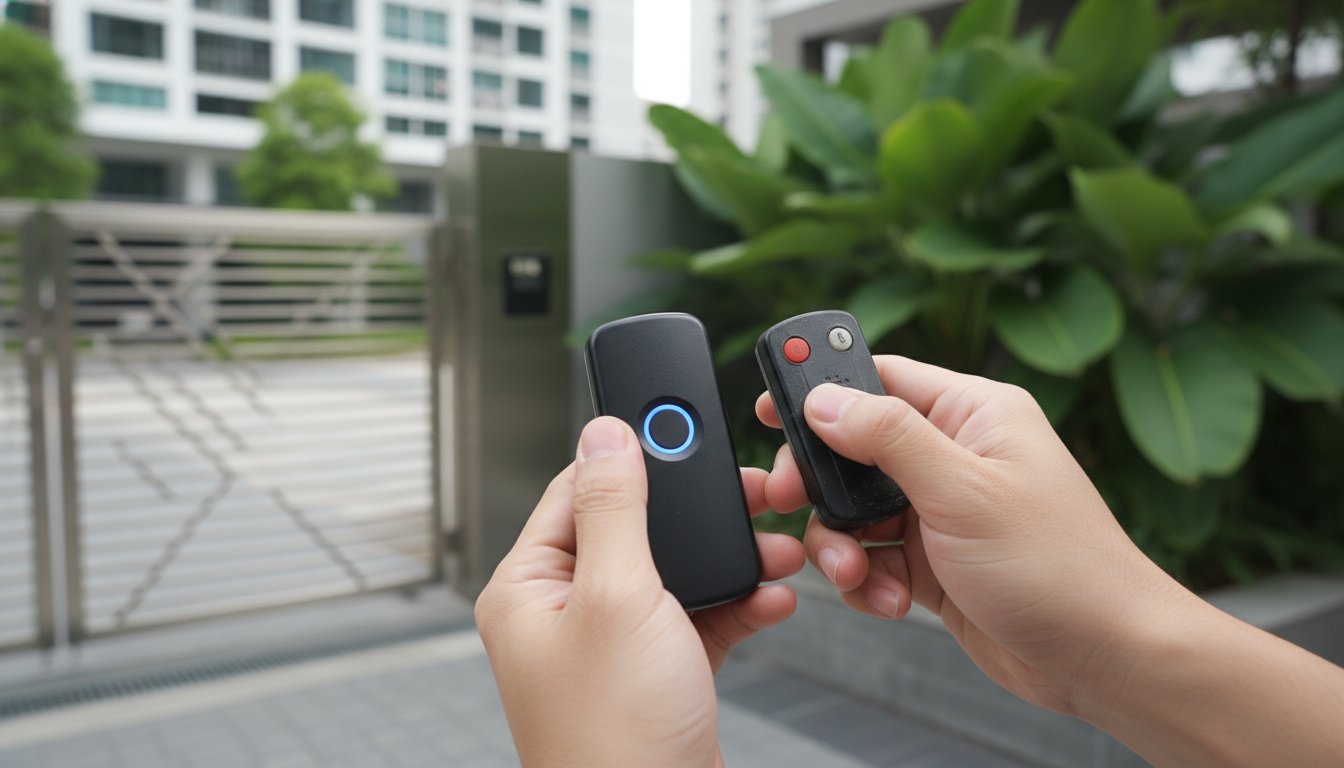


A “do not duplicate” stamp is a request, not a law, and it does not by itself prevent an ordinary key from being copied. If you’re concerned about what happens when a copied key is blacklisted, the marking alone does not make it unusable.
It’s understandable to worry that the stamp means a replacement is impossible. In practice, the key’s design and the rules for its specific system matter more than the wording stamped on it.
This guide explains why keys are marked “do not duplicate,” how restricted key systems differ from ordinary keys, and what replacement options may be available in Singapore. It also explains when an access card or vehicle key needs a different kind of duplication service.
Key Takeaways
- A “do not duplicate” stamp is a request; the key’s design and the rules of its key system determine what replacement options are available.
- For electronic vehicle keys, a blacklist may affect whether the vehicle recognizes the key, while a physical key blade is a separate part of the access process.
- To narrow down the cause, consider whether the key is mechanical or electronic and whether the original lock or vehicle still accepts another working key.
- For vehicle-key duplication, compatibility must be verified using vehicle details such as the chassis number, and final confirmation is required before service proceeds.
Why would a copied key be blacklisted?
A “do not duplicate” marking usually communicates the owner’s request to limit copies. It does not disable a mechanical key. An ordinary key may still operate its lock even when the stamp discourages copying. The marking signals an intention to control copies; it is not a technical blacklist recorded inside the key.
More structured controls can apply to restricted key systems. Their keys may have two rows of cuts, surface dimples, or distinctive side millings. Some designs require special equipment. These features make the key identifiable and can limit who is able to order or produce copies. Registered master key systems are often used on business properties.
In such systems, an organisation may designate specific people to request additional keys. A locksmith may accept cutting orders only in writing from those authorised people. This process helps the organisation manage who receives copies. It differs from simply stamping an ordinary key “do not duplicate.”
Some apartment complexes managed by a body corporate also require replacement or duplicate key requests to go through the body corporate. This gives the property manager a role in controlling distribution. However, once a duplicate exists, it may be possible to make further copies from it. The controls therefore depend on the key design and the property’s ordering process, not just the words stamped on the key.
Can a blacklisted copied key still unlock the original lock?
For a standard mechanical lock, a blacklist does not change the metal key’s cuts. If the copied key matches the lock and the lock has not been changed, it can still turn the cylinder. A “do not duplicate” stamp, or a refusal to make another copy, does not automatically disable a key that has already been cut.
Electronic access works differently. A building access card can be denied by a reader after its credential is deactivated, even though the card looks unchanged. In this case, the blacklist affects electronic access, not a separate mechanical key that operates the same door. The property’s access system determines which credentials remain accepted.
Vehicle keys can also combine separate functions. If a key has a metal blade and an electronic component, the blade may operate a compatible lock while the vehicle rejects the electronic credential. A key that turns a door lock does not prove that the vehicle will start. The key’s design and the vehicle system determine how those functions interact.
To understand what has happened, identify what “blacklisted” refers to: a physical key, an access credential, or an electronic vehicle key. Then compare the result at the original lock or reader with another authorised key or credential, if available. For example, if a copied access card fails but an authorised card opens the same reader-controlled door, the issue may be that card’s access status. A mechanical key that will not turn points to a different problem than a reader rejecting a card.
Duplicating a registered design key that is still patent-protected is illegal unless authorised. That restriction concerns making a duplicate; it does not establish whether an existing key will turn the original lock. Locks less than five years old are likely still under warranty and may be replaced free of charge if the keys are lost or stolen.
How can I check whether a copied key has been blacklisted?
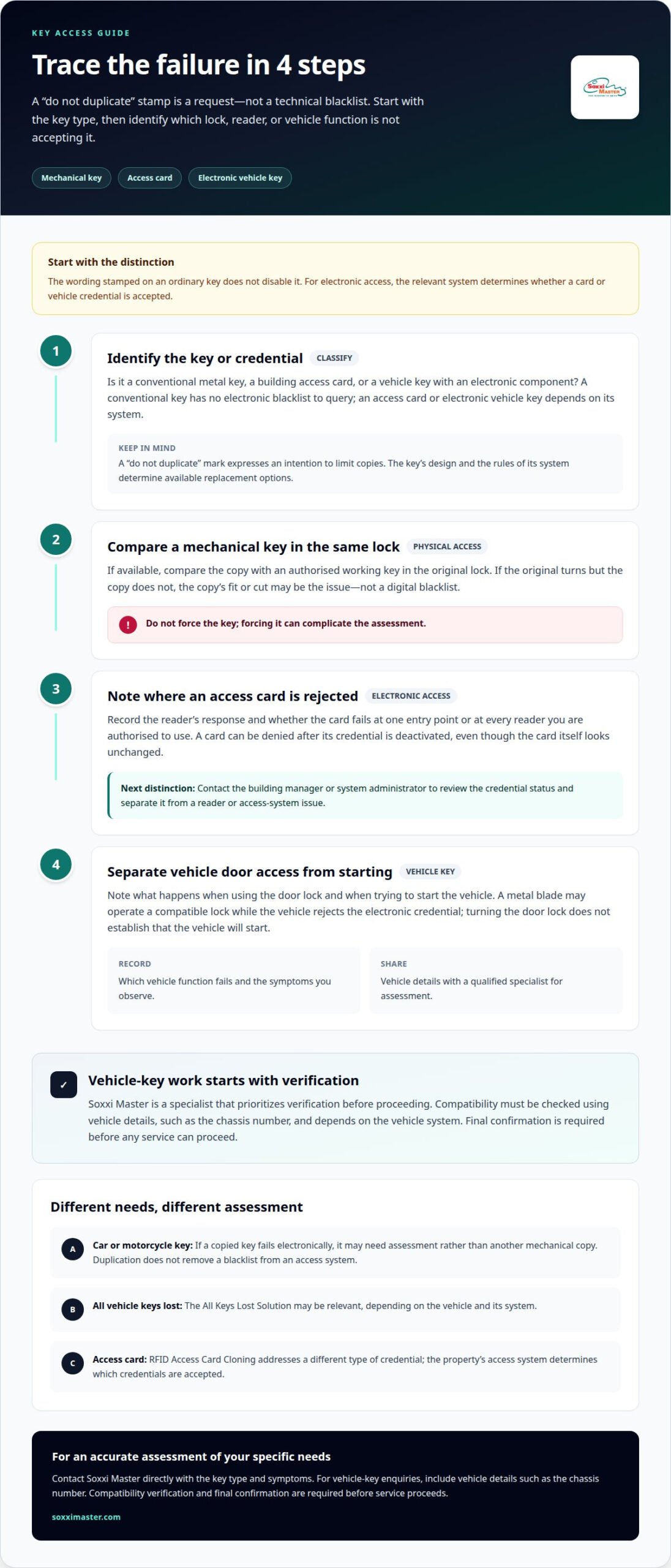
If you’re wondering what happens if the copied key gets blacklisted, first identify whether it’s a metal key or an electronic credential. A conventional key has no electronic blacklist to query, and its “do not duplicate” stamp does not show whether it has been disabled. For an access card or vehicle key, the relevant system controls electronic acceptance.
For a mechanical key, compare its operation with an authorised working key in the same lock. If the original turns but the copy does not, the problem may be the copy’s fit or cut rather than a digital blacklist. Don’t force the key, as that can complicate the assessment.
For an access card, note the reader’s response and contact the building manager or system administrator. They can review the credential’s status and distinguish it from a reader or access-system issue. For example, note whether the card fails at one entry point or at every reader you’re authorised to use.
For a vehicle key, note what happens at the door and when you try to start the vehicle. A metal blade turning a door lock does not establish whether the electronic key is accepted. Share the vehicle details and symptoms with a qualified specialist. If you’re asking, “What if the copied key gets blacklisted?”, these observations can help clarify the issue.
- Identify whether the key is mechanical or electronic.
- Compare its operation with an authorised working key or credential.
- Record which lock, reader, or vehicle function fails.
- For managed access, ask the system administrator to review the credential.
Soxxi Master: Car & Motorcycle Key Duplication
Soxxi Master duplicates car and motorcycle keys for drivers who need a replacement or spare. If a copied key fails electronically, it may need assessment rather than another mechanical copy. Duplication does not remove a blacklist from an access system.
For vehicle-key enquiries, compatibility must be verified using vehicle details, such as the chassis number. Final confirmation is required before any service can proceed. This verification helps establish whether the key is compatible with the vehicle, depending on its system.
If all vehicle keys are lost, the All Keys Lost Solution may be relevant. For an access card issue, RFID Access Card Cloning addresses a different type of credential. Contact Soxxi Master directly with the key type and the symptoms for an accurate assessment and final confirmation of your needs.
Choose a clear next step for your access needs
If you’re deciding what to do when a copied key gets blacklisted, first focus on the access you need to restore. A replacement is only one possible next step. The key type and access system involved help determine what action makes sense.
You can also review how spare keys and credentials are managed. Keep track of which copies are in use and who they’re intended for. A clear record can make future replacements easier to organise and help you decide whether access should be restored or restricted.
For an accurate assessment of your specific needs, contact Soxxi Master directly. Final confirmation is required before any service can proceed.
A considered next step can help you move forward with greater clarity.
Frequently Asked Questions
What are the security and legal risks of using a copied key without permission in Singapore?
A “do not duplicate” stamp alone is a request; it does not establish that copying an ordinary key is illegal. Using a key to enter a place without permission is a separate security concern. For a registered key system, follow its authorisation process rather than treating a stamped key as unrestricted. The legal position depends on the circumstances and applicable rules, so do not assume the stamp alone settles it.
Can a blacklisted car key still start the vehicle, and how can it be reprogrammed?
A vehicle may reject a blacklisted key’s electronic credential even if its metal blade still turns a door lock.