

A strong U-lock can make a bicycle harder to steal, but no lock eliminates the risk. Choosing the best anti-theft bike lock in Singapore starts with matching its security to where you park and securing both the frame and wheels to a sturdy object.
Think about the places where you park, not just the lock itself. This guide explains what to look for in a U-lock, how to reduce common theft opportunities when locking up, and how bicycle registration may help identify a bike if it is stolen. It also covers additional security measures that can complement a lock, helping you choose a practical setup for cycling in Singapore.
Key Takeaways
- Choose a U-lock suited to the risk of your parking location, and make the lock-up itself part of your security plan.
- Secure the bicycle’s frame and wheels to a sturdy object, and position the lock to limit access for cutting tools.
- Bicycle registration may help with tracking after a theft; consider how it fits alongside other security measures.
- Soxxi Master offers ABUS bicycle locks for cyclists considering a U-lock option for everyday security needs.
1. High-security U-locks for high-risk areas
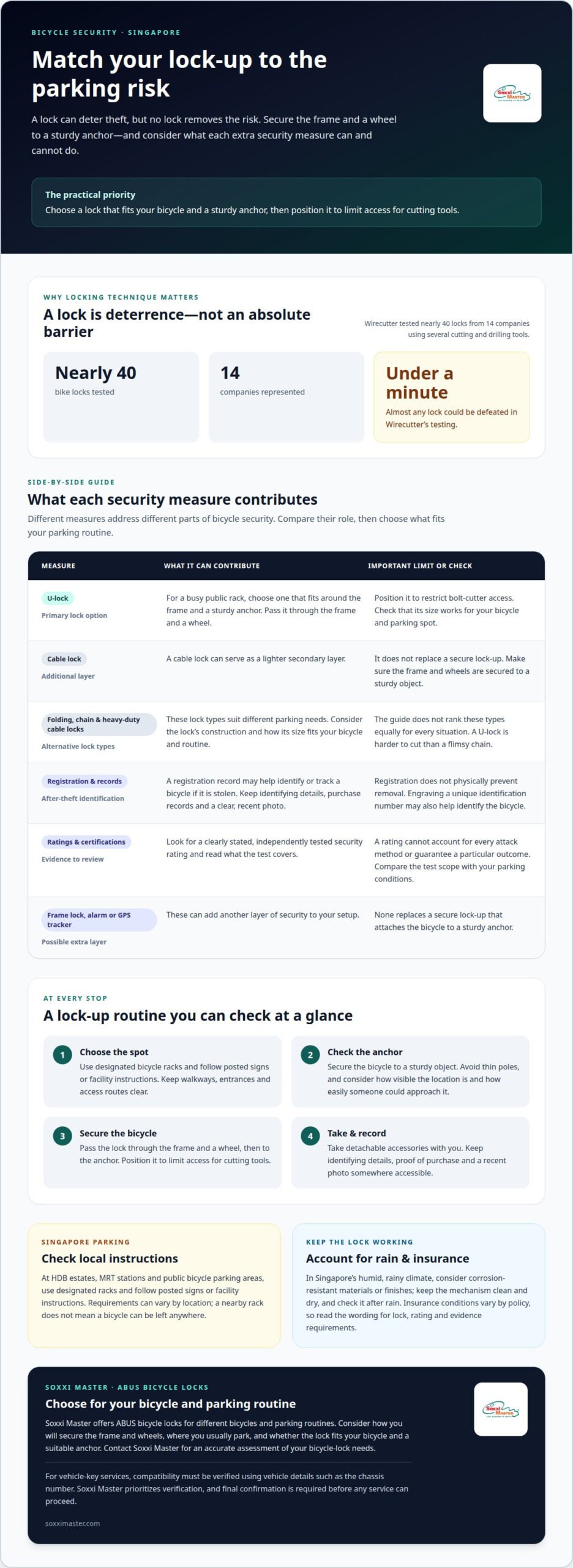
The best anti-theft bike lock in Singapore depends on where you park and how you secure your bicycle. For a busy public rack, choose a high-security U-lock that fits both the frame and a sturdy anchor. Wirecutter tested nearly 40 bike locks from 14 companies using hacksaws, bolt cutters, cordless drills and angle grinders. Its testing found almost any bike lock could be defeated in under a minute, so treat a lock as deterrence, not an absolute barrier.
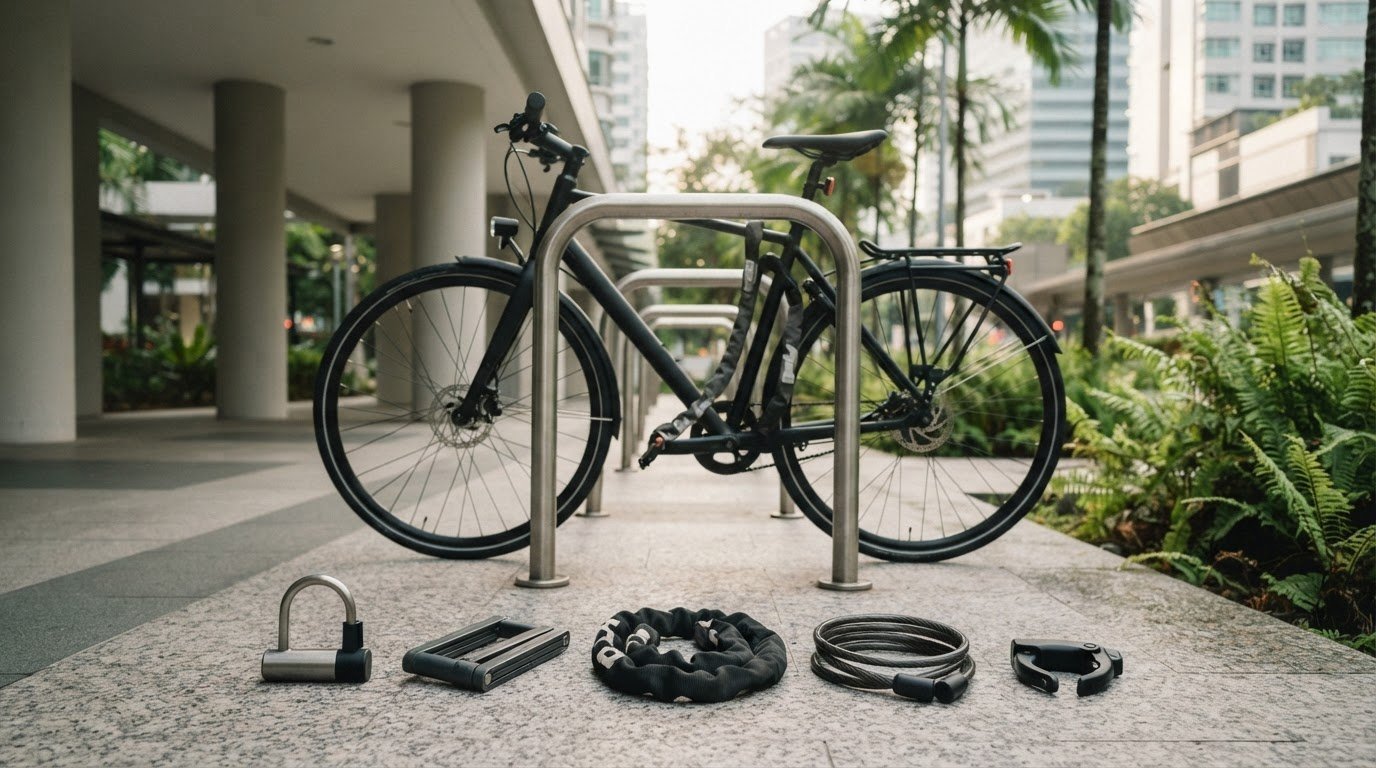
Choosing the best anti-theft bike lock in Singapore means weighing security against fit and portability. U-locks, folding locks, chain locks and heavy-duty cable locks suit different parking needs. A U-lock is harder to cut than a flimsy chain, while a cable lock can serve as a lighter secondary layer. An “angle-grinder-resistant” label describes resistance, not immunity. Check how the lock’s construction and size suit your bicycle and parking routine. Singapore bicycle-lock options provide local selection context.
At a public rack, pass the lock through the frame and a wheel, then secure both to the anchor. Position the lock to restrict bolt-cutter access, and avoid thin poles. Choose a well-lit, busy parking area where possible. A frame lock, alarm or GPS tracker can add another layer of security, but none replaces a secure lock-up. In Singapore’s humid, rainy climate, consider corrosion-resistant materials or finishes, and keep the mechanism clean and dry. Check that it works properly after rain. If the lock cannot reach both the bicycle and anchor, a wheel or the frame may remain unsecured.
2. Anti-theft protection and registration requirements
Registration and good locking habits address different security risks. A bicycle registration record may help identify or track a bike if it is stolen, but it does not physically prevent removal. Keep identifying details and a clear photograph with your ownership records. Engraving a unique identification number may also help deter theft and make the bicycle easier to identify.
When comparing lock ratings or certifications, look for a clearly stated, independently tested security rating and read what the test covers. A rating cannot account for every attack method or guarantee a particular outcome. Compare the test’s scope with your parking conditions, then secure the frame and wheels to a sturdy object. Avoid thin poles and position the lock to limit bolt-cutter access.
At HDB estates, MRT stations and public bicycle parking areas, use designated bicycle racks and follow posted signs or facility instructions. Keep walkways, entrances and access routes clear. Requirements can vary by location, so the presence of a rack does not mean you can leave a bicycle anywhere nearby.
Bicycle insurance conditions vary by policy. Some policies specify acceptable locks, security ratings or evidence required after a theft. Read the policy wording before relying on cover, and keep proof of purchase, registration details and photographs somewhere accessible. Registration may help with identification and tracking, but it does not replace insurance conditions or careful parking.
Before leaving your bicycle, check that the lock secures the frame and wheels, the anchor is sturdy, and bicycle parking is permitted there. Keep the key or combination accessible, and store the lock’s identifying details with your bicycle documents.
3. Bicycle theft concerns in Singapore
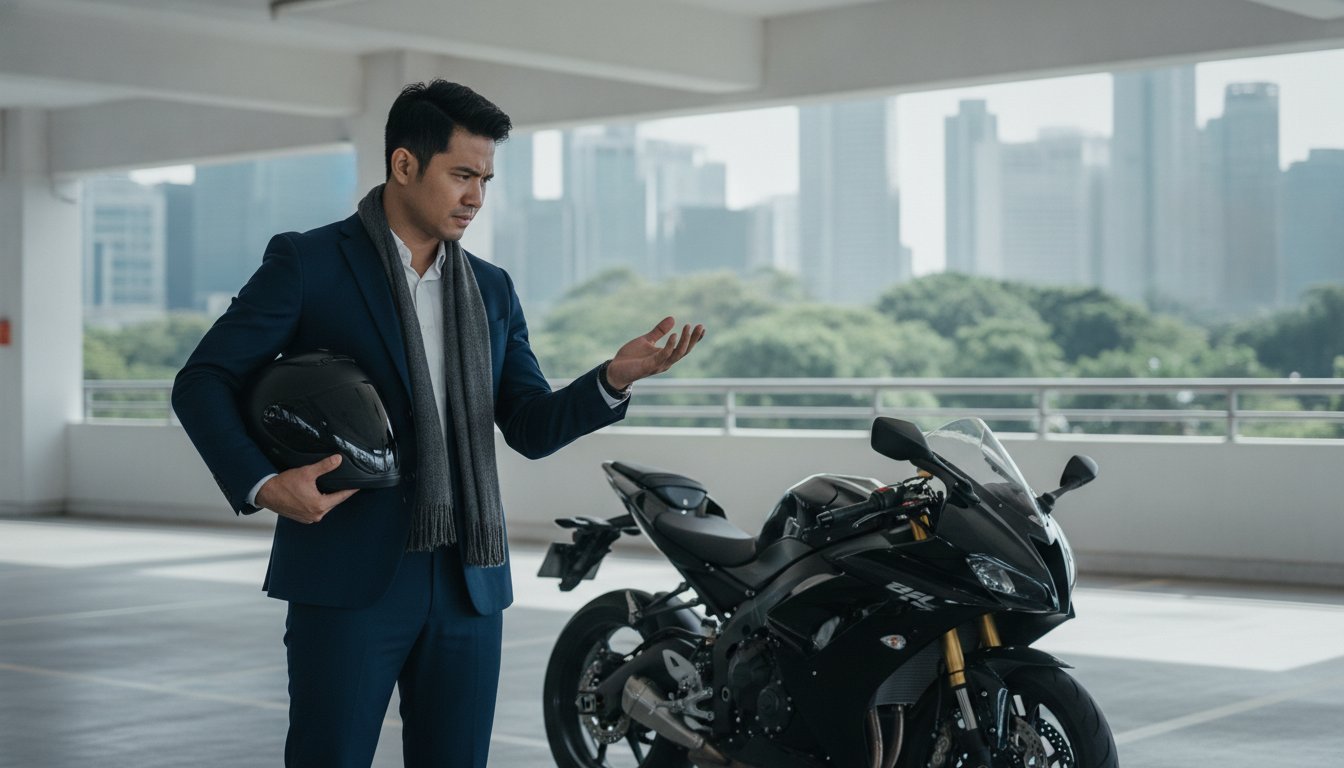
In Singapore, theft risk depends on exposure, access and how you use your bicycle. A commuter leaving a bicycle unattended during regular stops faces different risks from someone storing it at home. Consider the whole journey, including short errands, sheltered walkways and shared parking spaces. A secure routine accounts for every place the bicycle is left, not only its main parking spot.
Accessibility matters as much as activity nearby. A bicycle at the edge of a rack may be easier to approach than one among other bicycles. Before leaving it, consider how visible the spot is and whether someone could linger there unnoticed. A quiet corner behind a building, for example, presents different risks from a visible area near a staffed entrance.
Your bicycle and its accessories also affect your security routine. A model with removable lights, a computer or other accessories leaves you with more items to manage than a basic setup. Take detachable equipment with you, and keep a recent photo showing the bicycle’s colour, distinctive features and accessories. These details can help you describe it accurately if it goes missing. Avoid posting real-time parking locations publicly while the bicycle is unattended.
Plan what to do before a theft occurs. Keep the bicycle’s identifying details, purchase records and a recent photo somewhere accessible. If it disappears, note its last known location and the time you last saw it, then report the loss through the appropriate channels. For Singapore cyclists, the practical approach is to assess each stop, remove items that do not need to stay on the bicycle, and keep clear records. A lock helps, while a consistent routine addresses risks a lock cannot.
Soxxi Master: ABUS bicycle locks
Soxxi Master offers ABUS bicycle locks to suit different bicycles and parking routines. When choosing, consider how you’ll secure the frame and wheels, where you usually park, and whether the lock’s size works with your bicycle and a suitable anchor. These practical checks can help narrow your options.
Explore ABUS bicycle lock options when you’re ready to consider a lock for regular use in Singapore. For vehicle-key services, Soxxi Master verifies compatibility using vehicle details such as the chassis number, and requires final confirmation before proceeding.
Contact Soxxi Master to discuss your bicycle-lock needs.
Make your next bicycle-security choice with confidence
Your parking routine may change with a new commute, workplace or regular stop. Reassess your security setup when it does, rather than assuming the same lock will suit every situation. The best anti-theft bike lock in Singapore is one that fits your bicycle, daily use and parking habits.
If you’re considering an ABUS bicycle lock, think about how and where you usually ride and park. Matching the lock to those habits can help you maintain a practical security routine over time.
When you’re ready, choose a bicycle lock that suits your regular rides and parking routine.
Frequently Asked Questions
How should I choose a bicycle lock for different needs in Singapore?
Soxxi Master offers ABUS bicycle locks in Singapore. Consider how often you’ll carry the lock, your parking conditions and the level of security you need. A compact commuting option and a heavier lock involve different trade-offs between portability and security. Contact Soxxi Master to discuss your requirements and get an assessment of suitable options.
How should I lock a bicycle securely to a rack in Singapore?
First, check that the rack is stable and intended for bicycle parking. Position the bicycle so the lock can reach the rack and the parts you want to secure, without blocking the path or neighbouring bicycles. Before leaving, gently tug the bicycle and confirm the lock is closed. Take any detachable accessories you’ll need during the day.
What are the risks of leaving a bicycle locked outdoors overnight in Singapore?
Overnight parking leaves a bicycle unattended for a long period, and no lock eliminates the possibility of theft. Rain and humidity can also affect exposed metal or the lock mechanism over time. If overnight parking is unavoidable, choose an approved, visible location and inspect the bicycle and lock before riding again.
Are there lightweight, portable high-security locks suitable for commuting and folding bikes?
Portable locks can suit commuters, but weight, carrying method and dimensions affect everyday convenience. For a folding bike, check that the lock can secure the folded frame to an appropriate anchor without catching on moving parts. A lighter design may involve security trade-offs, so match its intended use to your parking routine instead of choosing by weight alone.
What anti-theft bike locks are available in Singapore?
For busy public racks, choose a high-security U-lock that fits your bicycle and a sturdy anchor. Soxxi Master offers ABUS bicycle locks to suit different needs, so consider your parking routine when choosing.