
Why should securing a backup for your own home feel like an expensive administrative hurdle? Many residents in Singapore find that the fees charged by their MCST for a replacement can be quite high, leading them to seek a professional lift access card cloning service as a more efficient alternative. It’s a common frustration to worry about whether a duplicate will actually work or if it might fail after just a few days of use.
We understand that you want a functional spare without the technical jargon or the risk of incompatibility. This guide provides a specialist look at the security protocols and verification steps required in 2026 to ensure a successful clone. With the Singapore access control market having grown at a compound annual rate of 5.1 percent through 2026, systems have become more diverse and complex. You’ll learn about the technical differences between standard RFID and encrypted systems like HID iClass or MIFARE. We’ll explain why compatibility is never assumed and must be verified based on your specific card’s frequency and data structure. By the end, you’ll understand the professional assessment process required to provide a reliable duplicate, which is always subject to your building’s specific system requirements.
Key Takeaways
- Identify the technical requirements of low and high-frequency RFID systems to better understand the duplication process for your specific card model.
- Learn how a professional lift access card cloning service utilizes verification protocols to ensure a functional spare that matches your building’s technical standards.
- Understand that duplication is always subject to compatibility, especially for advanced encrypted chips like iClass or DESFire that require expert assessment.
- Explore the step-by-step verification process, from initial visual identification to final technical confirmation, ensuring a seamless experience without technical jargon.
- Discover the importance of choosing an established specialist for both mechanical and electronic needs to ensure long-term reliability and accurate results.
Understanding Lift Access Card Cloning in Singapore
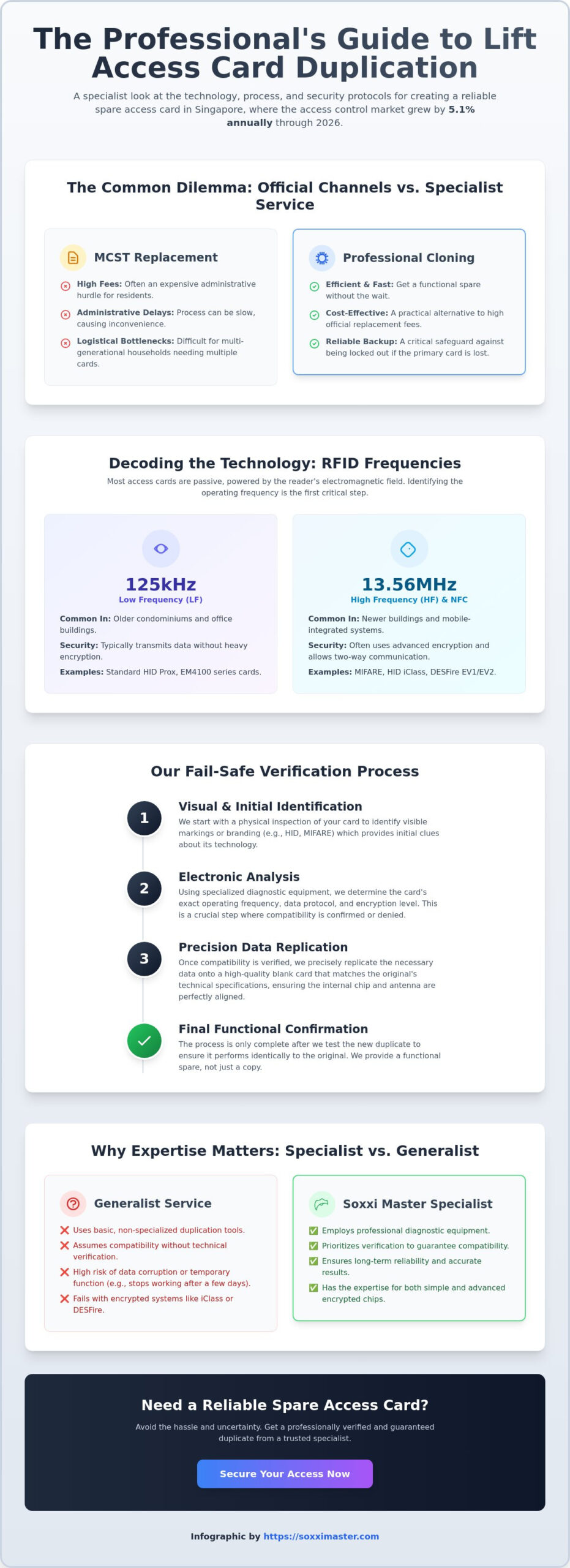
Access card cloning is the technical process of replicating Radio Frequency Identification (RFID) or Near Field Communication (NFC) data from an existing credential onto a compatible spare. It’s not just a simple copy; it’s a precise alignment of data protocols. Most modern buildings in Singapore rely on Proximity Card Technology to manage vertical transportation and secure entry points. When residents seek a professional lift access card cloning service, they’re often looking for a reliable way to manage their household’s mobility without the friction of administrative delays.
While the Management Corporation Strata Title (MCST) serves as the official authority for card issuance, the process for obtaining additional spares can involve significant administrative overhead. This leads many residents to seek professional specialist services that offer technical fabrication based on verified compatibility. With the Singapore access control market projected to grow at a compound annual growth rate of 5.1 percent between 2020 and 2026, the complexity of these systems is increasing. It’s important to distinguish between simple data copying and professional technical fabrication, where the internal chip and antenna of the new card must be perfectly matched to the reader’s specific requirements.
The Need for Spare Access Cards
In Singapore’s multi-generational households, the demand for spare cards is a matter of daily convenience. Having only one or two cards for a family of four or five creates logistical bottlenecks. Beyond convenience, a backup card is a critical safeguard against total lockout situations. If a primary card is lost or damaged, having a verified spare ensures that daily routines aren’t disrupted while waiting for official replacements. Residents often find that a professional duplicate door access card service provides the necessary redundancy for tenants and family members alike.
Specialist vs. Generalist Services
Technical expertise is vital because modern access systems often use encrypted protocols. A generalist using basic duplication tools might produce a card that works for two days and then fails, or worse, doesn’t work at all because it cannot handle the specific frequency or encryption level. At Soxxi Master, we prioritize verification and accuracy. We don’t assume compatibility; we verify it. Using unverified or low-quality duplication tools carries the risk of data corruption. Our approach focuses on precision, ensuring that the technology inside the spare is as reliable as the original. This specialist focus allows us to handle both mechanical keys and electronic access systems with the same level of professional rigor. We believe final confirmation is always required before any service can proceed, as compatibility varies by system.
How RFID and NFC Cloning Technology Works
Radio Frequency Identification (RFID) functions through a simple yet precise exchange of energy and data. Most lift cards are passive tags, meaning they don’t have their own power source. Instead, they draw energy from the electromagnetic field generated by the card reader. Once powered, the card transmits a unique identification number or an encrypted data packet. A reliable lift access card cloning service relies on identifying the exact frequency and protocol this exchange uses to ensure a functional duplicate.
In Singapore, the vast majority of access systems operate on two distinct frequency bands. Identifying which one your building uses is the first step in technical verification. While generalists might use basic handheld devices that only support one type, a professional specialist uses diagnostic equipment to analyze the card’s internal structure. Near Field Communication (NFC) is a specialized subset of High Frequency RFID, often used in mobile-integrated systems and newer smart cards. It allows for two-way communication, which adds layers of complexity to the duplication process.
Low Frequency (LF) Systems
Low Frequency systems typically operate at 125kHz. These are common in many older condominiums and office buildings across the island. Cards like the standard HID Prox or EM4100 series fall into this category. Because these systems usually transmit data without heavy encryption, they’re often straightforward to identify. However, they still require specific hardware to ensure the bit-length and facility code are replicated accurately. If you’re unsure about your card’s technology, you can consult a specialist to verify the internal protocol.
High Frequency (HF) and Smart Systems
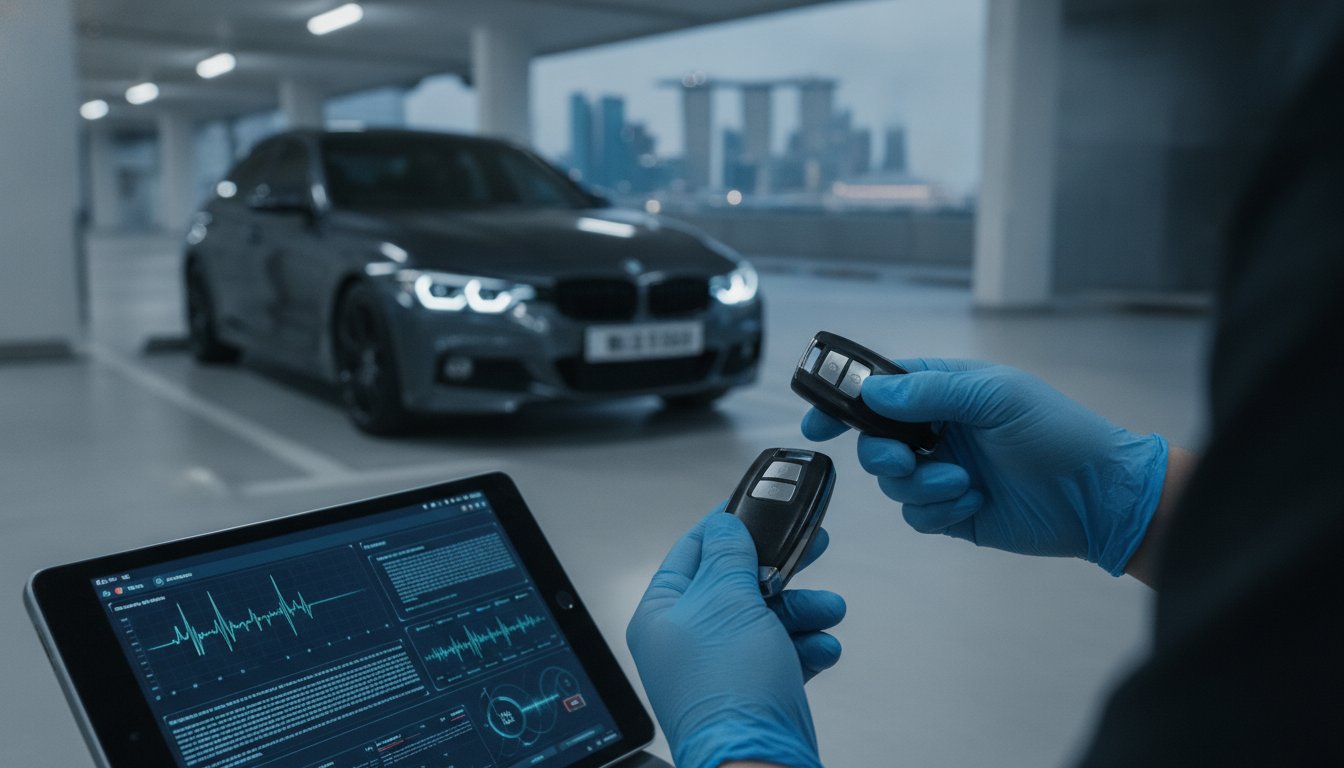
Modern, high-security developments favor High Frequency systems operating at 13.56MHz. This category includes MIFARE, DESFire, and HID iClass systems. These cards are more than just simple ID transmitters; they’re essentially small computers capable of handling complex data structures and encryption. Security researchers have uncovered real-world RFID vulnerabilities that demonstrate how certain older smart cards can be compromised, but newer versions remain highly secure. This is why a professional assessment is mandatory. We don’t guess if a smart card can be cloned; we use specialist readers to determine if the specific protocol is supported or if it remains proprietary and restricted. Final confirmation is always required before we proceed with any technical fabrication to ensure the spare functions seamlessly with your building’s specific reader.
Compatibility Factors: Why Not Every Card Can Be Cloned
While many residents hope for a quick solution, the reality of access technology is that duplication is always subject to compatibility. A professional lift access card cloning service must navigate a landscape of proprietary protocols that manufacturers use to protect their systems. These security measures are designed to prevent unauthorized replication, meaning that some high-security chips remain restricted from third-party duplication. Success is never assumed; it’s the result of a precise technical match between the original card and the new credential.
Physical card inspection is essential for a definitive answer. While a photograph can provide clues about the brand, it doesn’t reveal the internal encryption or the specific data sectors in use. A card that looks identical to a standard model on the outside might house an advanced chip on the inside, requiring specialized hardware for identification. Without a physical read of the chip, any claim of compatibility is merely an estimate.
Common Card Brands in Singapore
In Singapore, brands like HID, Mifare, and Fermax are widely used, but security levels vary significantly by model. For instance, an older HID Prox card uses a different frequency and data structure than a modern HID iClass card. Similarly, a Mifare Classic 1K card might be duplicated easily, while a Mifare DESFire EV3 uses sophisticated AES encryption that may not be supported depending on the specific configuration. Because building managements often upgrade their readers without changing the card’s appearance, visual identification is just the first step. Final confirmation requires a specialist to read the card’s internal data using diagnostic tools.
Encryption and Security Barriers
Modern security systems often include anti-cloning features that can detect and disable unauthorized duplicates. Some systems use a counter or rolling code logic; every time you tap the card, the data on the chip changes in a specific sequence. If a clone is used, the system may detect a mismatch in the sequence and block both the original and the duplicate from future use. This is why copying just a serial number is often insufficient for smart systems. A true professional duplicate door access card service involves analyzing whether the full data sectors can be replicated or if the system uses proprietary encryption that blocks cloning entirely. If a system is restricted, we provide honest advice rather than risking a failed duplicate. For an accurate assessment of your specific card, you should contact a specialist who can verify the technology in person.
The Professional Verification Process for Secure Duplication
A professional lift access card cloning service doesn’t rely on guesswork. It’s a methodical process that prioritizes accuracy over marketing speed. While some providers promise instant results from a single photo, true verification involves multiple technical layers. This ensures the spare card functions reliably over time without failing after a few uses. We focus on technical fabrication rather than simple data copying to maintain the integrity of the original credential.
Initial Assessment via WhatsApp
The process begins with a preliminary check through digital communication. Providing clear, high-resolution photographs of both the front and back of your card allows us to identify external markers and brand signatures. It’s also helpful to mention your condo or building name during this stage. This information helps us cross-reference your card with our database of known systems used in specific Singaporean developments. You can reach out to Soxxi Master Contact for an initial assessment of your card’s compatibility. While this digital review is a helpful starting point, it’s important to remember that final confirmation is always subject to a physical inspection.
On-Site Specialist Verification
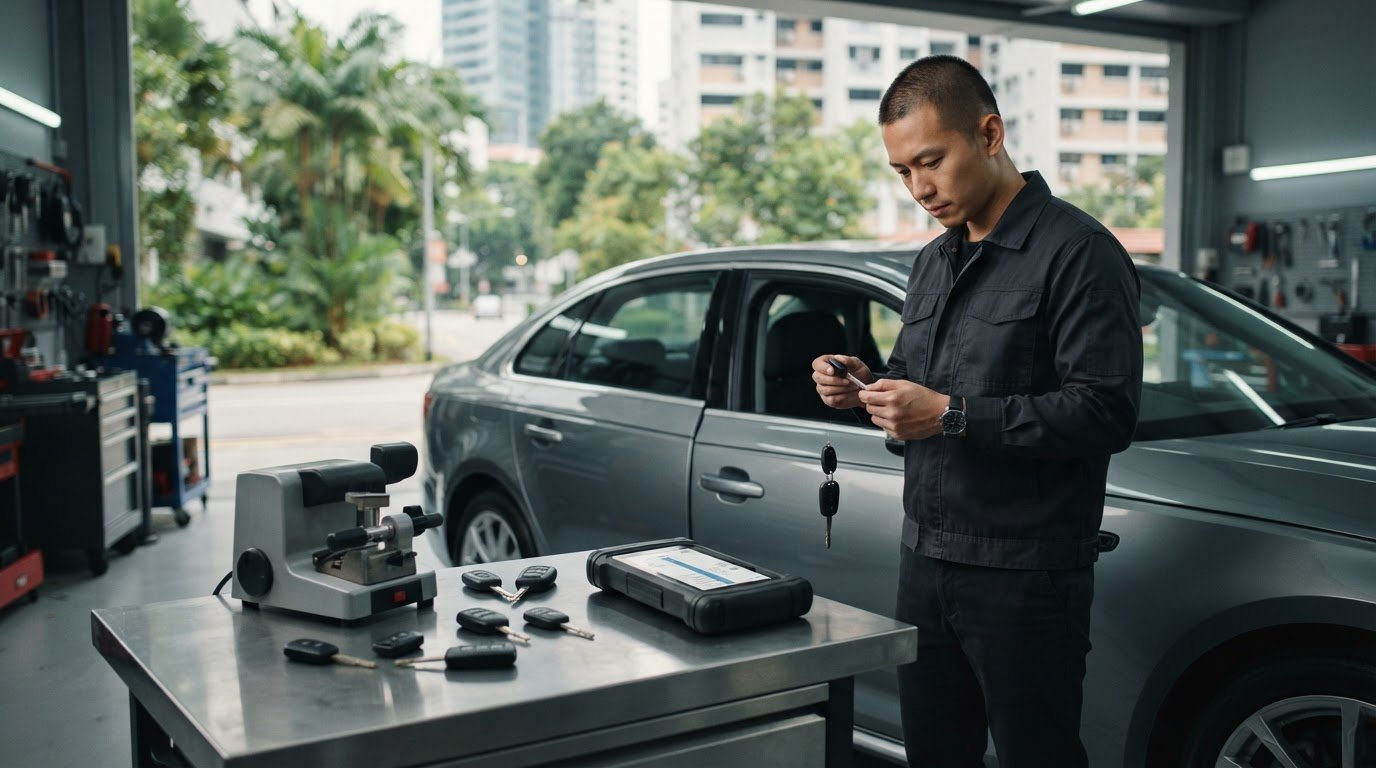
Visiting a specialist in person ensures the highest level of accuracy for your duplication needs. We use professional diagnostic equipment to identify the exact frequency and protocol of your chip without risking damage to the original card. This physical read is the only way to detect complex data structures or encrypted sectors that a photograph simply cannot capture. Once the protocol is identified, we verify the data integrity to ensure the copy is seamless. We don’t just replicate the serial number; we ensure the technical fabrication matches the specific requirements of your building’s reader. If you want to ensure your spare is reliable, you can view our card duplication services for more details.
The final stage involves testing the spare card to confirm it matches the original’s function perfectly. We prioritize using durable fobs and cards that are fit for heavy daily use. This avoids the common issue of clones failing due to poor antenna quality or fragile casing. Every step of our process is designed to provide a functional solution while maintaining professional standards. If you’re ready to secure a reliable backup, contact Soxxi Master for an accurate assessment and confirmation of your specific needs.
Choosing a Specialist for Your Access Card Needs
Selecting a lift access card cloning service requires more than just finding the nearest provider. In a market where technology evolves rapidly, choosing an established specialist with a physical presence in Singapore is vital for long-term reliability. A physical shop provides a point of accountability that mobile-only services can’t match. It also ensures that the diagnostic equipment used for your card is professional-grade and regularly maintained. Without these tools, there’s a risk of receiving a duplicate that fails to communicate correctly with your building’s reader.
We take a comprehensive approach to security. Whether your needs are mechanical or electronic, our “Master of Key” philosophy ensures that every duplication is handled with technical rigor. This holistic view is essential as modern building security systems become more integrated. Relying on unverified services that lack proper diagnostic gear can lead to corrupted data or cards that stop working after a few days. It’s about trust and technical accuracy.
The Soxxi Master Difference
With 18 years of experience as one of Singapore’s pioneers in the industry, we’ve seen the transition from simple proximity cards to complex encrypted systems. Our approach is intentionally conservative. We prioritize data accuracy and card longevity over quick sales. We don’t assume every card can be replicated; instead, we perform a thorough technical identification first. This ensures that the solutions we provide are both functional and durable. For those interested in our specific process, you can learn more about RFID Access Card Duplication. Our goal is to provide a seamless experience that respects the technical requirements of your specific system.
Beyond Lift Cards: Integrated Access Solutions
For residents of landed properties or those with private parking, access needs often extend beyond the elevator. We also provide Auto Gate Remote Duplication to streamline your entry process. Depending on model and compatibility, it’s sometimes possible to consolidate multiple access points into a single device, reducing the clutter on your keychain. This integration requires a high level of technical expertise to ensure all frequencies and protocols are matched correctly. We avoid generic solutions, focusing instead on what works for your specific hardware.
Every access system is unique, and compatibility varies by system. We encourage you to seek an accurate assessment rather than relying on general claims. Final confirmation is always required before any service proceeds to ensure the best possible outcome for your specific situation. Please contact Soxxi Master for a professional evaluation and confirmation of your needs.
Securing Your Modern Access with Technical Precision
Navigating the complexities of modern RFID and NFC systems requires technical rigor. It’s about understanding that every building’s security protocol is unique. Successful duplication relies on a professional lift access card cloning service that prioritizes verification over speed. As access technology evolves through 2026, the difference between simple copies and professional technical fabrication becomes critical for long term reliability.
With 18 years of specialist experience, Soxxi Master remains a Singapore pioneer in key and RFID duplication. We utilize precision diagnostic equipment to assess your specific card’s frequency and encryption level. This conservative approach ensures that any solution provided is functional and accurate, though it’s always subject to compatibility with your building’s reader. Final confirmation is required before any service proceeds to ensure the best results for your specific needs.
Ready to secure a reliable backup for your household? Contact Soxxi Master for a professional access card assessment today. We look forward to providing the expertise and reassurance you need for your electronic access requirements.
Frequently Asked Questions
Is it legal to clone my own condo lift access card in Singapore?
There is no national law in Singapore that makes duplicating your own access card for personal use illegal. However, most Management Corporation Strata Title (MCST) bylaws for condominiums and office buildings prohibit unauthorized duplication. Residents should be aware that building management may confiscate cloned cards if their specific bylaws are breached. It’s a matter of building policy rather than criminal law.
How long does the card cloning process typically take at your shop?
The technical fabrication of a duplicate card often takes between 10 to 20 minutes, depending on the complexity of the internal chip. This timeframe applies once the frequency and protocol have been successfully identified using our diagnostic equipment. More advanced encrypted systems may require additional time for a thorough verification to ensure the spare functions reliably for daily use.
Will my original card still work after it has been cloned?
Your original card remains fully functional and unaffected by the duplication process. A professional lift access card cloning service uses a non-destructive read method to identify the data structure before replicating it onto a compatible spare. The original credential serves as the master template and continues to work with your building’s reader as it did before without any data loss.
Can you clone access cards that are integrated with mobile apps?
Compatibility for mobile-integrated systems depends on whether the access point uses physical RFID/NFC protocols or cloud-based authentication. If the system relies on a physical chip embedded in a card or fob, duplication may be possible subject to technical verification. However, systems using encrypted Bluetooth tokens or dynamic app-based codes often remain proprietary and cannot be cloned using standard specialist methods.
What should I do if my cloned card stops working after a few weeks?
If a spare stops functioning, it’s often due to hardware damage or the building’s security system detecting a data mismatch. You should bring both the original and the duplicate back to our specialist for a technical reassessment. We use diagnostic tools to determine if the internal antenna has failed or if the system has implemented new anti-cloning protocols that require a different technical approach.
Do you support high-security brands like HID iClass or Mifare DESFire?
Support for high-security brands like HID iClass or Mifare DESFire is subject to the specific model and encryption level in use. While we utilize advanced diagnostic gear, some proprietary chips are designed to block third-party duplication entirely. A physical assessment is always required to confirm if your specific version can be successfully replicated without triggering security blocks implemented by the manufacturer.
Can I clone an access card if I have lost the original?
Duplication is not possible if the original card is missing because the lift access card cloning service requires reading the unique data stored on the existing chip. If you’ve lost all your cards, you must contact your MCST or building management to issue a new master credential. Once you have a working original, a specialist can then be used to create the necessary backups.
Do I need to provide any proof of residence before cloning a card?
We prioritize security and may request verification to ensure the service is being performed for a legitimate resident or tenant. This practice aligns with professional standards in Singapore’s access control industry, which saw a 5.1 percent growth in complexity through 2026. Providing proof of residence helps maintain the integrity of the building’s security while we assist with your spare card needs and verification.