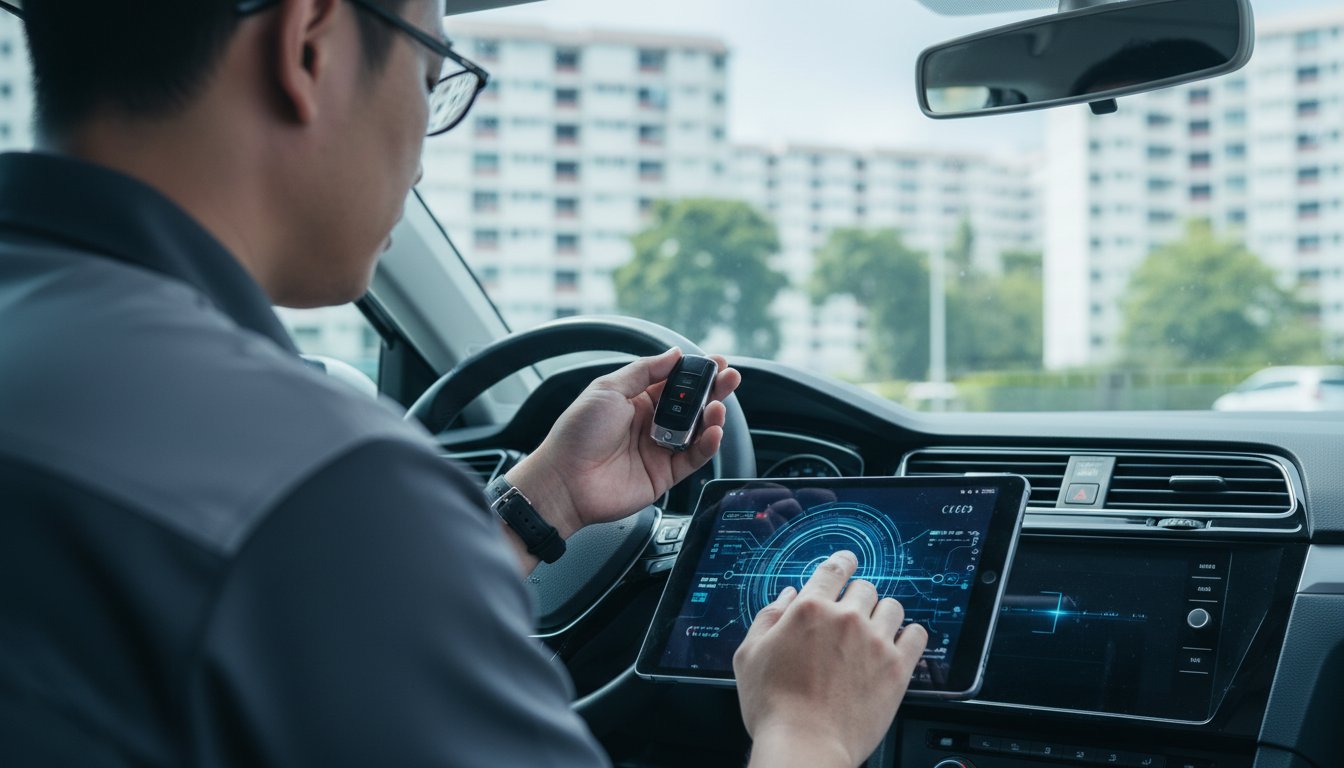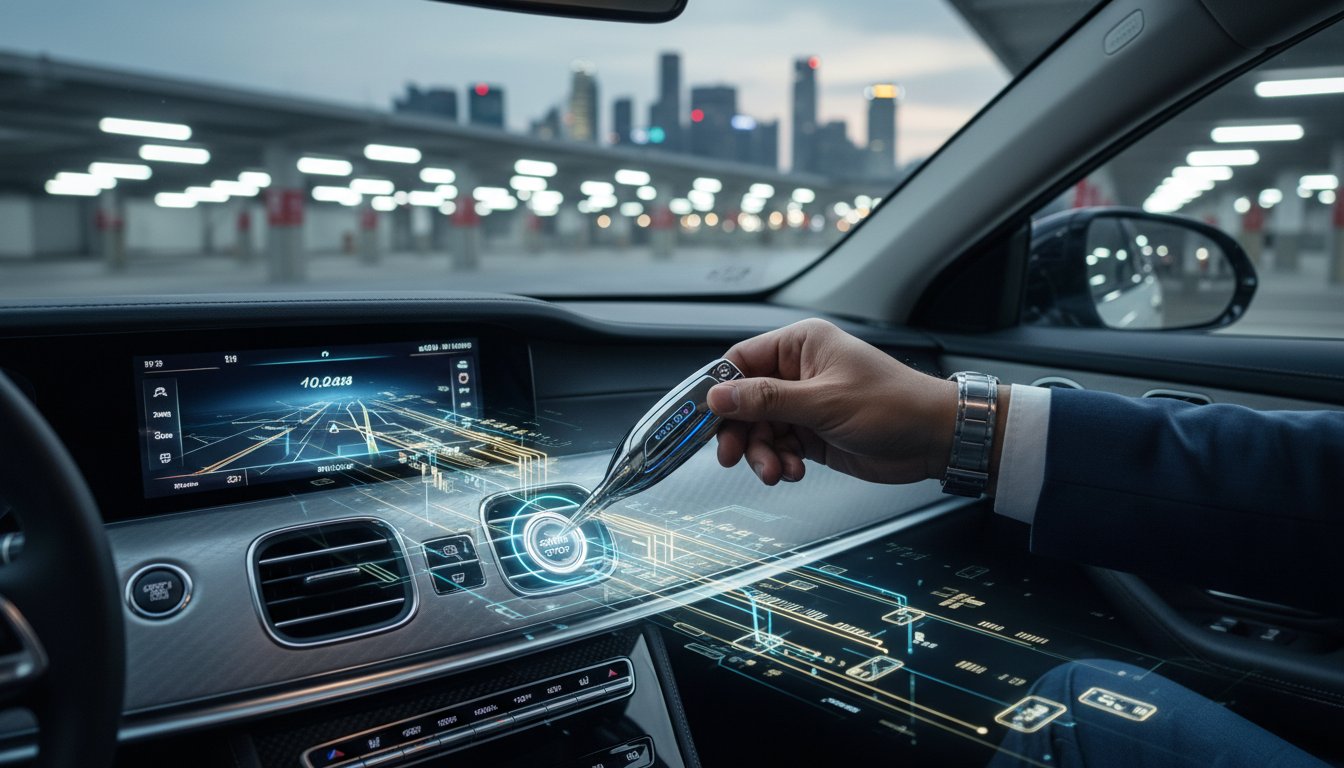


Is your car’s smart key a sophisticated security tool or just a plastic fob that costs a fortune to replace? Many drivers in Singapore face significant anxiety when dealing with lost or malfunctioning remotes, especially when confronted with high dealership replacement costs and long waiting periods. It’s easy to feel overwhelmed by the technical jargon surrounding transponders and immobilisers. Professional key fob programming for push start cars is a specialized field that requires exact hardware and software synchronization to ensure your vehicle remains accessible and secure.
We understand that your vehicle’s security is a top priority, and finding a reliable alternative to the agent doesn’t have to be a gamble. This guide explains the technical precision needed to program modern smart keys and how you can secure a fully functional spare for your peace of mind. You’ll learn about the verification process, which requires specific vehicle details like a chassis number to ensure compatibility before any work begins. We’ll also preview how a specialist’s methodical approach provides a streamlined solution, subject to your specific vehicle model and existing system requirements.
Key Takeaways
- Understand the complex cryptographic handshake between your smart key and the vehicle’s ECU that enables secure “Keyless Go” functionality.
- Learn how professional key fob programming for push start cars utilizes the OBD-II port to sync new hardware while clearing data from lost keys.
- Recognize the significant risks of using unverified fobs from online marketplaces, which can lead to permanent ECU lockouts or system bricking.
- Identify the differences between a simple dead battery and a complete loss of programming to determine the most efficient repair path for your remote.
- Discover why precise verification using specific vehicle details, such as a chassis number, is required to confirm system compatibility before any service.
The Evolution of Vehicle Access: Understanding Push-Start Key Fobs
Vehicle access has transformed from basic mechanical locks to sophisticated electronic interfaces. Modern vehicles now utilize smart keys and proximity fobs, which eliminate the need for a physical ignition cylinder. These devices communicate with the car’s computer via radio frequencies, allowing the engine to start with the press of a button. Because these systems rely on encrypted data, key fob programming for push start cars requires specialized diagnostic tools to ensure a secure connection between the hardware and the vehicle’s Engine Control Unit (ECU).
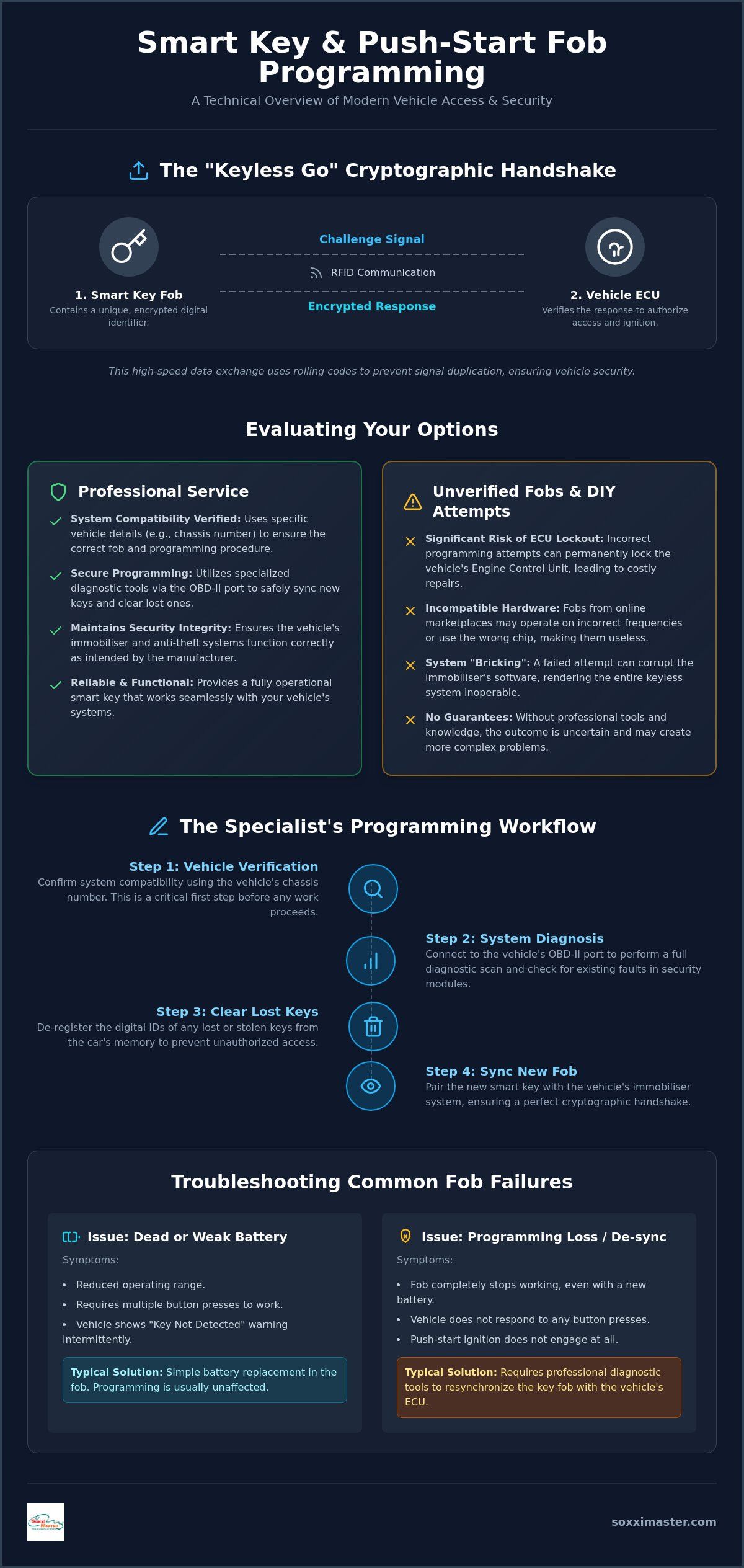
The “Keyless Go” system functions through a continuous dialogue between the fob and the car’s antennas. When you approach the vehicle, the ECU sends out a challenge signal. The fob must then provide the correct encrypted response to authorize entry or ignition. This level of security ensures that only the verified owner can operate the vehicle, though it adds layers of complexity to the duplication process. Every interaction is a high-speed data exchange that happens in milliseconds, ensuring the driver experiences no delay.
Smart Keys vs. Traditional Transponders
While both systems provide security, they operate on different principles. Traditional transponder keys usually feature a physical metal blade and a chip that must be near the ignition lock. In contrast, smart fobs are purely electronic. They manage the vehicle’s immobiliser system through proximity rather than physical contact. To understand the foundational technology behind these chips, you can read our guide on What is a Transponder Key?. The shift to button-start ignitions means that the immobiliser handshake happens wirelessly, making the programming process more intricate depending on the vehicle’s specific security architecture.
The Role of RFID in Modern Car Security
Modern smart key systems rely heavily on Radio Frequency Identification (RFID) technology. These systems use signals to detect when a fob is within a limited distance of the vehicle’s sensors. This restricted range is a deliberate safety feature designed to prevent unauthorized access. It’s a precision-based system where the vehicle must verify the fob’s presence in a specific zone before the ignition engages.
The security of this system is maintained through a cryptographic handshake. Every time the fob communicates with the car, it uses a rolling code or a unique encrypted identifier. This prevents simple signal duplication and ensures that each interaction is unique. Because of these high-security protocols, professional key fob programming for push start cars is essential to maintain the integrity of the vehicle’s anti-theft system. Compatibility varies by system, so verification with vehicle details remains a critical first step before any service can proceed.
The Technical Process: How Smart Key Fob Programming Works
Professional key fob programming for push start cars isn’t just about the physical hardware; it’s a deep-level software integration. Technicians interface with the vehicle through the On-Board Diagnostics (OBD-II) port. This port acts as the communication bridge to the car’s immobiliser and Engine Control Unit (ECU). It’s here that the digital identities of your keys are managed. When a key is missing, the first priority is often clearing the old data. By removing the lost key’s unique ID from the system, you ensure that even if someone finds the lost remote, they can’t start your engine.
The next step involves syncing the new fob’s unique digital identifier. This isn’t a simple duplication job. Each smart key uses a rolling code sequence that must be perfectly aligned with the car’s expectations. If the sequence is out of sync, the car might unlock but won’t start. Technicians use specialized diagnostic hardware to verify this sequence, ensuring the cryptographic handshake is valid every time you press the start button. This precision is vital for the security and reliability of the vehicle’s ignition system.
The Programming Workflow
The process starts with a comprehensive diagnostic scan. This identifies any existing faults in the security modules that might prevent successful pairing. Once the system is cleared, the technician performs the software-based pairing of the new remote. This is a methodical process where the car is “taught” to recognize the new hardware. Finally, every function is tested. We check the proximity lock and unlock features, the remote boot release, and the push-start response to ensure the driver experiences a seamless transition.
Security Verification Requirements
Accuracy begins with the chassis number, or VIN. Providing this number is mandatory because the programming protocols vary by system and production year. The VIN allows us to identify the correct frequency standards required for vehicles registered in Singapore. For a precise assessment of what your specific vehicle requires, you can explore our range of original car remote keys.
We also require verification of vehicle ownership before any security data is modified. This protects the vehicle owner and maintains the integrity of the car’s anti-theft systems. Final confirmation is always required before any service can proceed, as success is subject to the specific hardware and software versions of your vehicle. Contact Soxxi Master to verify your vehicle’s details and confirm the appropriate service path for your needs.
Evaluating Your Options: Professional Programming vs. DIY Attempts
When you’re faced with a lost or malfunctioning smart key, the temptation to purchase a low-cost replacement from an online marketplace is high. However, these “universal” fobs often lack the specific internal circuitry required for localized vehicle security systems. Because key fob programming for push start cars relies on precise cryptographic handshakes, an unverified fob may fail to communicate with the vehicle’s immobiliser entirely. This incompatibility isn’t just an inconvenience; it can lead to security vulnerabilities or a complete failure to start the engine, depending on the vehicle’s specific security architecture.
The success of the programming process is heavily influenced by the vehicle’s model and production year. Older systems might use simpler transponders, while newer models incorporate multi-layered encryption that is difficult to bypass. Professional verification remains the only way to ensure that the replacement hardware matches the vehicle’s requirements. Without this, you risk spending money on a device that your car will simply never recognize.
The Limitations of DIY Programming
DIY programming tools available to consumers often lack access to proprietary manufacturer software. Attempting key fob programming for push start cars with consumer-grade devices carries significant risks. If the vehicle’s computer detects an incorrect security sequence, it may trigger an ECU lockout. This “bricking” of the system can result in permanent immobiliser damage, which often requires expensive hardware replacement. Professional service is safer for modern electronics because it utilizes verified protocols that respect the vehicle’s original security boundaries.
Specialist vs. Dealership Solutions
Authorized dealerships often have long lead times for key replacements, especially if they need to order specific components from overseas. Specialist providers offer a more efficient alternative for obtaining original car remote keys. While dealerships are a standard choice, many owners prefer the streamlined approach of a specialist capable of handling various car brands locally. You can learn more about how these services compare by reviewing our guide on Soxxi Master vs. Car Dealer.
Final confirmation of your specific vehicle’s compatibility is required before any service can proceed. Every vehicle’s system varies, and an expert assessment is the best way to avoid unnecessary complications. For an accurate evaluation of your car’s needs, contact Soxxi Master to confirm the best solution for your situation.
Troubleshooting Common Push-Start Key Fob Failures
A failing smart key often begins with intermittent behavior. You might notice the proximity sensors don’t respond as quickly as they used to, or the car requires multiple button presses to unlock the doors. These symptoms are frequently dismissed as minor inconveniences, but they often signal an underlying electronic issue. While a dead battery is the most common culprit, a complete loss of synchronization between the fob and the vehicle’s computer can also occur. When the cryptographic handshake fails, professional key fob programming for push start cars is often the only way to restore full functionality to the system.
Environmental factors also play a significant role in smart key reliability. High-voltage power lines, mobile phone towers, or even certain aftermarket electronic accessories inside the car can create radio frequency interference. This interference disrupts the low-frequency signal the car uses to “find” the fob. If your vehicle suddenly stops detecting the key in a specific location, try moving the vehicle or the fob to see if the connection returns. If the problem persists regardless of location, the issue likely resides within the fob’s internal circuitry or the vehicle’s receiver antennas.
Battery vs. Internal Circuit Issues
Determining whether you need a simple battery replacement or a more complex repair is the first step in troubleshooting. If the LED indicator on the fob doesn’t light up, the battery is likely depleted. However, if the light flashes but the car remains unresponsive, the internal transponder chip may be damaged. For a detailed diagnostic, you can refer to our guide for when your key fob not working. Common signs of internal failure include:
- Corrosion on the circuit board from moisture exposure.
- Loose battery contact points due to physical shock or drops.
- Micro-cracks in the soldering that disrupt the signal flow.
Emergency Start Procedures
Most modern vehicles include a fail-safe for when the fob battery is too weak to transmit a signal. By placing the fob directly against the start button or a designated slot in the center console, the car uses inductive charging to read the chip’s data. This allows you to start the engine even with a dead battery. While this works as a temporary measure, it isn’t a permanent solution. Relying on emergency starts increases the risk of being stranded if the chip fails entirely, potentially leading to all keys lost scenarios that are far more complex to resolve.
If your smart key shows signs of inconsistent performance, seeking a professional assessment is a prudent step to avoid a total lockout. Every vehicle’s security system varies by model and year, making expert verification essential. For an accurate diagnosis and to ensure your vehicle’s access system remains reliable, contact Soxxi Master for a professional consultation regarding your specific vehicle details.
Specialized Programming Solutions for Push-Start Vehicles in Singapore
Soxxi Master approaches automotive security with a focus on technical accuracy and methodical execution. When you visit our specialized facility at 37 Jalan Pemimpin, you’re engaging with a team that understands the intricate data exchanges required for modern ignitions. Key fob programming for push start cars isn’t a one-size-fits-all service. It requires a controlled environment and specific diagnostic interfaces that can communicate safely with your vehicle’s ECU. We support a wide range of vehicle models, though successful programming is always subject to system compatibility and the specific security version of your car’s hardware.
Our process is designed to be secure and verified. We don’t rely on guesswork or unverified aftermarket tools that might compromise your car’s sensitive electronics. Instead, we use professional-grade diagnostic hardware to ensure that every new smart remote is perfectly synced with the immobiliser. This methodical approach helps build immediate trust, especially when you’re dealing with the high-pressure situation of a missing or broken key. We prioritize precision over speed to ensure the long-term reliability of your vehicle’s access system.
Our Service Commitment
Our primary goal is to provide a reliable solution that restores your vehicle’s accessibility without unnecessary complications. Every service begins with a professional assessment of your specific vehicle needs. We offer comprehensive key duplication services to provide you with a backup, significantly reducing the risk of future lockouts. By utilizing advanced diagnostic hardware, we can perform secure syncing that follows manufacturer-recommended protocols. This commitment to technical excellence ensures that the final result is a fully functional smart key that operates exactly as intended.
Next Steps for Your Vehicle
To provide an accurate assessment, we require specific details about your vehicle. The most important piece of information is the chassis number, also known as the VIN. This unique identifier allows us to verify the exact security system, frequency, and cryptographic protocol used by your car’s manufacturer. Because modern automotive security is constantly evolving, compatibility is never assumed. We provide a final confirmation only after verifying these details against our technical database.
Final confirmation is a mandatory step before any key fob programming for push start cars can proceed. It protects the integrity of your vehicle’s systems and ensures that the hardware provided will function correctly with your specific build. We encourage you to reach out for a professional evaluation of your specific requirements. For a reliable solution to your smart key needs and an accurate assessment of your vehicle’s compatibility, please contact Soxxi Master to speak with an expert and confirm your next steps.
Securing Your Vehicle’s Digital Future
Understanding the complexity of modern automotive security is the first step toward a reliable solution. Professional key fob programming for push start cars involves more than just hardware; it requires a precise cryptographic alignment with your vehicle’s ECU. By prioritizing verification through specific vehicle details like a chassis number, you ensure that your replacement is technically compatible and secure. As a pioneer in automotive key replacement in Singapore, Soxxi Master utilizes specialized diagnostic hardware for immobiliser systems to provide accurate results. Whether you need a proactive spare or an expertise-driven “all keys lost” solution, a methodical approach protects your vehicle from the risks of unverified DIY attempts. Final confirmation of service is always subject to your vehicle’s specific system architecture. We invite you to contact Soxxi Master for a professional assessment of your key fob programming needs to ensure your continued access and peace of mind. We look forward to helping you secure a dependable solution for your vehicle.
Frequently Asked Questions
Can I program a push-start key fob myself at home?
Programming a push-start key fob at home is generally not possible for modern vehicles. These systems require specialized diagnostic software and hardware to establish a secure, encrypted connection with the car’s immobiliser. Attempting a DIY solution can result in an ECU lockout or permanent system damage. Professional service ensures that the cryptographic handshake is established correctly without compromising the vehicle’s electronic security.
How long does it typically take to program a new smart key?
The time required for programming varies significantly depending on the vehicle’s security architecture and specific model. While some systems can be synced relatively quickly, others require extensive data processing to verify the cryptographic credentials. A final confirmation of the duration required can only be provided after a technician performs an initial diagnostic scan of your specific vehicle details.
What information do I need to provide for a new key fob?
You must provide specific details including the vehicle make, model, and chassis number (VIN). This information is essential for a specialist to identify the correct frequency and security protocol used by your vehicle’s manufacturer. Verification of vehicle ownership is also a mandatory requirement before any security-related programming can proceed to ensure the protection of the vehicle owner.
Will programming a new key fob disable my existing keys?
Programming a new remote does not inherently disable your existing keys if they are present during the sync. However, if a key has been lost, it’s recommended to clear its data from the system to prevent unauthorized access. The technician will typically re-sync all current keys to the immobiliser during the key fob programming for push start cars process to ensure they remain functional.
Can a used key fob from another car be reprogrammed to mine?
Most modern push-start key fobs cannot be reprogrammed if they have already been paired with another vehicle. These fobs are often locked to the original vehicle’s chassis number at the software level. While some older transponders might allow for reuse, modern smart keys usually require brand-new, unprogrammed hardware to establish a successful connection with a different ECU, subject to compatibility.
What happens if I have lost all the keys to my push-start car?
Losing all keys requires a specialized “all keys lost” solution to regain access and engine operation. This process involves accessing the vehicle’s computer system to generate new security credentials and clear the old ones from the memory. Professional key fob programming for push start cars in this scenario is a complex task that relies on advanced diagnostic tools to restore functionality to the vehicle.
Is it possible to program a key for a car that is not currently starting?
It’s possible to program a key for a non-starting car if the issue is specifically related to the immobiliser or a missing transponder signal. If the car’s computer doesn’t detect a valid key, it will prevent the engine from engaging. However, if the starting issue is mechanical or battery-related, a new key will not resolve the problem, making a professional diagnostic assessment critical to confirm the cause.
Why does my car say “Key Not Detected” even with a new battery?
A “Key Not Detected” message often indicates a synchronization failure or internal damage to the fob’s circuitry. Even with a fresh battery, the transponder chip may fail to send the required rolling code sequence. This can also be caused by external signal interference or failing internal antennas, necessitating a professional assessment to identify the exact cause of the communication breakdown and determine if a repair is possible.