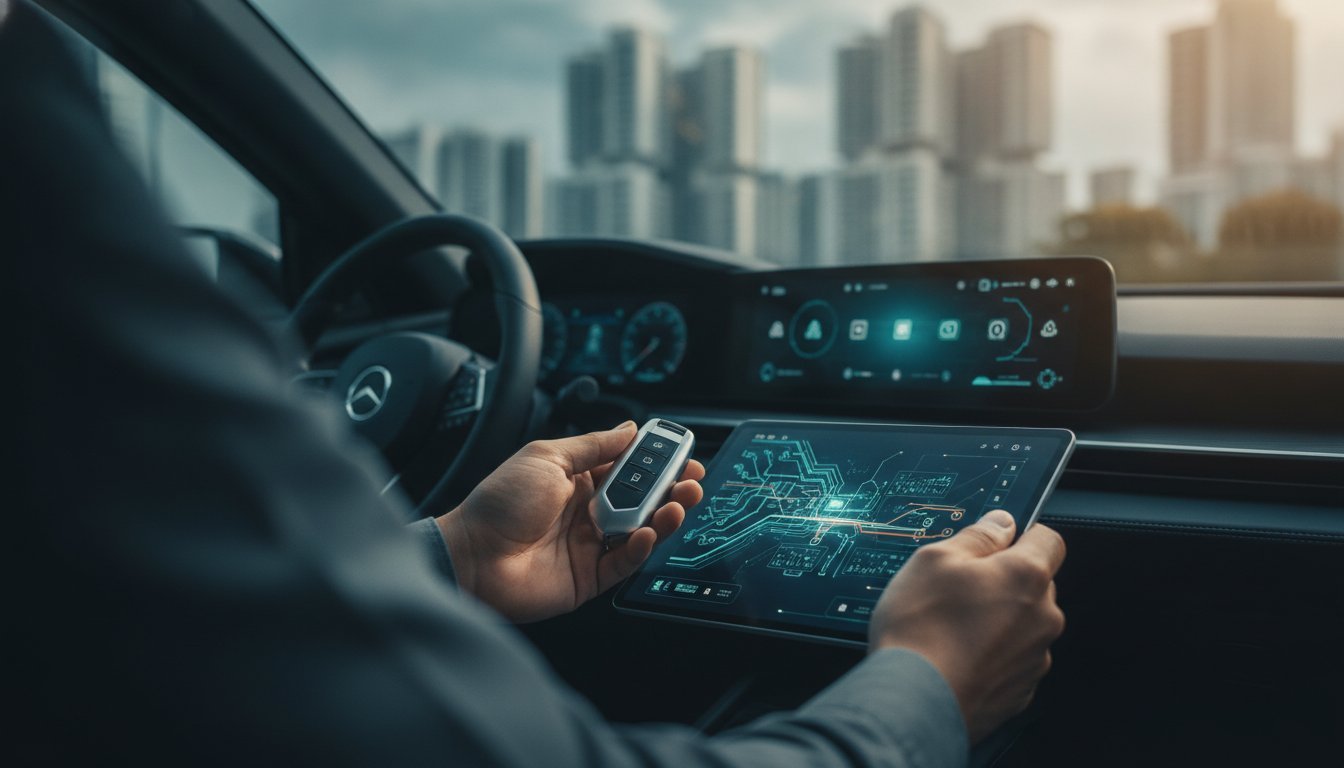


You’re already running late for an important meeting in the CBD when you press the start button, only for your dashboard to flash a “car key not detected” warning. It’s a high-pressure situation that immediately triggers concerns about expensive towing fees or lengthy dealer repairs. Many drivers in Singapore feel a sense of frustration when their vehicle’s sophisticated security system suddenly refuses to cooperate, leaving them stranded and confused about the next step.
This guide provides the professional clarity you need to understand why your vehicle is failing to recognize your smart key. You’ll discover the specific steps required to restore your ignition and learn how to determine if the fault lies with the remote battery or the vehicle’s own power supply. We’ll examine the technical reasons behind signal failure and explain why professional verification by a seasoned expert is the safest path to a resolution. By understanding these complex electronic systems, you can move from a state of uncertainty to a clear, verified solution that gets you back on the road with minimal delay.
Key Takeaways
- Identify why the “car key not detected” warning appears, often resulting from a communication failure between the transponder and the vehicle’s immobiliser.
- Distinguish between common issues like low-voltage remote batteries and external factors such as radio frequency interference from nearby electronics.
- Learn the correct manufacturer-approved methods for emergency starts to regain access to your vehicle during a system failure.
- Understand why professional diagnostic tools and chassis number verification are essential for a reliable fix without risking damage to electronic components.
- Discover specialized solutions for complex access issues, including professional support for situations where all original keys are missing.
Understanding the ‘Car Key Not Detected’ Message
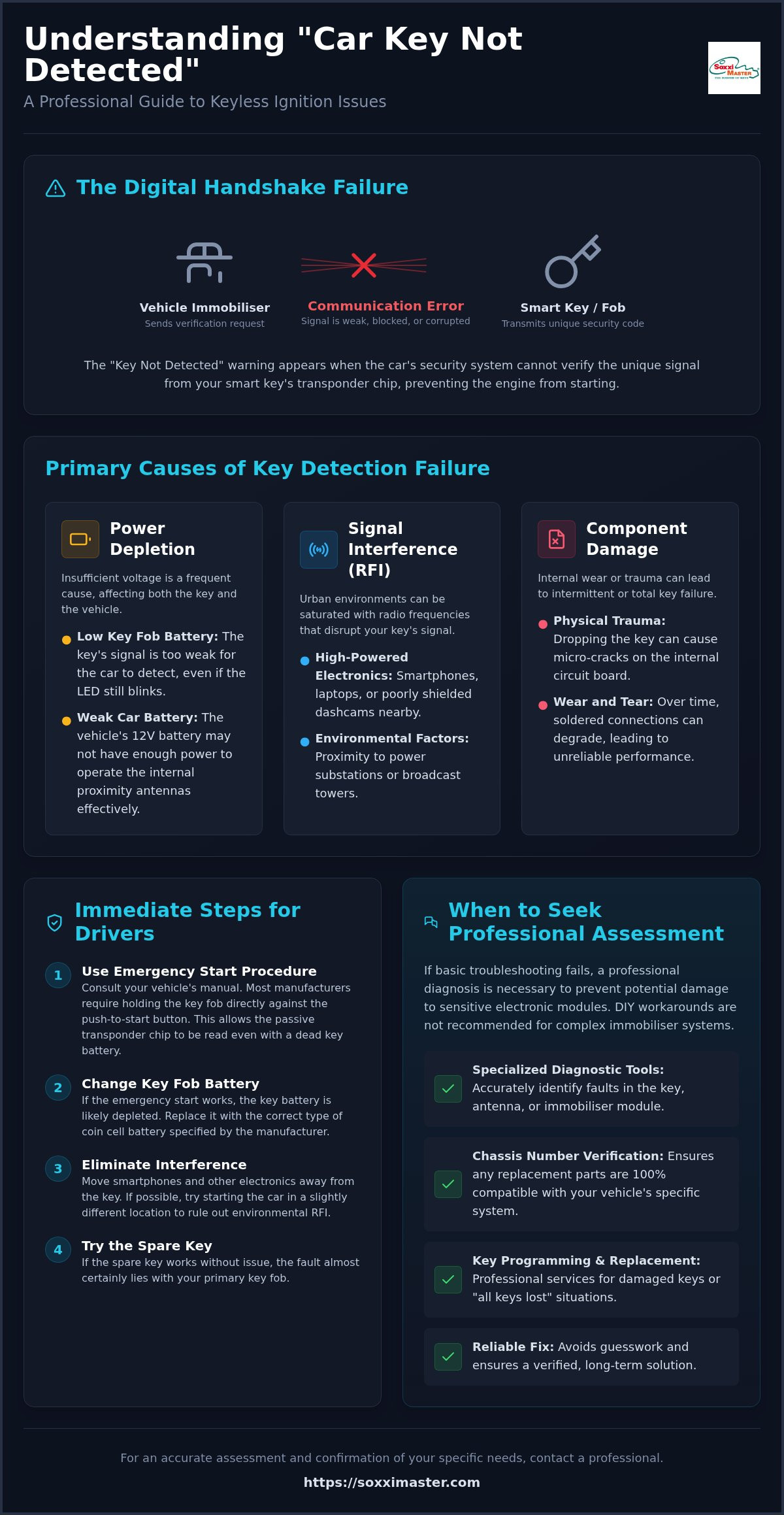
When your dashboard displays a car key not detected warning, it signals a breakdown in the secure digital handshake between your key and the vehicle. This handshake is a complex protocol where the car’s immobiliser system verifies the unique digital signature of the key before allowing the engine to start. While traditional keys used a physical blade to turn a mechanical lock, modern push-to-start systems rely entirely on wireless data exchange. This shift makes modern vehicles more susceptible to signal interference, electronic glitches, or component degradation. The immobiliser acts as the primary gatekeeper of your vehicle’s security. It’s designed to prevent theft by ensuring that the engine remains disabled unless a specific, verified signal is received from the authorized remote.
How Smart Keys Communicate with Your Vehicle
Modern vehicles utilize a sophisticated Remote keyless system that operates through low-frequency (LF) and radio frequency (RF) signals. When you approach or enter the car, the vehicle’s internal antennas send out an LF signal to wake up the key fob. The fob then responds with an RF signal containing its unique identification code. A critical component in this process is the transponder key chip embedded within the remote. This chip requires precise physical proximity to the vehicle’s internal antennas to complete the security handshake. If the signal is too weak or the data packet is corrupted by external interference, the system defaults to a locked state to protect the vehicle.
Common Error Messages by Car Brand
Drivers in Singapore may encounter various terminology depending on their vehicle’s make and model year. European brands often display clear text like “No Key Detected” or “Key Not Found” on the multi-function display. In contrast, many Japanese manufacturers might use a simple amber or red key icon flashing on the instrument cluster to signal a detection failure. It’s helpful to observe the light patterns on your original car remote keys during these failed start attempts. A rapidly blinking LED on the fob usually indicates that the remote is attempting to transmit data. No light at all often points toward a depleted battery. You must also distinguish between a “Key Battery Low” alert, which is a maintenance warning, and a full detection failure. A full failure, resulting in the car key not detected message, prevents the vehicle from operating entirely and often requires specialized equipment to diagnose. Verification of these signals using a chassis number is the only way to confirm if a module has failed or if the key itself is damaged.
Primary Causes of Key Detection Failure
A car key not detected warning often stems from a lack of sufficient power. While many owners assume a battery is either working or dead, the reality is more nuanced. Modern smart keys require a specific voltage threshold to transmit the encrypted data required for ignition. If the coin cell battery drops even slightly below this level, the signal fails. Additionally, the vehicle’s own 12V battery must be in good health. A discharged car battery reduces the performance of the proximity sensors located throughout the cabin. This results in a failure in detection even if the key itself is functioning perfectly. It’s a common scenario where the car has enough power to light up the dashboard but not enough to maintain the sensitive proximity network.
External Signal Interference in Singapore
Singapore’s urban landscape is saturated with wireless signals that can disrupt vehicle communication. High-density residential and commercial zones often experience significant radio frequency interference (RFI). These waves can drown out the relatively weak signal emitted by your key fob. Common sources of interference include:
- High-powered smartphones held in the same hand as the key.
- Poorly shielded aftermarket electronic accessories, such as dashcams or chargers.
- Proximity to large-scale infrastructure like power substations or broadcast towers.
These devices can inadvertently mask the transmission from your fob. If you suspect interference, try moving the vehicle just a few metres away from the suspected source. Holding the key directly against the start button can also help, as this allows the passive transponder to communicate despite the surrounding electronic noise.
Internal Fob Wear and Component Damage
Physical trauma is a leading cause of intermittent detection issues. Dropping your fob on a concrete floor can cause micro-cracks in the circuit board’s delicate soldering. These cracks might expand or contract with temperature changes, leading to a situation where the car key not detected message appears only occasionally. Singapore’s persistent humidity is another silent enemy. Moisture ingress leads to oxidation on battery contacts, which prevents a clean flow of power to the transponder. If you notice the casing is cracked or the rubber buttons are worn through, the internal components are at risk. In these cases, a specialized key repair service is necessary to resolder connections or replace the housing. For a definitive diagnosis of your specific system, you should contact Soxxi Master to verify the fault before attempting any hardware changes.
Immediate Troubleshooting Steps for Drivers
Facing a car key not detected error requires a methodical approach to rule out simple environmental factors. First, ensure your key fob isn’t buried in a bag alongside your smartphone, coins, or metallic credit cards. These items can physically shield the transponder signal or cause electromagnetic interference. Try holding the key in your hand, away from other objects, and attempt to start the vehicle again. Another quick diagnostic check involves testing the central locking. If the buttons on the remote unlock the doors but the car won’t start, the issue likely lies with the proximity sensor or the immobiliser handshake rather than a completely dead battery. Conversely, if the remote doesn’t respond at all, the power supply within the fob is the primary suspect.
The Emergency Start Method
Engineers design modern vehicles with a failsafe for situations where the fob battery is exhausted. This is often called the passive start or emergency start method. Depending on your model, you may need to press the fob directly against the Start/Stop button while pushing it. This utilizes passive induction to power the transponder chip, similar to how a contactless payment card works. Other vehicles, particularly certain continental brands found in Singapore, feature a dedicated backup pocket or slot in the centre console or steering column. Placing the key in this specific location allows the car’s internal antenna to read the chip even without a functioning remote battery. Consult your owner’s manual for the exact inductive spot in your vehicle.
Verifying the Remote Battery Health
If the emergency start works, you should inspect the condition of the coin cell battery. In Singapore, many convenience stores sell generic or low-quality batteries that may lack the sustained voltage required for high-security remotes. Ensure you’re using high-quality lithium cells from reputable manufacturers to maintain consistent signal strength. When opening the fob, check for the correct orientation of the positive (+) and negative (-) terminals. If replacing the battery doesn’t resolve the car key not detected message, avoid repeated DIY attempts. Forcing the system or using unverified programming tricks can desynchronise the key from the vehicle’s computer. At this stage, it’s safer to contact Soxxi Master for a professional assessment to verify if the fault is electronic or mechanical.
Professional Assessment vs. DIY Workarounds
While the internet is full of advice on DIY programming, using unverified tools on modern car electronics carries substantial risk. Budget-grade OBD programmers often lack the security protocols needed for complex Singaporean vehicle models. Using these devices can lead to a corrupted immobiliser or Engine Control Unit (ECU), turning a minor detection issue into a major repair. When the car key not detected warning persists after a battery change, it usually indicates a deeper fault in the transponder’s internal circuitry. A simple battery replacement cannot fix a micro-crack in a chip or a corrupted data packet. Professional tools are required to verify the integrity of the signal and the health of the internal transponder.
A spare key is your most effective diagnostic asset. If a second key starts the vehicle immediately, you’ve successfully isolated the fault to the original remote. However, if both keys fail, the problem likely resides within the vehicle’s internal receiver or the immobiliser module itself. This level of cross-referencing saves time and prevents unnecessary hardware replacement. It’s a methodical way to determine if the vehicle is failing to “listen” or if the key is failing to “speak.”
When to Call a Key Specialist
You should seek expert assistance if the emergency induction method fails to register the key against the start button. Similarly, if the car key not detected error is intermittent, appearing and disappearing without a clear pattern, it suggests a loose connection or a failing module. When multiple remotes fail simultaneously, it’s a clear sign that professional diagnostic equipment is required to read the vehicle’s fault codes. These symptoms point toward a system-wide issue that varies by vehicle age and manufacturer.
The Specialist Diagnostic Process
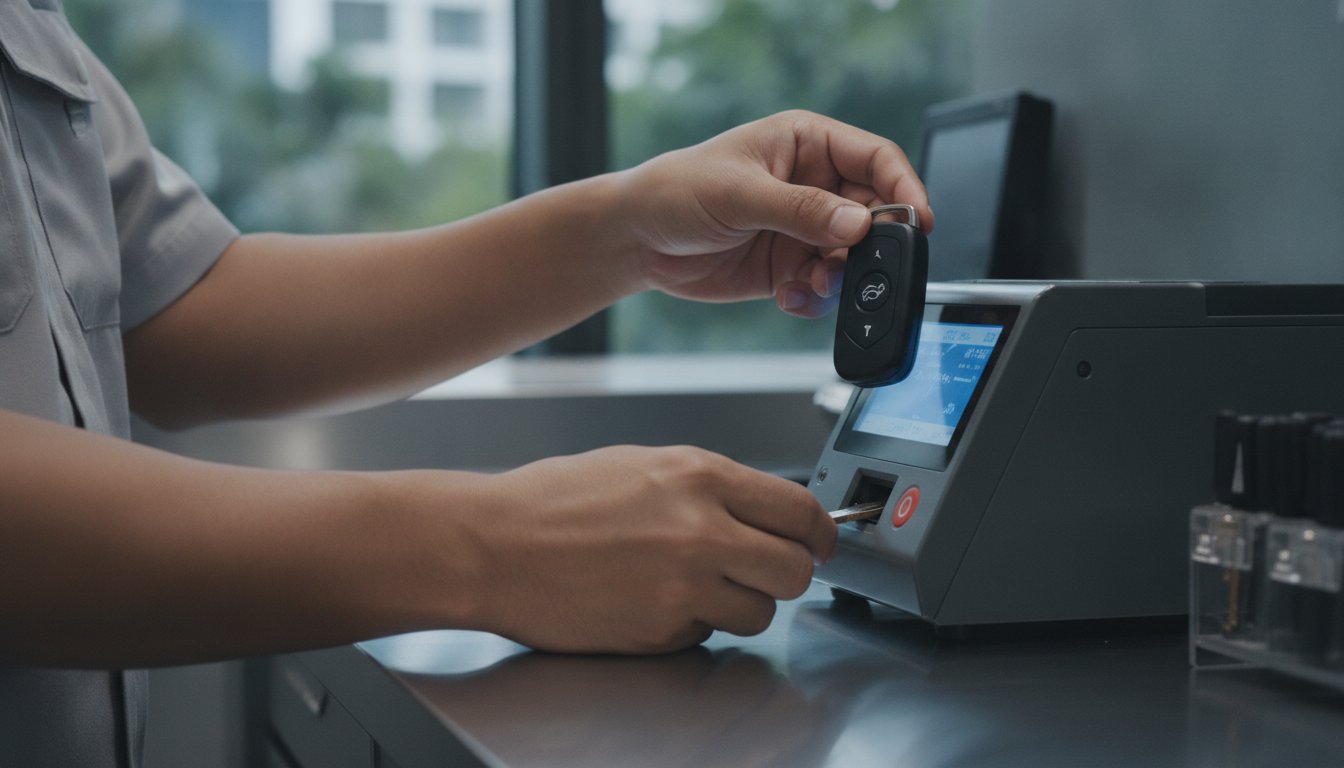
A specialist begins by testing the signal frequency and transponder ID of your existing remote to ensure it’s still broadcasting a valid signal. We then inspect the vehicle’s interior antennas for electronic faults that might be blocking the security handshake. Often, providing a duplicate car key is the most reliable way to verify if the issue is a hardware failure in the old remote. Every assessment is verified using your vehicle’s chassis number to ensure total compatibility before any programming begins. This precision-focused approach ensures the security system remains intact.
To receive an accurate assessment for your specific vehicle model, contact Soxxi Master for professional verification and a reliable solution.
Soxxi Master Solutions for Key Detection Issues
Soxxi Master provides a technical alternative to lengthy dealer wait times when your vehicle shows a car key not detected warning. Our team specializes in the diagnostic assessment of original car remote keys and advanced smart systems used across Singapore. Unlike general kiosks, we utilize professional-grade equipment to read the specific data packets transmitted by your key. If your system has completely failed and you have no working remotes, our all keys lost solution offers a methodical path to restoring vehicle access and ignition. Every service we perform is grounded in accuracy and technical mastery, ensuring your vehicle’s security protocols remain uncompromised. We focus on restoring the original functionality of your proximity system using verified components and specialized programming techniques.
Why Professional Verification Matters
Precision is the cornerstone of our service process. We use vehicle chassis numbers to verify that any new hardware is compatible with your specific immobiliser module, subject to the vehicle’s system requirements. This avoids the “parts-dart” approach where components are replaced based on guesswork or trial and error. Instead, we identify the exact point of electronic failure, whether it’s a corrupted transponder chip or a failing interior antenna module. Proper synchronization is essential for modern security. We ensure that every new key is correctly registered within the vehicle’s security database, preventing future car key not detected errors from recurring. This verified approach provides a long-term fix rather than a temporary workaround that might fail unexpectedly later.
Visit Our Specialist Centre at Jalan Pemimpin
For a definitive resolution, we invite drivers to visit our specialist centre at 37 Jalan Pemimpin. Our facility is equipped with advanced technical diagnostic tools that aren’t available at standard retail kiosks or general locksmith outlets. You’ll receive an on-site assessment from experienced technicians who understand the nuances of both traditional transponders and modern proximity keys. This professional environment allows us to perform deep-level diagnostics on the vehicle’s access control systems with high levels of competence. To streamline your experience and reduce waiting time, you can reach out via our online form for an initial assessment of your key issue. Providing your vehicle details in advance allows us to verify compatibility, depending on your model, and prepare the necessary diagnostic equipment before you arrive.
Restoring Reliable Access to Your Vehicle
Identifying the source of a car key not detected warning is the first step toward a permanent fix. We’ve explored how environmental factors, depleted batteries, and internal circuit damage can disrupt the essential handshake between your remote and the vehicle’s immobiliser. While emergency start methods provide a temporary workaround, they don’t address the underlying electronic fault that could leave you stranded again. Professional verification ensures that the root cause is addressed without risking damage to your car’s sensitive electronics.
As a pioneer in automotive key replacement in Singapore, Soxxi Master utilizes specialized diagnostic equipment to verify the health of your transponder system. We prioritize accuracy by using your chassis number to ensure total system compatibility before performing any service. Our expertise in complex transponder systems allows us to resolve detection issues that standard kiosks cannot handle. You should contact Soxxi Master for a professional key assessment to confirm the exact nature of your fault. Our team is ready to provide the technical clarity and efficient service needed to get you back on the road with confidence.
Frequently Asked Questions
Why does my car say ‘Key Not Detected’ when the battery is new?
Internal hardware damage or signal interference are likely culprits. Even with a fresh battery, micro-cracks in the circuit board or oxidized contacts can prevent the transponder from sending a clear signal. It is also possible the new battery is a low-quality cell that doesn’t meet the specific voltage requirements of your vehicle’s security module. Verification by a specialist can confirm if the internal chip is still functional and transmitting correctly.
Can I still start my car if the key fob is not detected?
Yes, most modern vehicles include a passive induction failsafe. You can typically start the engine by pressing the key fob directly against the Start/Stop button. This method uses a backup antenna to read the transponder chip without needing battery power from the fob. You should consult your owner’s manual to find the exact location of the emergency inductive sensor for your specific model to ensure a successful start.
Is it possible for a mobile phone to interfere with my car key signal?
Mobile phones and other electronic devices can definitely mask your key’s radio frequency. Holding a smartphone in the same hand as your remote often triggers a car key not detected error. To resolve this, keep your phone and key in separate pockets or hands. This simple separation usually allows the vehicle’s proximity sensors to receive the key’s transmission without being drowned out by surrounding electronic noise.
How do I know if the problem is my key or the car’s receiver?
The most effective way to determine the source of the fault is by using a spare key. If the second key works perfectly, the issue is isolated to the original remote’s hardware or battery. If both keys fail to register, the fault likely resides in the vehicle’s immobiliser module or internal receiver antennas. Professional diagnostic equipment is then necessary to read the system’s fault codes and identify the failure.
What should I do if both of my car keys are not being detected?
If both keys fail simultaneously, the vehicle’s 12V battery might be discharged. Proximity systems are sensitive to voltage drops and are often the first feature to stop working when a car battery is weak. If the car battery is healthy, the issue may be a fault in the immobiliser system itself. You should seek a professional assessment to verify the system’s integrity using your vehicle’s chassis number for accuracy.
Can a damaged key fob casing cause detection problems?
A damaged casing allows humidity and debris to reach the delicate internal circuit board. In Singapore’s humid climate, this often leads to oxidation on the battery contacts or micro-cracks in the soldering. If the casing is loose, the battery may not maintain a constant connection, causing intermittent detection failures. Replacing a worn shell and cleaning the contacts can often restore the signal strength and reliability of the remote.
Is professional key reprogramming necessary after a battery change?
Reprogramming is typically not required for a simple battery swap. However, if the car key not detected message remains after you install a high-quality lithium cell, the key may have lost its digital synchronization. This can happen if the battery was removed for too long or if internal components are failing. In these cases, a specialist must use diagnostic tools to securely resynchronize the key to your vehicle’s computer.
How long does a professional diagnostic assessment for a car key take?
A professional diagnostic assessment at our Jalan Pemimpin centre generally takes between 30 and 60 minutes. This timeframe allows our technicians to test the transponder ID and signal frequency using specialized equipment. We prioritize an accurate diagnosis to ensure the correct solution is provided for your specific vehicle. The exact time required depends on the complexity of your car’s electronic architecture and the specific fault detected during testing.