

You’ve just received a quote from the dealership for a replacement key fob and the price is high enough to make any driver pause. It’s a frustrating situation, especially when you’re already dealing with a broken casing or buttons that simply won’t respond. While the dealer is the traditional route, an aftermarket car remote offers a professional and efficient alternative for those seeking value without sacrificing security. Finding a functional replacement doesn’t have to be a guessing game of frequencies and transponder chips.
We recognize that modern vehicle security is increasingly complex, with 2026 models utilizing advanced protocols like CAN FD and Ultra-Wideband technology. This guide explores how high-quality aftermarket options compare to genuine dealer fobs in terms of build quality and electronic reliability. You’ll discover the importance of verification through your chassis number and why professional programming is essential for a seamless setup. Because every system is different, final compatibility is always subject to your specific vehicle details, ensuring you receive a solution that’s both durable and technically sound.
Key Takeaways
- Learn the essential components of a modern remote, including the transponder chip and internal circuit board, to understand how they interact with your vehicle’s security system.
- Discover how a high-quality aftermarket car remote compares to genuine dealer fobs in terms of material durability, feature parity, and overall electronic reliability.
- Understand why professional programming using specialized diagnostic tools is required for most modern vehicles to prevent electronic errors or immobiliser lockout.
- See why providing specific vehicle details, such as a chassis number, is necessary to verify compatibility and ensure a precise match for your car’s unique frequency.
- Compare the technical benefits of both original equipment and premium third-party alternatives to find a functional solution that meets your specific requirements.
What is an Aftermarket Car Remote?
An aftermarket car remote is a third-party device engineered to replicate the specific functions of an Original Equipment Manufacturer (OEM) fob. While many vehicle owners first encounter these when searching for alternatives to dealership services, it’s important to understand that these aren’t merely plastic shells. A complete electronic remote includes the internal circuitry required to transmit signals, whereas a replacement shell is only a cosmetic housing. Drivers in Singapore often choose these options for their immediate availability and the ability to select alternative designs, such as a folding flip-key, which may be more convenient than the original factory-issued key. Specialist providers often maintain a range of both original car remote keys and high-quality third-party alternatives to suit different needs.
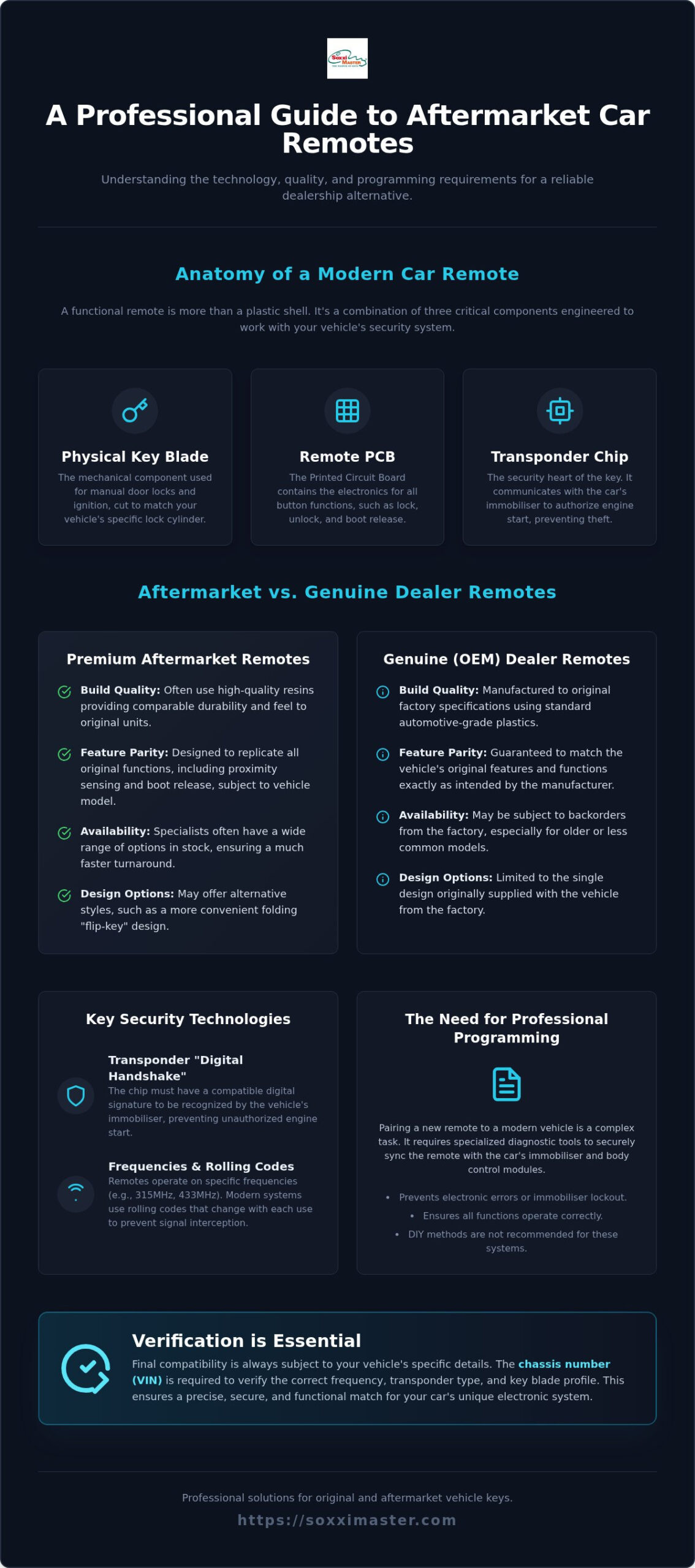
These devices consist of three essential parts: the physical key blade, the remote Printed Circuit Board (PCB) for button functions, and the transponder chip. The underlying Remote Keyless System technology allows these components to work in harmony with the vehicle’s security modules. High-quality third-party options are designed to integrate with these modules just as effectively as factory units. By choosing a professional solution, you ensure that the internal electronics meet the technical standards required for reliable operation, providing a functional alternative when original keys are backordered or discontinued. This technical parity is essential for maintaining the convenience of remote entry and vehicle security.
The Role of the Transponder Chip
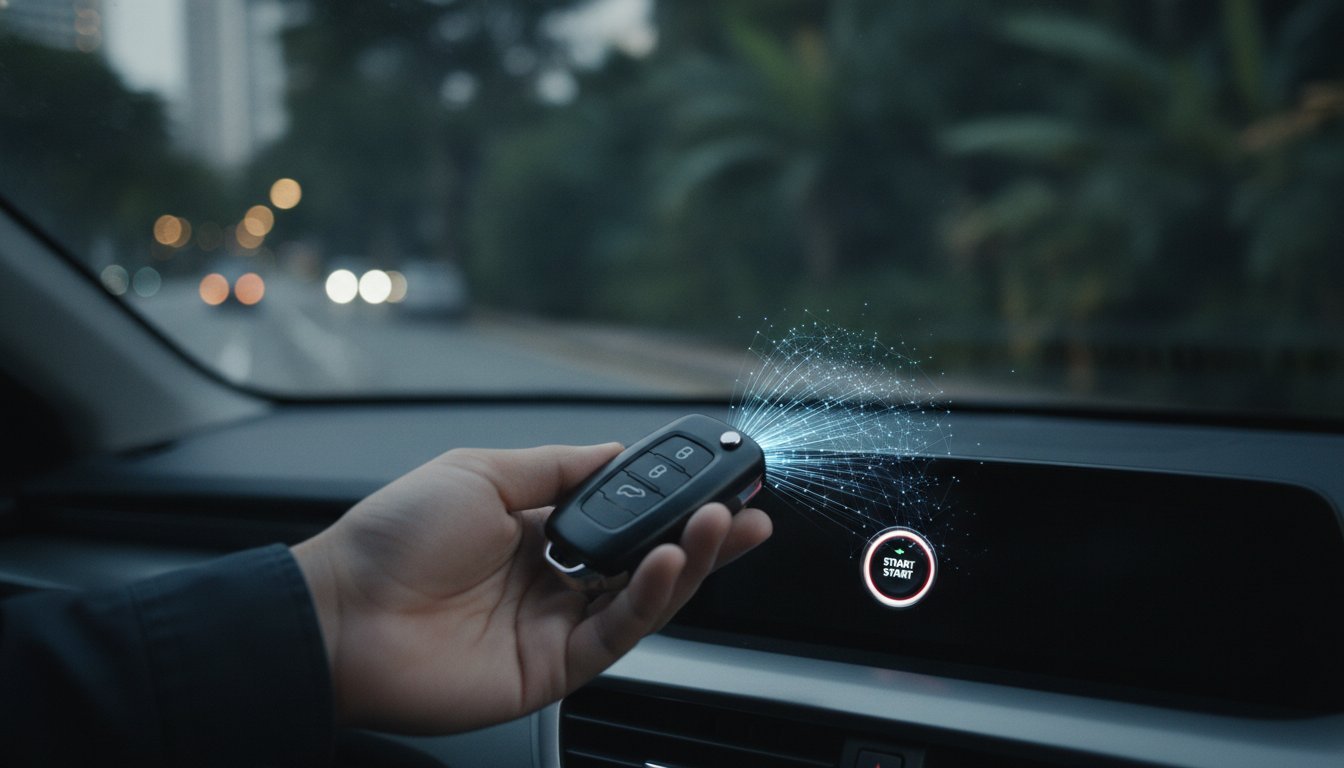
The transponder chip serves as the digital security heart of the device. When the key is used, it communicates with the vehicle immobiliser system to verify a unique digital signature. If the signature is not recognized, the engine will not start, effectively preventing unauthorized operation. An aftermarket car remote must contain a compatible chipset that matches the vehicle’s specific security encryption. This digital handshake acts as a gatekeeper against traditional hot-wiring, though compatibility varies by system and year. Because these chips are specific to the vehicle’s immobiliser generation, they require precise matching to ensure the car’s security remains uncompromised.
Remote Frequencies and Signal Types
For a remote to be functional, its frequency must match the car’s receiver exactly. In Singapore, common frequencies include 315MHz and 433MHz, although this depends on the vehicle’s region of origin. Modern systems typically use rolling code technology, where the signal changes with every press to prevent interception. Because these technical specifications are highly specific to each make and model, verification is never assumed and is always subject to compatibility with your vehicle’s electronic architecture. We encourage you to contact Soxxi Master for an accurate assessment and confirmation of your vehicle’s specific remote requirements using your chassis number.
Aftermarket vs. Genuine Dealer Remotes: A Detailed Comparison
Choosing between a genuine dealer fob and an aftermarket car remote involves evaluating several technical factors beyond just appearances. Original Equipment Manufacturer (OEM) remotes are built to factory specifications using standard automotive plastics. In contrast, premium third-party alternatives often utilize high-quality resins that provide comparable durability and weight. Feature parity is generally maintained across both options, including support for boot release, panic buttons, and proximity sensing, though this is always subject to vehicle model and year.
Availability remains a significant advantage for specialist providers. While dealerships may face backorders or discontinue keys for older vehicle models, specialists often maintain a diverse inventory of both original car remote keys and compatible alternatives. This ensures a faster turnaround for drivers who cannot wait weeks for a factory shipment. If you’re unsure which path to take, you can contact our team for a technical assessment of your specific needs.
Evaluating Reliability and Longevity
Reliability is often measured by battery efficiency and the tactile response of the buttons. High-quality aftermarket options are engineered to match the power consumption of genuine fobs, though battery life can vary depending on the specific chipset used. The tactile feedback of the buttons is designed to withstand thousands of presses, mirroring the “click” feel of an original unit. It’s important to remember that the longevity of any remote depends on the quality of its internal components and the precision of its assembly.
The Security Aspect
A common misconception is that an aftermarket car remote is less secure than a dealer-supplied version. In reality, security is determined by the programming process and the encryption of the transponder. When a specialist performs professional programming, the vehicle’s computer is updated to recognize only the specific keys present, effectively deauthorizing any lost or stolen fobs. For a deeper look at this technology, read our guide on What is a Transponder Key?.
Modern security also encompasses data integrity. With growing FTC scrutiny on connected car data, choosing a service provider that prioritizes secure, verified programming protocols is more important than ever. Compatibility is never assumed and must be verified using your chassis number before any service proceeds, ensuring the electronic handshake between the key and the vehicle is precise and secure.
Key Factors for Evaluating Aftermarket Quality
Quality in the aftermarket world varies significantly. While a budget option might look correct on the outside, the internal components often tell a different story. A high-quality aftermarket car remote features a precision-engineered Printed Circuit Board (PCB) designed to handle the rigors of daily use. These premium boards utilize stable oscillators to maintain frequency accuracy, ensuring the remote works every time you press a button. Poorly manufactured boards often suffer from weak solder joints that can fail after a few months of pocket wear.
Dust and water resistance are also hallmarks of superior quality. Premium casings include rubber gaskets and tight-fitting seams to protect the delicate electronics from Singapore’s humid climate. If these seals are absent, moisture can quickly corrode the PCB, leading to unresponsive buttons or total failure. It’s also vital to ensure the remote is compatible with your existing mechanical emergency key. A mismatch here could leave you unable to enter the vehicle if the battery dies, making a precise mechanical fit just as important as the electronic one.
Casing vs. Internal Electronics
Many drivers assume they need a brand-new device when their buttons stop clicking. Often, the issue is simply a worn-out micro-switch or a cracked shell. In these cases, a professional key fob repair is the more efficient choice. If the internal electronics remain functional, we can transplant them into a fresh casing or resolder the switches to restore tactile response. Depending on the model, you might even have the option to upgrade to a more modern flip-key design during this process, subject to compatibility with your original internal board.
Verification via Chassis Number
Verification is the only way to avoid the “universal remote” trap. Generic remotes often struggle with the complex rolling code systems found in modern European and Japanese vehicles. By providing your chassis number, you allow for a technical cross-reference against manufacturer databases. This ensures the transponder chip and frequency are an exact match for your car’s immobiliser system. Final confirmation is required before any service can proceed to ensure a successful and secure result. If you’re unsure about your vehicle’s specific requirements, you can contact our specialists for an accurate assessment of your chassis details.
The Professional Programming Process
Modern vehicles manufactured after 2010 are essentially rolling computers. Programming an aftermarket car remote is a precise technical task that requires specialized diagnostic equipment to interface with the vehicle’s Engine Control Unit (ECU). Using unverified DIY tools found online carries a significant risk of corrupting the vehicle’s software. This can lead to a total system lockout where the ECU refuses to recognize any key, necessitating a complex reset process. Professional service ensures that the integration is handled safely through the OBDII port rather than through unverified software bypasses.
Security management is a primary benefit of professional programming. Specialists can access the car’s memory to identify exactly how many keys are currently registered to the system. If you’ve lost a remote or purchased a second-hand vehicle, we can clear old digital signatures from the car’s memory. This ensures that only the remotes in your possession can start the engine, effectively neutralizing the security risk of lost or stolen fobs. This level of control is essential for maintaining the integrity of your vehicle’s immobiliser system.
Diagnostic Tool Integration
The choice between cloning and programming depends on your vehicle’s architecture and your current situation. Cloning an existing working remote involves copying the digital data onto a new chipset, which is a viable solution for many models. However, if no working key remains, a more advanced all keys lost solution is required. This involves generating new security codes directly from the immobiliser module itself to restore access.
Final confirmation of the system requirements is always verified against your chassis number first. This ensures the hardware is compatible with the specific encryption used in your vehicle. Service availability for these advanced procedures depends on the specific vehicle model and year. We encourage you to contact Soxxi Master for an accurate assessment and confirmation of your specific vehicle’s programming needs.
Professional Aftermarket Solutions at Soxxi Master
Soxxi Master operates as a pioneer in Singapore’s automotive key duplication industry, providing technical solutions from our service center at Jalan Pemimpin. Our approach to supplying an aftermarket car remote is built on precision rather than guesswork. We maintain an extensive inventory that includes both original car remote keys and high-quality third-party alternatives. This variety ensures that vehicle owners have options that suit their specific technical requirements and preferences. Whether you require assistance with a modern vehicle, a motorcycle, or even auto gate remotes, our focus remains on delivering a functional and durable result.
Accuracy is the cornerstone of our service. We follow a strict “verify first, service second” protocol. This means we don’t proceed with duplication or programming until we’ve confirmed the electronic architecture of your specific vehicle. Technical details, such as the immobiliser generation and frequency requirements, are thoroughly checked to ensure seamless integration. This methodical process reduces the risk of electronic conflicts and ensures that your new remote functions as intended.
Why Choose a Specialist Over a Generalist?
General locksmiths may handle basic mechanical locks, but automotive transponder systems require a deeper level of electronic expertise. As specialists, we understand the nuances of various manufacturer security protocols, from traditional fixed codes to modern encrypted rolling codes. We prioritize pricing transparency, ensuring you understand the scope of the work before any service begins. This approach avoids the frustration of hidden diagnostic fees often found elsewhere. For more detailed insights into the technical process, you can read our Guide to Car Key Duplication in Singapore.
How to Get Started
Initiating a request for an aftermarket car remote is a straightforward process designed for your convenience. You can reach out to us through our WhatsApp channel or by using our online form for an initial compatibility check. To provide an accurate assessment, please have your vehicle’s make, model, year, and chassis number ready. This information allows our team to cross-reference our database and confirm hardware availability. Once verified, you can visit our service center at 37 Jalan Pemimpin for a professional assessment. Final confirmation of compatibility is always required before any service can proceed, ensuring your vehicle’s security remains uncompromised. Contact Soxxi Master today to verify your specific needs and receive a professional assessment of your vehicle’s remote requirements.
Securing Your Vehicle Access with Professional Precision
Selecting an aftermarket car remote requires a careful balance of technical verification and hardware quality. As we’ve explored, the internal PCB design and proper environmental sealing are just as critical as the physical casing. Most importantly, professional programming through specialist diagnostic equipment ensures your vehicle’s security system is correctly configured. This process also allows for lost keys to be safely cleared from the car’s memory, providing an essential layer of protection for your vehicle.
Soxxi Master remains Singapore’s pioneer in automotive key replacement, offering expertise that bridges mechanical craftsmanship and modern electronics. Our convenient service center at Jalan Pemimpin is fully equipped to handle complex transponder systems and electronic duplication with high levels of precision. Because every vehicle system is unique, final confirmation of any service is always subject to a technical match with your specific chassis number. We invite you to contact Soxxi Master for a professional compatibility assessment to ensure your replacement remote is a perfect match for your car’s security architecture. Taking these professional steps now ensures long-term reliability and peace of mind whenever you’re on the road.
Frequently Asked Questions
Can I program an aftermarket car remote myself?
Modern vehicles typically require professional diagnostic tools for secure programming. While some older models might support manual sequences, vehicles manufactured after 2010 utilize advanced security protocols that must be accessed through the OBDII port. Attempting a DIY solution on these complex systems carries a high risk of locking out the immobiliser or corrupting the vehicle’s software. Entrusting this process to a specialist ensures the electronic integration is handled safely and accurately.
Are aftermarket remotes as secure as original dealer keys?
Security is maintained through professional programming protocols and the quality of the internal transponder. An aftermarket car remote provides the same level of protection as a dealer key when it’s correctly synchronized with your vehicle’s ECU. During the setup process, we can clear the digital signatures of any lost or stolen keys from the car’s memory. This ensures that only the remotes currently in your possession are authorized to start the engine.
What should I do if my aftermarket remote stops working?
Start by verifying the battery is fresh and correctly installed. If the remote remains unresponsive, the issue might involve worn micro-switches on the circuit board or a damaged casing. Instead of seeking a full replacement, you can visit our service center at Jalan Pemimpin for a professional assessment. We often provide repair services that restore functionality to the internal electronics, which is an efficient alternative to purchasing a completely new unit for your vehicle.
Will an aftermarket remote affect my car’s warranty?
Using an aftermarket car remote does not void your vehicle warranty. Under the Magnuson-Moss Warranty Act, manufacturers cannot legally void a warranty simply because a third-party part was used. The manufacturer must prove that the specific aftermarket component directly caused a failure to deny a warranty claim. Our technical approach focuses on non-invasive programming that maintains the integrity of your vehicle’s existing electronic systems and security architecture.
Can you provide a remote if I have lost all my original keys?
Can you provide a remote if I have lost all my original keys?
The time required for programming depends entirely on your vehicle’s specific security encryption and the complexity of the immobiliser system. Some systems allow for rapid integration, while others require a timed bypass period to gain authorized access to the ECU. We prioritize technical precision over speed to ensure every function, including proximity sensing and boot release, is fully tested. This methodical approach ensures a reliable result without compromising the vehicle’s electronic stability.
Do aftermarket remotes come with a physical emergency key?
Most aftermarket units include a mechanical emergency key blade as part of the complete assembly. This blade is essential for entering the vehicle if the remote battery fails or the car’s power is depleted. During your service, we use precision key-cutting machinery to match the blade to your vehicle’s mechanical locks. This ensures you have a complete solution that provides both electronic convenience and mechanical reliability, though final fitment is always subject to your specific lock type.
Why do I need to provide my chassis number for a remote quote?
The chassis number is the only reliable way to verify technical compatibility before any service proceeds. This unique identifier allows us to cross-reference manufacturer databases to identify the exact frequency and transponder chipset required for your vehicle. Without this verification, there’s a risk of selecting hardware that won’t communicate with your car’s immobiliser. We encourage you to contact Soxxi Master for an accurate assessment and final confirmation of your specific vehicle’s remote requirements.