


The lower upfront cost of a non-genuine car remote can turn into a false saving if it wears out sooner or needs repair. Problems with non-genuine car remotes may include poor physical finish, unreliable operation or compatibility issues, so the purchase price alone does not tell the whole story.
It’s sensible to look closely at the materials, packaging, labels and security features before deciding. This guide explains how to weigh possible repair costs against the initial saving, spot signs of accelerated wear and assess the information supplied with a remote. Compatibility should also be verified using vehicle details, such as the chassis number, and final confirmation is required before any service can proceed. These checks help you make a more informed decision without assuming that every non-genuine remote has the same quality or risk.
Key Takeaways
- Weigh the purchase cost against possible repeat replacements or repairs to judge whether an apparent saving is worthwhile.
- Look for signs of poor finish or early wear, which may indicate materials that break down sooner.
- Review packaging, labels, security features and part details when assessing a remote’s authenticity.
- Compatibility varies by vehicle. Contact Soxxi Master with your vehicle details, such as the chassis number, for verification and final confirmation before service proceeds.
Repair costs and false savings
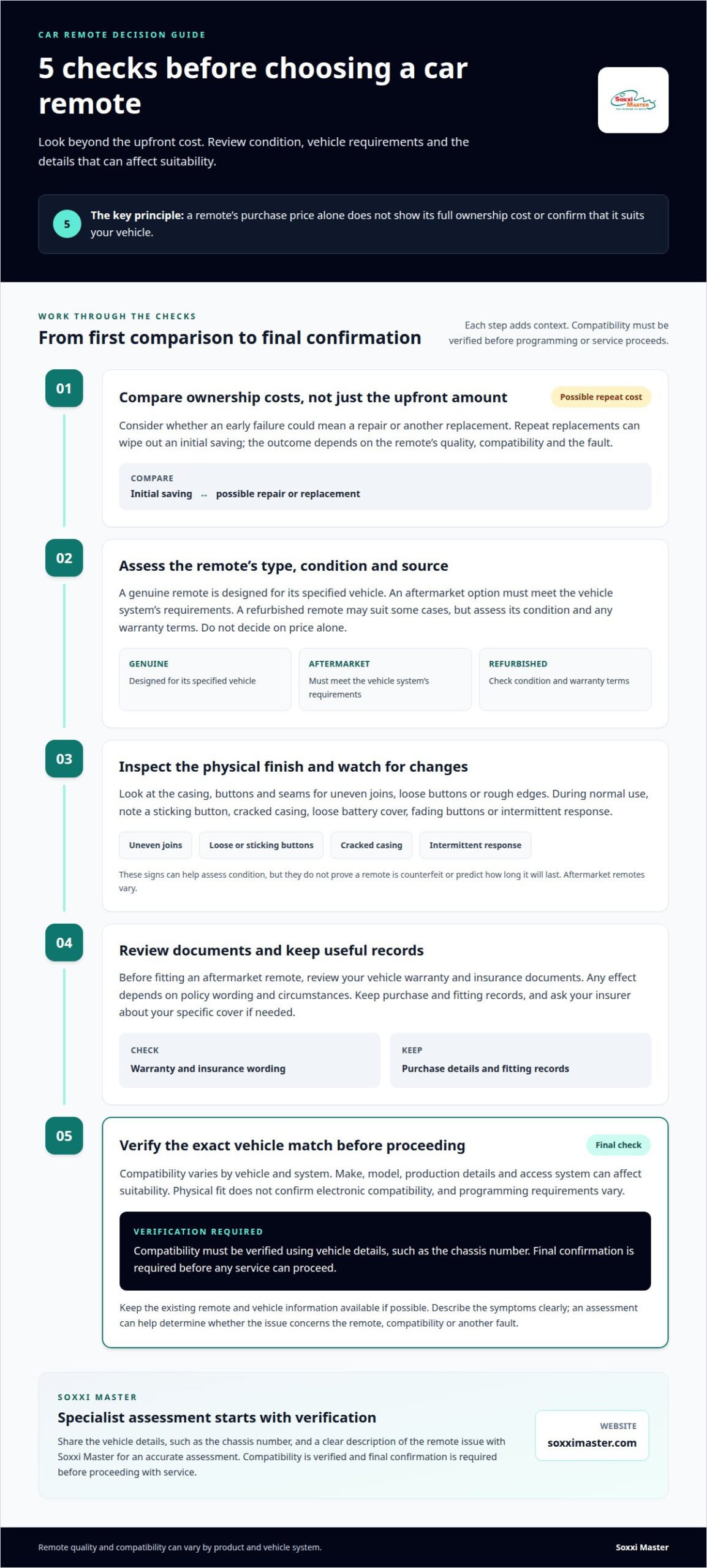
- Compare the potential ownership costs, not just the amount paid upfront. Consider whether an early failure could mean another replacement or a repair. For example, repeat replacements can wipe out the initial saving. The outcome depends on the remote’s quality, compatibility and the fault.
- Choose a remote based on its fit, condition and source. A genuine remote is designed for its specified vehicle; an aftermarket option must meet the vehicle system’s requirements. A refurbished remote may suit some cases, but assess its condition and any warranty terms. Do not decide on price alone.
- Review your vehicle warranty and insurance documents before fitting an aftermarket remote. The effect depends on the policy wording and circumstances. Keep purchase and fitting records, and ask your insurer about your specific cover if needed.
- Do not assume that a non-genuine remote will damage the immobilizer or vehicle electronics. Compatibility issues or faulty components may cause operating problems, depending on the remote and vehicle system. If the vehicle or remote behaves differently after fitting, arrange a technical assessment before continuing to rely on it.
- Whether a remote can be programmed depends on its compatibility with the vehicle. Requirements vary by system, so do not assume a remote will work across different makes and models. Compatibility must be verified using vehicle details, such as the chassis number, before programming can proceed.
How material quality may affect wear
- Inspect the casing, buttons and seams before accepting a remote. Look for uneven joins, loose buttons or rough edges. These signs can help you assess the finish, but they do not prove a remote is counterfeit or predict how long it will last.
- Pay attention to changes during normal use. Note, for example, if a button sticks, the casing cracks or the battery cover loosens. Record when the issue began and which functions are affected. This makes it easier to describe the symptoms without assuming their cause.
- Do not assume aftermarket remotes as a category have weaker range or shorter battery life. Performance depends on the specific remote and its compatibility with the vehicle. If response becomes intermittent, note when it happens and seek an assessment rather than guessing at the cause.
- Material quality can affect a remote’s condition over time. Non-genuine parts vary, and some materials may wear or break down sooner. Visible damage, such as a cracked shell or broken button, can affect usability. Not every aftermarket remote has the same materials or durability.
- Keep your purchase details and note any changes over time, such as fading buttons, a damaged casing or intermittent response. If the problem continues after replacing the battery, have the remote assessed instead of repeatedly replacing parts without identifying the fault.
Are aftermarket car remotes compatible with all makes and models?
- Assume compatibility varies, rather than expecting one remote to fit every vehicle. The make, model, production details and access system can all affect suitability. Remotes that look alike may not operate the same vehicle, so appearance alone is not enough to confirm a match.
- Provide the vehicle details needed for a proper match. The chassis number can help identify the specific vehicle, alongside its make and model. Compatibility must be verified using vehicle details, such as the chassis number, before proceeding. Final confirmation is required before any service can proceed.
- Physical fit and electronic compatibility are different. A remote may fit the key housing but still be unsuitable for the vehicle’s system. Programming requirements also vary. Have the complete remote and vehicle combination assessed, not just the casing or button layout.
- Describe the fault clearly if you are replacing a working remote. Note whether the buttons respond inconsistently, the remote is physically damaged, or the vehicle does not recognise it. These symptoms can have different causes. An assessment can help determine whether the issue is the remote, compatibility or another fault.
- Keep the existing remote and vehicle information available for assessment. If the original remote still works, its details may help identify a suitable replacement. Do not rely on a generic online description that lists broad vehicle coverage. The specific remote and vehicle need to be assessed together.
Soxxi Master: Auto Gate Remote Duplication
Soxxi Master duplicates auto-gate remotes for compatible gate systems. This is a separate service from resolving car remote faults. For vehicle keys, Soxxi Master provides car and motorcycle key duplication, subject to compatibility with the vehicle and system.
Before work proceeds, compatibility must be verified using the vehicle details, such as the chassis number. Final confirmation is required before any service can proceed. This helps ensure the assessment is based on the specific vehicle, rather than appearance alone.
If you’re unsure whether your issue concerns a car remote or an auto gate remote, share the relevant details for an accurate assessment. Contact Soxxi Master to discuss your needs and receive final confirmation before proceeding.
Make your next remote decision with confidence
If problems with non-genuine car remotes continue, identify the cause before replacing parts again. A clear description of the fault and the vehicle details can help guide the assessment.
Soxxi Master provides car and motorcycle key duplication and an All Keys Lost Solution for relevant vehicle-key needs. RFID access card cloning is available for access-card requirements. Vehicle compatibility must be verified using details such as the chassis number before programming proceeds.
Share your vehicle and remote details, along with a clear description of the problem, to help assess the issue and determine the appropriate next step.
With the right information, you can move forward with greater clarity.
Frequently Asked Questions
What problems can non-genuine car remotes cause?
Non-genuine remotes may have inconsistent operation, physical wear or compatibility issues. Buttons might stop responding reliably, or the vehicle may not recognise the remote. These problems can disrupt everyday access and require assessment to identify the cause. Problems with non-genuine car remotes vary by product and vehicle, so symptoms alone do not establish whether a remote is counterfeit.
Can a non-genuine remote compromise car security or be cloned easily?
A non-genuine label alone does not show whether a remote compromises security or can be cloned easily. Security depends on the remote and the vehicle’s access system, and appearance cannot confirm how either is protected. Avoid sharing remote or vehicle security details publicly. If you are concerned about a remote, arrange an assessment based on the specific vehicle and remote.
How can I tell whether a car remote is genuine or counterfeit?
Look for inconsistencies in packaging, labels, logos, security marks and part numbers, but treat them as clues, not proof. Compare the details with official manufacturer information, including any available verification feature. Keep the invoice and seller details. A convincing appearance does not confirm authenticity; an assessment may help interpret the remote’s markings.
What should I check before buying or programming a replacement car remote?
Before buying, gather the vehicle’s make, model and chassis number, along with details from the existing remote if available. Check the seller information, part number, invoice and stated warranty terms. Compatibility must be verified using vehicle details, such as the chassis number, before programming. Suitability varies by system, so do not assume a match based on a listing alone.
What are the risks of buying a non-genuine car remote online in Singapore?
Online listings may not clearly explain a remote’s origin, condition or vehicle compatibility. A product may arrive with different markings or specifications than expected, while incomplete seller or invoice details can complicate follow-up. Review the listing carefully and retain order records. Do not assume a remote will work simply because its description names your vehicle; compatibility needs to be verified.