

What if the small crack in your remote is actually a ticking clock for your vehicle’s security? It’s a common frustration when buttons become unresponsive or you find yourself relying on tape to hold your key together. You likely worry about the transponder chip falling out or the delicate internal electronics suffering permanent damage. Understanding how to fix broken car key casing issues correctly is the most effective way to avoid the much higher cost of a full electronic replacement.
We understand that your priority is a sturdy, functional key that looks and feels like the original. This guide explains why a compromised shell is a structural risk and how professional restoration preserves your key’s functionality. Depending on your specific model and system compatibility, professional shell replacement offers a fast solution that protects your expensive internal components. We will preview the restoration process that avoids the need for complex re-programming while ensuring your vehicle remains secure and functional. This approach prioritizes precision and technical accuracy to keep your access systems running smoothly throughout 2026.
Key Takeaways
- Understand why a cracked casing is a structural failure that exposes sensitive electronic components to moisture and dust.
- Learn how to fix broken car key casing issues through professional shell restoration to maintain the integrity of your original remote.
- Discover why DIY repairs with adhesives or tape can lead to permanent damage of the internal microswitches and circuitry.
- Recognize that casing solutions are highly specific to your vehicle’s model and year, requiring verification for a precise fit.
- Explore how expert assessment prioritizes the preservation of genuine transponder chips to avoid the need for complex re-programming.
The Hidden Risks of Using a Broken Car Key Casing
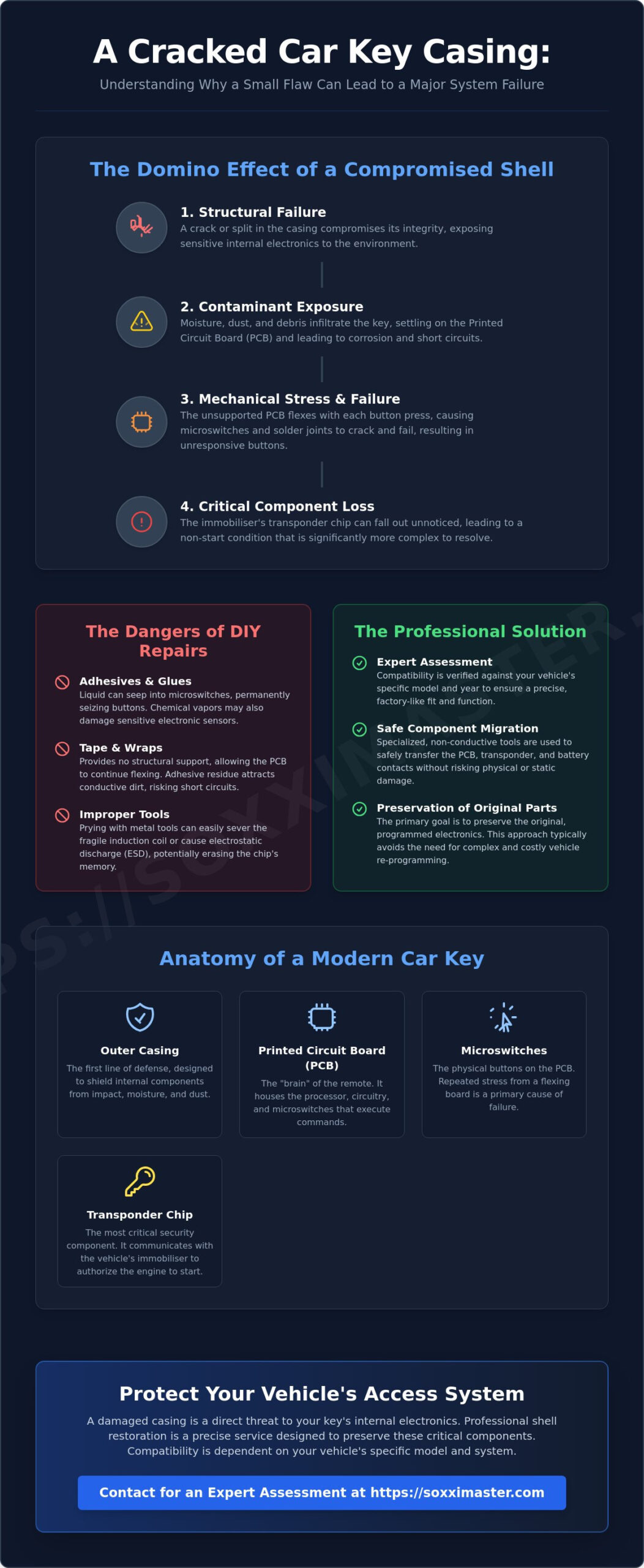
A car key casing is more than a plastic handle. It’s a precision-engineered shield for the sensitive electronic components that allow your vehicle to start and lock. When you notice structural cracks, you’re seeing the first sign of a security vulnerability. These gaps allow moisture and microscopic dust to settle directly onto the Printed Circuit Board (PCB). Over time, environmental exposure leads to corrosion, which can cause the remote to fail entirely. Choosing to fix broken car key casing damage early prevents these contaminants from compromising the delicate circuitry inside.
Mechanical stress is another significant concern. A healthy casing provides a rigid platform that aligns your finger’s pressure with the internal microswitches. When the shell is broken, that support vanishes. Every time you press a button, the internal board flexes. This repeated movement often causes microswitches to snap off the PCB or damages the solder joints. What starts as a “sticky” button often ends in a dead remote that no longer communicates with the vehicle. Proactive restoration ensures the hardware remains stable enough to protect these tiny, fragile parts.
Understanding the Role of the Transponder Chip
Modern vehicle security relies on transponder keys to prevent theft. Inside your key casing sits a tiny transponder chip that communicates with the car’s immobiliser system. If the chip isn’t within a specific proximity to the ignition cylinder, the engine won’t start. When a casing splits open, this chip can easily fall out without you noticing. Losing this component often results in a total “all keys lost” scenario. This is much more difficult to resolve than a simple shell replacement, as the vehicle’s computer would no longer recognize any authorized hardware.
When a Broken Shell Becomes a Locksmith Emergency
A compromised casing can quickly transition from a nuisance to an emergency. If you notice the internal components shifting when you turn the key, the structural integrity is gone. In some cases, a cracked shell can even jam or break apart inside the ignition cylinder, leading to a mechanical lockout. If the damage reaches this stage, a standard shell swap might not be sufficient. You may require a full key duplication service to restore reliable access to your vehicle. Professional assessment helps identify if the internal electronics are still viable for a casing transfer before a total failure occurs. Final confirmation of compatibility depends on your specific vehicle model and system type.
Why DIY Repairs May Compromise Your Key System
Home repairs often seem like a logical first step when your key starts to split. However, attempting to fix broken car key casing damage with common adhesives like superglue creates significant risks. The liquid is incredibly thin and can cause several issues:
- Liquid seeping into microswitches
- Chemical vapors clouding internal sensors
- Permanent seizure of mechanical buttons
Once these buttons are permanently stuck, the remote becomes useless. Professional restoration ensures that no chemicals interfere with the electronic components.
Tape is another popular but flawed solution. It provides zero structural rigidity, which allows the internal board to flex and eventually crack solder joints. Over time, the adhesive on the tape degrades into a sticky residue. This substance attracts conductive dirt and metallic particles that can cause short circuits on the Printed Circuit Board (PCB). If you’ve encountered deceptive practices while seeking help for these issues, you can file a complaint through official consumer protection channels.
The most dangerous part of a DIY shell transfer is the risk to the induction coil. This delicate copper winding is essential for the immobiliser system. It’s often glued to the old plastic or positioned very close to the edge. One slip of a screwdriver or a rough prying motion can sever the wire, rendering the car unable to start. Unlike a broken button, a damaged induction coil often requires a complete electronic replacement. A professional approach to fix broken car key casing problems avoids these mechanical pitfalls by using specialized extraction tools. Specialists use non-conductive equipment to safely migrate the electronics without risking a static discharge that could erase the chip’s memory.
The Problem with Adhesives and Static
Chemical vapors from high-strength glues can “bloom” inside the casing, leaving a white residue that clouds internal sensors. Beyond chemical damage, the risk of Electrostatic Discharge (ESD) is high. Handling a bare PCB without professional grounding equipment can fry the sensitive logic gates. Additionally, a glued key is nearly impossible to open for future battery changes without destroying the shell again.
Fitment Issues with Low-Quality Aftermarket Parts
Low-quality aftermarket shells often lack the precise internal tolerances required for your key. These parts may lead to rattling electronics, which stresses the solder joints of the transponder chip. Compatibility is never assumed and must be verified using specific vehicle details, like a chassis number. Final confirmation is always required before any service can proceed. For a reliable assessment, you should contact Soxxi Master to verify these details and receive confirmation of your specific needs before proceeding.
The Professional Process of Restoring Car Key Casings
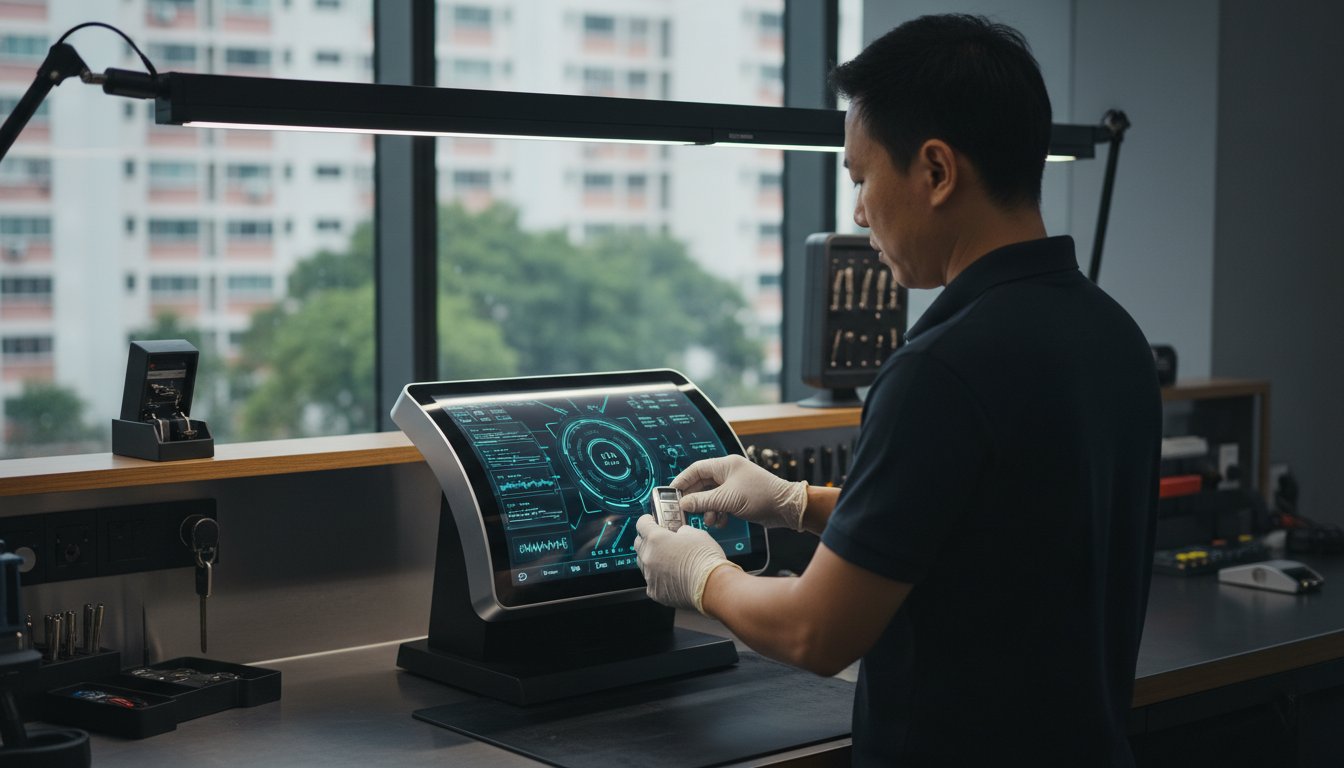
A professional approach to fix broken car key casing issues involves more than just a shell swap. It’s a methodical process designed to ensure the longevity of your vehicle’s access system. The procedure begins with a detailed assessment of the Printed Circuit Board (PCB). Specialists verify that the existing electronics are free from corrosion or physical damage before any transfer occurs. This step is vital. Re-housing a damaged board into a new casing won’t solve underlying electronic failures. It only hides them.
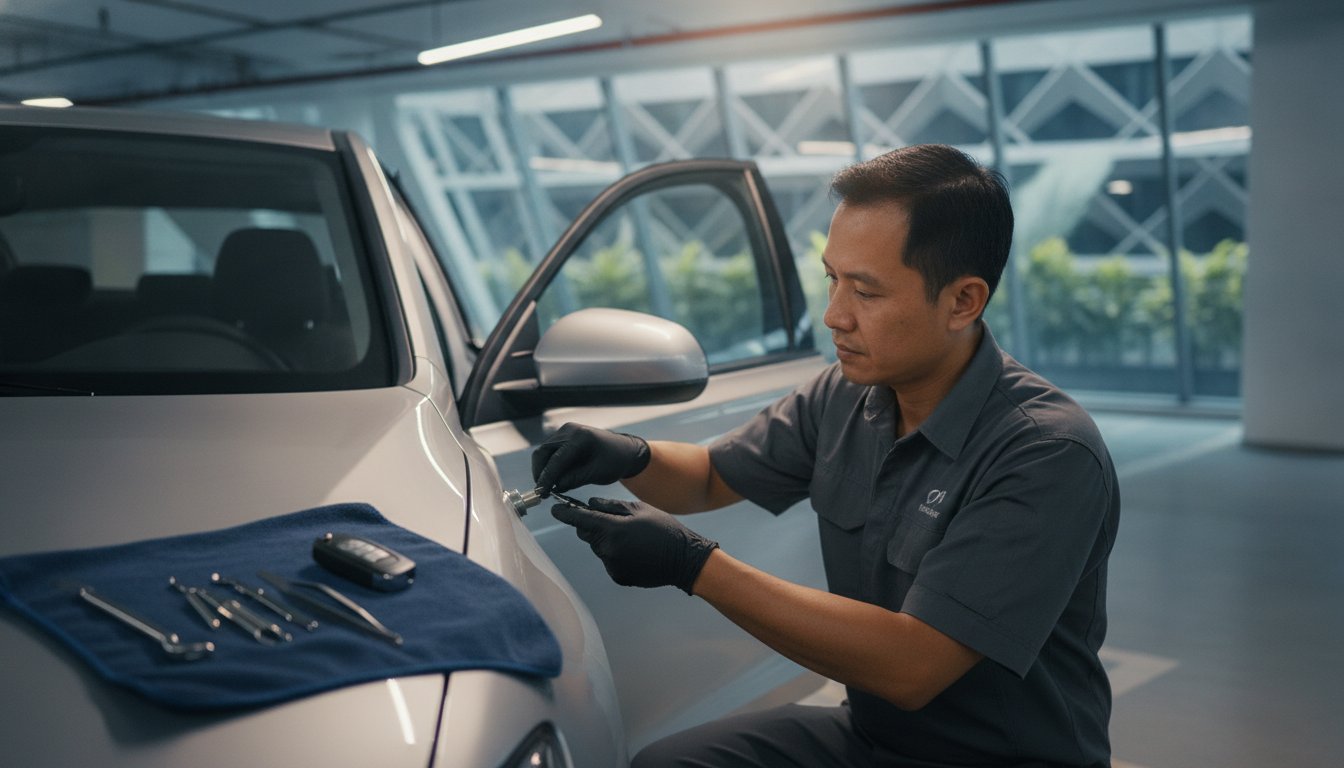
Once the board’s health is confirmed, the precision extraction of the transponder chip and remote electronics follows. Depending on the model, these components can be fragile or securely bonded to the original plastic. Professionals use non-marring tools to remove these elements without applying stress to the solder joints. The selection of a high-quality replacement casing is equally important. The new shell must match the original manufacturer’s specifications. This ensures every internal component sits securely in its designated cradle without rattling.
Step-by-Step Casing Replacement
Disassembling a key requires specialized tools to avoid damaging the internal logic. Once the shell is open, the PCB is cleaned of any accumulated debris or oxidation. This debris often enters through cracks in the old housing and can cause future button failure if not removed. The transponder chip is then seated into its new compartment. Proper positioning is essential. Even a few millimeters of misalignment can interfere with the immobiliser system’s ability to read the chip, leading to intermittent starting issues.
Verification and Final Testing
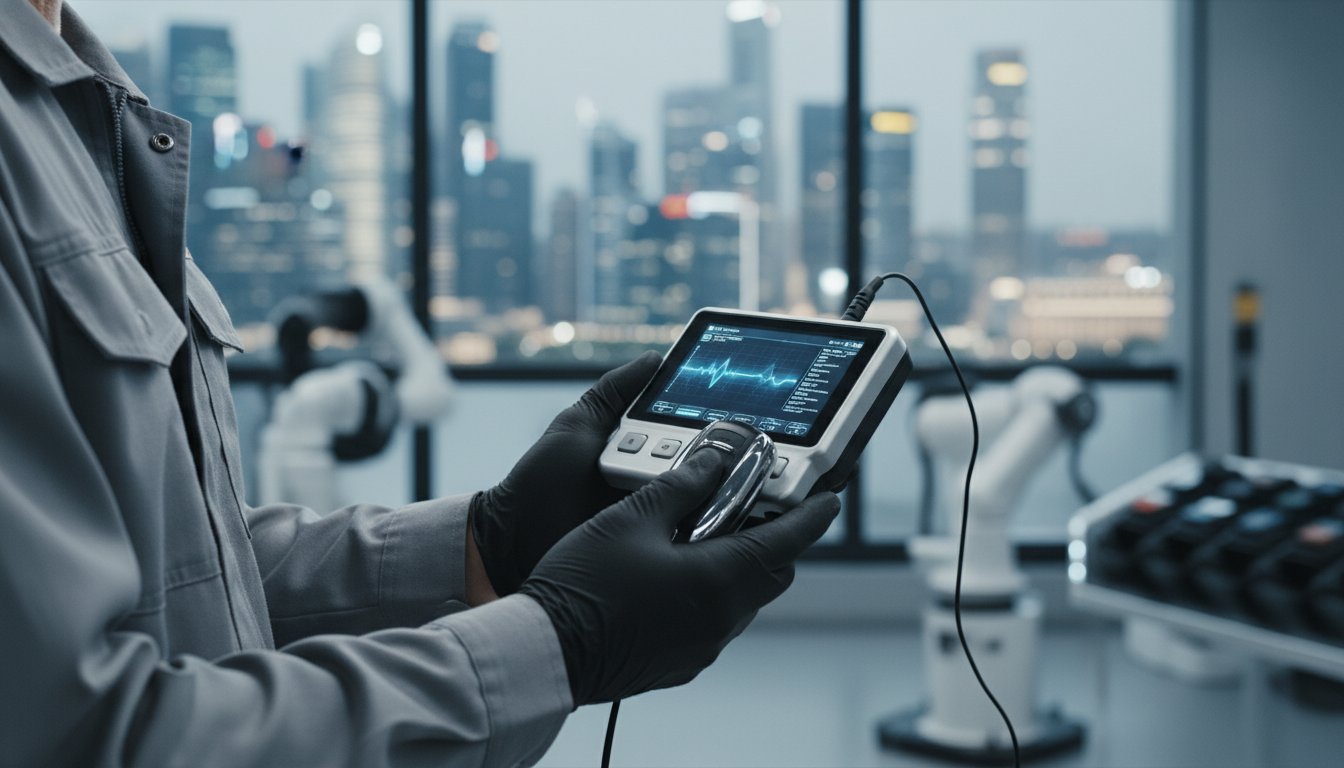
A key isn’t ready for use until it passes a series of rigorous tests. Specialists use frequency testers to confirm the remote is transmitting the correct RF signal. This ensures that the buttons are responsive and the battery contact points are secure. For flip keys, the mechanical folding mechanism is tested for stability and smooth operation. The final and most important step is a start-up test. This confirms the immobiliser recognizes the transponder in its new housing. Using a professional service to fix broken car key casing damage ensures that the transition is seamless and the key remains as reliable as the original.
Compatibility is not assumed and must be verified using specific vehicle details, such as a chassis number. Final confirmation is required before any service can proceed. For an accurate assessment of your specific vehicle needs and to confirm compatibility, please contact Soxxi Master to speak with an experienced specialist.
Understanding Compatibility and Casing Types
Automotive key designs aren’t universal. A shell that appears identical to yours in a photograph might have completely different internal mounting points. This is especially true for regional market variations, where the Singapore variant of a vehicle may use different internal hardware than the same model sold in Europe or the US. When you need to fix broken car key casing components, the first step is identifying the exact architecture of your key. Most modern systems utilize one of three primary designs: integrated remote keys, mechanical flip keys, or smart key fobs. Each type requires a specific shell that aligns perfectly with the original Printed Circuit Board (PCB).
The quality of the material determines how long the repair will last. High-grade ABS plastic is preferred for its impact resistance and thermal stability. In contrast, lower-quality alternatives often feel brittle and can crack under the mechanical stress of turning the ignition. Professional providers don’t assume compatibility based on appearance alone. Verification using specific vehicle details, such as the chassis number, is a standard part of the process. It’s important to remember that final confirmation of the system type is required before any service can proceed, as internal layouts vary by system and production year.
Flip Keys vs. Smart Fobs
Flip keys involve mechanical complexities that standard remotes don’t share. The spring-loaded folding mechanism relies on precise pivot points within the casing. If the housing is even slightly off-spec, the blade may not lock into place or could become loose over time. Smart key fobs focus on protecting proximity sensors and internal antennas. These casings often incorporate internal gaskets to guard against dust and moisture. Subject to compatibility, certain luxury smart fobs require specific shell tolerances to ensure the emergency bypass blade remains accessible and secure.
Durability in the Singapore Climate
The local climate in Singapore presents specific challenges for car key longevity. High humidity levels and intense heat can cause rubberized buttons to degrade, becoming sticky or tearing away from the plastic frame. Professional-grade casings are better suited for these environmental stressors, as they use materials designed to resist UV damage and moisture absorption. To extend the life of your new shell, avoid leaving your keys in direct sunlight on the dashboard and keep them away from high-moisture environments.
If you’re unsure which housing your vehicle requires, it’s best to seek an expert opinion. You can explore car key casing solutions at Soxxi Master to find a durable, high-quality replacement that matches your original hardware specifications and ensures long-term reliability.
Expert Assessment and Casing Solutions at Soxxi Master
Soxxi Master provides a professional alternative to drivers who want to avoid the significant expense of a full dealer replacement. When you choose to fix broken car key casing issues through our service, our specialists prioritize the preservation of your original, genuine electronics. We recognize that the Printed Circuit Board (PCB) and transponder chip are the most valuable components of your access system. Our methodical approach ensures these parts are transferred into a high-grade housing without disturbing the delicate internal connections or induction coils discussed in previous sections.
Service availability varies by system and requires a physical assessment for confirmation. We don’t assume compatibility based on a visual check alone; instead, we rely on technical verification to ensure a precise fit. This commitment to accuracy prevents future mechanical or electronic failures, providing you with a key that looks and functions like the original. Depending on your vehicle model, we focus on maintaining the structural integrity of your hardware to ensure long-term reliability. Our goal is to provide a solution that restores your key’s original tactile feel and security.
Why Choose a Specialist for Key Repair?
Handling the intersection of traditional craftsmanship and modern digital security requires a specific set of skills. Our team has extensive expertise in both traditional mechanical keys and modern electronic remotes. We maintain access to a wide range of high-quality replacement parts for various makes and models, ensuring that the components used for your repair meet strict standards. You can explore our solutions for original car remote keys to understand how we restore functionality to compromised hardware using verified parts and precise techniques.
Get an Accurate Assessment Today
We encourage you to bring your keys to our Jalan Pemimpin location for a detailed review. A physical inspection allows our specialists to verify the integrity of your PCB and confirm the specific casing required for your vehicle. During this process, we check for signs of wear that might not be visible to the naked eye, such as micro-cracks or battery contact oxidation. This professional oversight is what distinguishes a specialist restoration from a temporary fix. It’s the most reliable way to fix broken car key casing damage without risking the expensive electronics inside.
Final confirmation of any service is subject to this technical inspection to ensure the best possible outcome for your specific vehicle. We prioritize accuracy to ensure your vehicle security remains uncompromised and your key remains functional for years to come. To start the process, you can contact Soxxi Master for an assessment and confirmation of your specific needs.
Secure Your Vehicle Access with Professional Restoration
A damaged casing isn’t just a cosmetic problem; it’s a vulnerability for your vehicle’s immobiliser system. We’ve seen how moisture and mechanical stress can lead to permanent electronic failure if you don’t act quickly. Choosing to fix broken car key casing issues through professional restoration ensures your original transponder chip stays secure and functional. This precision approach avoids the pitfalls of DIY repairs and protects the delicate circuitry inside your remote.
As a pioneer in Singapore automotive key replacement, we use specialized tools for transponder chip preservation. This methodical process renews your key’s hardware while maintaining its original electronic integrity. Final confirmation of compatibility depends on your specific vehicle details and requires a technical inspection. Visit us at 37 Jalan Pemimpin for an expert consultation where our specialists can review your key’s condition. Contact Soxxi Master for a professional assessment of your car key and ensure your access remains reliable for years to come. We look forward to helping you restore your key to its original standard.
Frequently Asked Questions
Can I replace just the shell of my car key if the buttons are broken?
Yes, you can replace just the shell if the internal Printed Circuit Board is still functional. The replacement casing includes the external button pads that interact with the internal microswitches. However, a technical inspection is necessary to ensure the microswitches on the circuit board haven’t been damaged. If the electronic buttons themselves are broken, a shell replacement alone won’t restore full remote functionality.
Will my car need to be reprogrammed if I only change the key casing?
Reprogramming is typically not required if the original electronics and transponder chip are transferred correctly to the new housing. Since these components contain your existing security codes, the vehicle should recognize the key immediately. Final confirmation is subject to compatibility, as some integrated systems require specific handling during the migration process to ensure the immobiliser signal remains consistent.
What happens if I lose the small chip inside the broken key shell?
Losing the transponder chip will prevent your vehicle from starting because the immobiliser system won’t receive the authorized security signal. This situation often transitions from a simple repair to a more complex “all keys lost” scenario. If the chip is missing, you’ll need a professional duplication or fabrication service to create and program a new transponder that is compatible with your vehicle’s security system.
How long does it typically take to replace a car key casing?
A professional shell restoration usually takes between 20 to 45 minutes, depending on the complexity of the key design. Flip keys with intricate spring mechanisms or smart fobs with internal gaskets may require more time for precision assembly. We prioritize a methodical process to ensure every component is seated securely and the signal strength is verified before the service is finalized.
Are all car key casings the same for every model?
No, car key casings vary significantly by manufacturer, model year, and even the regional market. To fix broken car key casing issues properly, we must verify the exact vehicle details to ensure the replacement part matches your internal hardware. A shell for a Singapore-spec vehicle might have different internal mounting points than an overseas variant, making verification of the chassis number essential.
Is it safe to use a third-party replacement shell for my car key?
It’s safe to use high-quality third-party shells provided they meet the original manufacturer’s specifications for material and fitment. Lower-quality alternatives often lack structural rigidity, which can lead to rattling electronics or damaged solder joints. We select replacement casings based on their ability to protect the internal circuitry and provide reliable tactile feedback for the buttons, depending on model compatibility.
Why do car key casings crack or become sticky over time?
Environmental stressors like high humidity and UV exposure accelerate the degradation of plastic and rubber components. In the Singapore climate, rubberized button pads often absorb oils and moisture, leading to a sticky texture or tearing. Structural cracks usually occur due to repeated mechanical stress or the natural aging of the ABS plastic housing, which becomes more brittle over several years of use.
Can Soxxi Master fix a casing that has been previously glued?
We can often fix broken car key casing damage even if it was previously glued, though the process requires a higher level of precision. Adhesives can make it difficult to open the shell without risking damage to the internal electronics. A physical assessment at our location is required to determine if the circuit board can be safely extracted from the glued housing without compromising the sensitive components. Please contact Soxxi Master for an accurate assessment and confirmation of your specific needs.