


A tight duplicate doesn’t automatically mean the lock is failing. When my duplicated key feels tight in the lock, the key’s cut and the lock’s condition both need assessment. Forcing or jerking it can make the problem worse. A specialist can determine whether the duplicate needs correction or the lock needs attention.
It’s frustrating when a new copy doesn’t turn smoothly, especially when you need reliable access. This guide explains what a specialist checks, what to avoid while a key is sticking, and which signs may point to a lock problem rather than an inaccurate duplicate. You’ll also learn when professional assessment is the safer next step.
Key Takeaways
- A specialist can assess whether resistance comes from an inaccurate duplicate or a problem inside the lock.
- Stop using a key that bends, catches repeatedly, or becomes stuck; forcing it can make removal harder.
- Oily sprays can attract dust and contribute to buildup, so the right approach depends on the lock’s condition.
- For vehicle-key services, Soxxi Master verifies compatibility using vehicle details such as the chassis number and requires final confirmation before proceeding. Contact Soxxi Master for an assessment of your needs.
1. How a specialist assesses a sticking lock and duplicated key
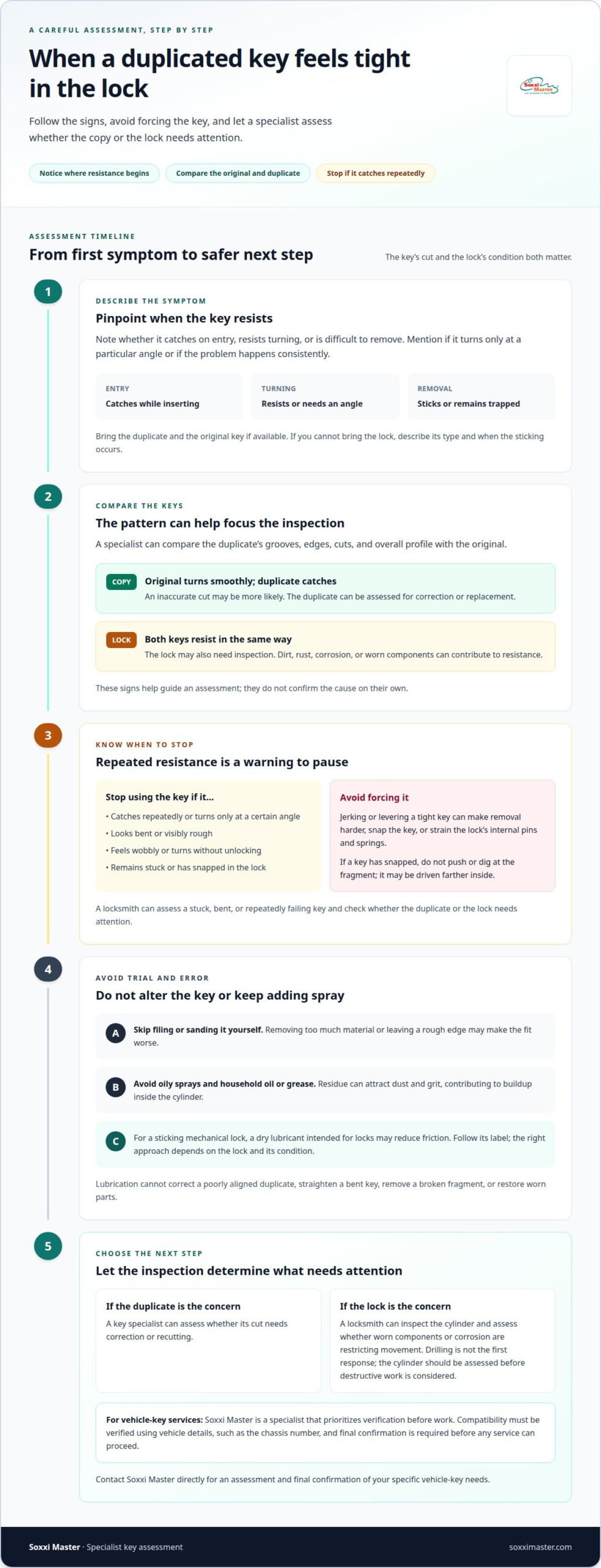
A useful assessment starts with the duplicate, the original key if available, and a clear description of the problem. Explain whether the key catches on entry, resists turning, or works only at a certain angle. If my duplicated key feels tight in the lock, noting exactly where resistance begins can help focus the inspection.
The specialist can compare the duplicate’s shape and cuts with the original, checking the grooves, edges, and overall profile. If the original works but the copy catches, an inaccurate cut is more likely. If both keys resist in the same way, the lock may also need inspection.
A tight duplicate may need correction or replacement. Filing or sanding it yourself may remove too much material, alter the cut, or leave a rough edge that catches. A specialist can inspect the key and decide whether correction is suitable, rather than relying on trial and error.
Bring both keys and, if practical, the lock for assessment. If you can’t bring the lock, describe its type and when the sticking occurs. A key specialist can inspect a duplicated key and advise whether it needs recutting. For vehicle-key work, provide vehicle details such as the chassis number. Compatibility must be verified, and final confirmation is required before service proceeds.
If my duplicated key feels tight in the lock even though the original turns smoothly, a specialist can compare the duplicate’s cut with the original and assess how the copy fits and turns in the lock. Have a bent, visibly rough, or repeatedly catching key assessed before using it again.
2. When to stop and call a locksmith
Stop using a key that catches repeatedly, turns only at a particular angle, or feels bent. A sticking duplicate may have an inaccurate cut, while resistance from both keys can point to a lock problem. Forcing a tight key can snap it or strain the lock’s internal pins and springs.
If the key is still in the cylinder, avoid jerking it or using it as a lever. A deformed key can wedge against the cylinder wall and break under pressure. If it has snapped, don’t try to push or dig out the fragment. You could drive it further inside and make extraction more difficult.
Call a locksmith when the key remains stuck, looks bent, or repeatedly fails to turn smoothly. A professional can assess whether the duplicate needs recutting, the lock has worn components, or corrosion is restricting movement. A wobbly key, or one that turns without unlocking, can also signal wear or damage inside the lock.
Drilling is not the first response to a tight key. It can damage a lock that might otherwise be recoverable, so a locksmith should assess the cylinder before considering destructive work. A severely corroded lock may need replacement, while a broken key fragment generally calls for careful extraction.
In Singapore, seek professional help if a key is bent, trapped, or broken, rather than continuing to test it. For a measured assessment of a troublesome duplicate, consider professional key assistance before the problem worsens.
3. Avoiding oily sprays such as WD-40
Oil-based sprays may seem like a quick fix for a tight lock, but residue can attract dust and grit. As debris builds up inside the cylinder, the key may become harder to insert or turn. A spray may also mask the symptom without correcting an inaccurate duplicate or worn lock components.
For a sticking mechanical lock, graphite powder or another dry lubricant can reduce friction. Choose a product intended for locks and follow its label; the right approach depends on the lock and its condition. Avoid pouring household oil or grease into the keyway, as these can leave buildup where the pins move.
Lubrication won’t correct a duplicate with poorly aligned cuts. If the original turns smoothly but the new copy catches at the same point, the copy may need assessment and recutting. If both keys resist, dirt, rust, or a lock fault may be contributing instead.
Don’t keep adding spray when resistance continues. More lubricant won’t remove a broken fragment, straighten a bent key, or restore worn internal parts. Stop if the key starts sticking more, feels wobbly, or won’t return to its neutral position. Those signs call for inspection, not repeated lubrication.
In Singapore, a specialist can assess whether a tight key needs correction or the lock needs attention. For a padlock exposed to rain or damp conditions, weather exposure and rust can cause binding; lubrication alone may not resolve severe corrosion. Keep the key straight, avoid force, and describe which keys stick and how the lock behaves.
Soxxi Master: ABUS bicycle locks
Soxxi Master provides Car & Motorcycle Key Duplication for drivers and riders who need a duplicate vehicle key. It also offers ABUS bicycle locks for people looking for a lock for their bike.
If your concern is a vehicle key, describe the key and the issue when you get in touch. For a bicycle lock, specify that you’re looking for an ABUS option.
These offerings address different needs: vehicle-key duplication and bicycle security. Sharing which one applies helps focus the conversation on your request.
Contact Soxxi Master about your needs
Arrange a Careful Key Assessment
If my duplicated key feels tight in the lock, I should arrange an assessment instead of continuing to test it. A professional review can help identify the right next step and reduce the risk of making the problem worse through repeated use.
When describing the issue, note whether it happens during insertion, turning, or removal, and whether it occurs consistently. This gives the specialist useful context. Keep the key available for assessment, and avoid altering it before the cause is understood.
Soxxi Master can discuss your key concern and assess your needs. A clear description of what happens in the lock helps start the conversation and supports a more informed decision about what to do next.
Frequently Asked Questions
How Can a Professional Help With a Key Stuck in a Lock?
A professional can assess whether the key is intact and how far it has entered the lock, then choose an appropriate way to address it. The specialist can also determine whether the immediate concern is safe removal or a lock inspection. This helps avoid actions that could worsen the obstruction or leave part of the key inside.
What can a locksmith do if a key will not slide out cleanly?
A locksmith can inspect the key’s position and attempt controlled removal with suitable tools. Returning the key to its neutral position before removal can help avoid pulling against the lock mechanism. If the key has broken, don’t probe the keyway: pressure may push the fragment deeper and make extraction more difficult.
What counts as a stuck key, and what is binding it?
A key is stuck when it can’t be inserted, turned, or withdrawn smoothly without unusual resistance. Binding is interference that prevents free movement. A rough edge or bent blade may catch at the keyway, while debris, rust, or worn internal parts can restrict the cylinder. Where resistance begins can help narrow down the cause.
Why does a duplicated key feel tight or stick in a lock?
A duplicate may feel tight when small cutting differences keep its grooves from aligning cleanly with the lock’s internal pins. If it was copied from a worn duplicate, those inaccuracies may carry forward. The cylinder could also be the source: dirt, corrosion, or wear can affect how keys operate. Stop testing if resistance increases.
How can I tell if a tight lock is caused by the duplicate key or the lock cylinder?
Compare how the original and duplicate behave in the same lock. If the original works smoothly but the duplicate catches, the copy may need professional correction. If both keys bind, the cylinder may need attention. A specialist can assess both keys and the lock together, rather than relying on appearance alone.