

A high-security padlock can still be the wrong choice if its body or shackle does not fit the hasp. Check the fit as well as resistance to tampering, weather and unauthorised key use.
Choosing a keyed-alike or master-keyed option also affects how access is managed. Knowing how to choose a high-security padlock means weighing its construction, keying arrangement and exposure to Singapore’s humid conditions against the hardware it must secure.
Compare these features, then assess size and clearance to narrow down a suitable option for a gate, storage area or other application.
Key Takeaways
- Match weather resistance to the lock’s location, especially for outdoor use in Singapore’s humid conditions.
- Compare cylinder design and resistance to picking or drilling, not just the padlock’s body material.
- Choose a keying arrangement that suits how access needs to be shared or managed.
- Measure the hasp opening and required clearance so the shackle and body fit and close properly.
How do I know what level of weather resistance I need?
Match weather protection to the lock’s location. Singapore’s humid climate makes corrosion resistance important for an outdoor padlock. A weatherproof model with a stainless steel body and shackle is one option. Thermo-plastic sheathed brass, hardened steel and aluminium are also used in weather-resistant models. For vans, trailers and mobile equipment, consider vibration tolerance as well as corrosion resistance. Indoor locks generally face less exposure, so fit and the required level of security may matter more.
Construction affects resistance to physical attacks. A solid steel body offers strength against force, while brass generally resists corrosion in everyday settings. A hardened steel shackle is a good choice for greater resistance to bolt cutters or saws. A shrouded shackle exposes less metal, limiting access for cutting and prying tools. Choose the shortest shackle that fits the hasp, since extra length gives tools more room to work.
Cylinder design matters too. Commercial-grade padlocks are described as using improved 6-pin cylinders, while consumer-grade models may use standard 4-pin or 5-pin cylinders. Pin count alone doesn’t establish resistance: cylinder construction determines how well it withstands picking, drilling and manipulation. UL 437 is a standard for testing lock-cylinder resistance to picking and drilling.
Padlock requirements can vary by insurer, site and asset in Singapore. Check the relevant policy wording or written site requirements for any required grade or test standard. Do not assume one grade applies everywhere.
To check certification, match the exact model and markings against the manufacturer’s documentation, including any named standard such as UL 437. Buy through an authorised seller and retain proof of purchase to help reduce counterfeit risk.
Are combination padlocks less secure than keyed ones?
Neither type is automatically more secure. Security depends on construction, application and access management. A combination lock avoids carrying a key, while a keyed lock depends on controlling key access. Many security-focused combination locks cannot have their code reset without the current code, so a lost or forgotten code can create an access problem.
For lockers and indoor toolboxes, a combination model can work well when several authorised people need access. For outdoor storage, prioritise resistance to moisture and tampering, then choose a keying method that suits the users. A master-key arrangement can simplify access across multiple locks, but plan carefully who needs entry. A gate chain can undermine security if it leaves too much shackle exposed.
Outdoor models need suitable coatings, protected internal components, drainage and dust or keyway protection. In Singapore’s wet, humid conditions, wipe away dirt and moisture, then inspect and lubricate the lock periodically, especially after exposure to rain or grit. Corrosion or debris can interfere with operation if maintenance is neglected. For indoor applications, environmental protection may matter less than the required physical security.
CEN padlock grades run from Grade 2 (standard security) to Grade 6 (maximum security). Sold Secure uses a separate scheme, so don’t assume its ratings map directly to CEN grades.
ABUS padlocks are available in Singapore; compare each model’s construction and intended application rather than assuming brands or ratings are interchangeable. Explore ABUS padlock options for a relevant starting point.
Common mistakes include choosing a lock that does not fit, leaving excess shackle exposed, pairing it with a weak chain and neglecting outdoor maintenance. Any of these can reduce the protection the lock provides.
Choosing a suitable padlock size and fit
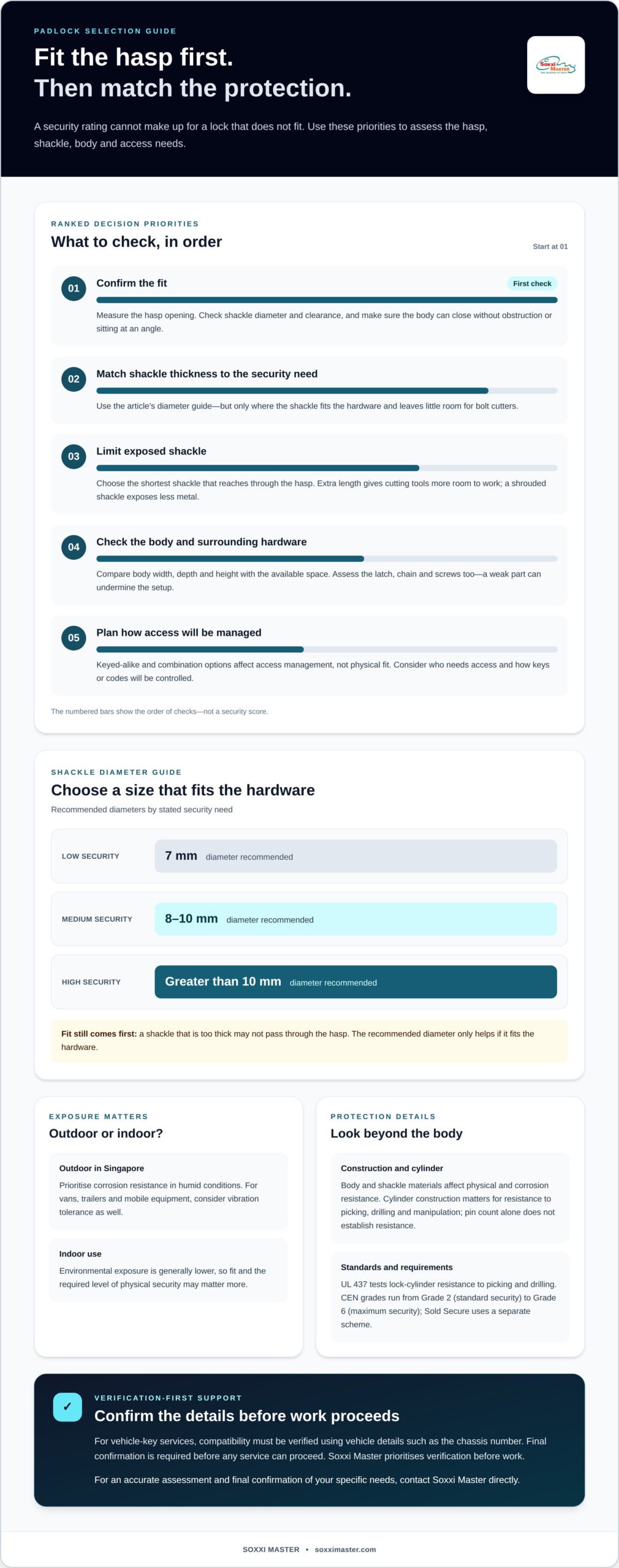
Knowing how to choose a high-security padlock starts with the hasp, not the advertised rating. Measure the opening and check the shackle diameter and clearance so the body can close without obstruction. A shackle that is too thick may not pass through, while an oversized body may prevent the lock from seating properly.
Use the security requirement to guide shackle thickness. A 7 mm diameter is recommended for low-security needs, 8 to 10 mm for medium security, and greater than 10 mm for high-security purposes. These sizes only help if the shackle fits the hardware and leaves little room for bolt cutters.
To choose a high-security padlock for a gate, find the shortest shackle that reaches through the hasp. Longer shackles expose more metal to cutting tools. Assess the latch, chain and screws too, since weak hardware can undermine the entire setup.
Check the body dimensions, especially for a laminated padlock or a tight storage-latch opening. Compare the body’s width, depth and height with the available space. Make sure the hasp closes fully without binding or holding the lock at an angle.
Keyed-alike and combination options affect access management, not physical fit. Match the body and shackle to the hardware before choosing the locking method.
Soxxi Master: ABUS padLocks
Soxxi Master offers ABUS padlocks for readers comparing lock construction, shackle fit and the demands of their intended use. They’re a practical next step when you’ve identified the hasp dimensions and security features needed, but want help narrowing down a suitable option.
For vehicle-key services, compatibility must be verified using vehicle details such as the chassis number, and final confirmation is required before work can proceed. This verification-first approach helps ensure the service is assessed against the specific vehicle.
If you’re considering a padlock for a gate, storage area or other application, contact Soxxi Master to discuss your requirements.
Plan for access needs beyond today
When choosing a high-security padlock, consider who will manage access over time, not just what the lock protects today. Changes in staff, tenants or site use can affect who needs access. Note whether the lock will protect a shared or individual space, then choose a setup that suits its use.
Soxxi Master offers Car & Motorcycle Key Duplication, RFID Access Card Cloning and an All Keys Lost Solution, subject to vehicle or system compatibility. Suitability must be verified before service proceeds. Vehicle-key work is assessed using vehicle details such as the chassis number, with final confirmation required before service proceeds.
A clear view of your requirements can help guide your next step.
Frequently Asked Questions
Can all padlocks be cut with bolt cutters?
Some padlocks can be cut with bolt cutters, particularly when the shackle is exposed and accessible, but others may resist cutting more effectively. Hardened shackles and shrouded designs can increase resistance by making cutting harder or limiting tool access. However, resistance does not mean a lock is impossible to defeat. Consider whether the hasp, chain or fixings could fail before the padlock does.
How do I choose the right Padlock for my needs?
Choose a lock to suit the item, location and access routine. For a staff equipment cabinet, decide whether several people need separate keys or a shared combination. For outdoor storage, account for exposure and how the lock attaches. Then confirm it closes fully without forcing the latch. A mismatch can leave the item unsecured despite robust construction.
How do I know which lock is right for me?
Start by considering the consequences of unauthorised access. A personal locker and a gate protecting valuable equipment may need different levels of resistance. Think about who needs access, how often the lock will be opened and whether keys or a code are easier to manage. The right choice balances those needs with the physical design of the item being secured.
What features make a padlock high security?
Look for complementary protections rather than relying on a “high-security” label. A robust body and protected shackle address physical attacks, while a well-designed cylinder helps resist picking and drilling. Manufacturer documentation can explain the model’s construction and any tested rating. The hasp and attachment hardware also affect the security of the complete setup.
Which padlock materials and shackle types resist cutting, drilling, picking, and prying?
Hardened steel shackles offer greater resistance to cutting, while shrouded designs reduce the exposed shackle available to cutters or pry tools. Solid steel bodies provide strength against physical attack; brass offers corrosion resistance rather than the same emphasis on attack resistance. Picking and drilling resistance comes from the cylinder design, not the body material alone.