


A customised key system depends on more than fitting a cylinder into a door. A 2-in-1 ABUS system combines a construction key system with a final key system, while a tailored locking plan can give different users access only to the doors assigned to their keys. This ABUS cylinder installation guide explains how those parts work together and what to consider when selecting door cylinders for a Singapore property.
Choosing the right setup means matching cylinder dimensions to the door and lock, then deciding which keys should operate which doors. This matters whether you need a straightforward replacement or a coordinated arrangement across several access points. The sections ahead explain construction and final keys, how ABUS cylinders fit into a key plan, and how installation and key duplication support the finished system. The goal is to help you understand the options before deciding on an arrangement that suits your doors and access needs.
Key Takeaways
- A 2-in-1 system combines construction and final keys, helping manage access as a project moves from building work to regular use.
- Matching a cylinder to the door and lock is essential; the required dimensions depend on the door’s configuration.
- A customised key plan can assign different access permissions and may be expanded when a building’s needs change.
- Soxxi Master offers ABUS cylinders. Contact Soxxi Master for an assessment and final confirmation; vehicle-key compatibility is verified using vehicle details such as the chassis number before service proceeds.
2In1 construction and final key system
An ABUS 2-in-1 key system combines a construction key system with a final key system. These stages serve different access needs during a building project. Construction access supports work before handover; final keys are intended for regular use. Separating the stages helps clarify who needs access, and when.
Start by listing the project’s doors and the people who need access to each one. During renovation, for example, tradespeople may need temporary access to selected doors, while occupants later need access based on their roles. Match these requirements to the intended final permissions before selecting cylinders. A clear key plan separates temporary site access from everyday access.
The system connects construction and final-key stages, but the procedure depends on the cylinder and system selected. Don’t assume every ABUS cylinder uses the same construction-key process. Record the cylinder type, the doors involved, and the final users’ permissions. Check these details against the planned arrangement before installation.
A practical ABUS cylinder installation guide should make the sequence clear:
- List the doors that need cylinders and identify their access requirements.
- Define who needs construction access, such as tradespeople working in selected areas.
- Set the intended final permissions, such as staff access to work areas and occupant access to shared doors.
- Confirm that the selected ABUS cylinders match the planned key arrangement before fitting.
This preparation connects temporary construction access with the final access plan. For projects with several doors, document the permissions for each one rather than treating the building as a single access point. This gives the installer a clear basis for matching cylinder selection to the intended key system.
ABUS door cylinders and key systems
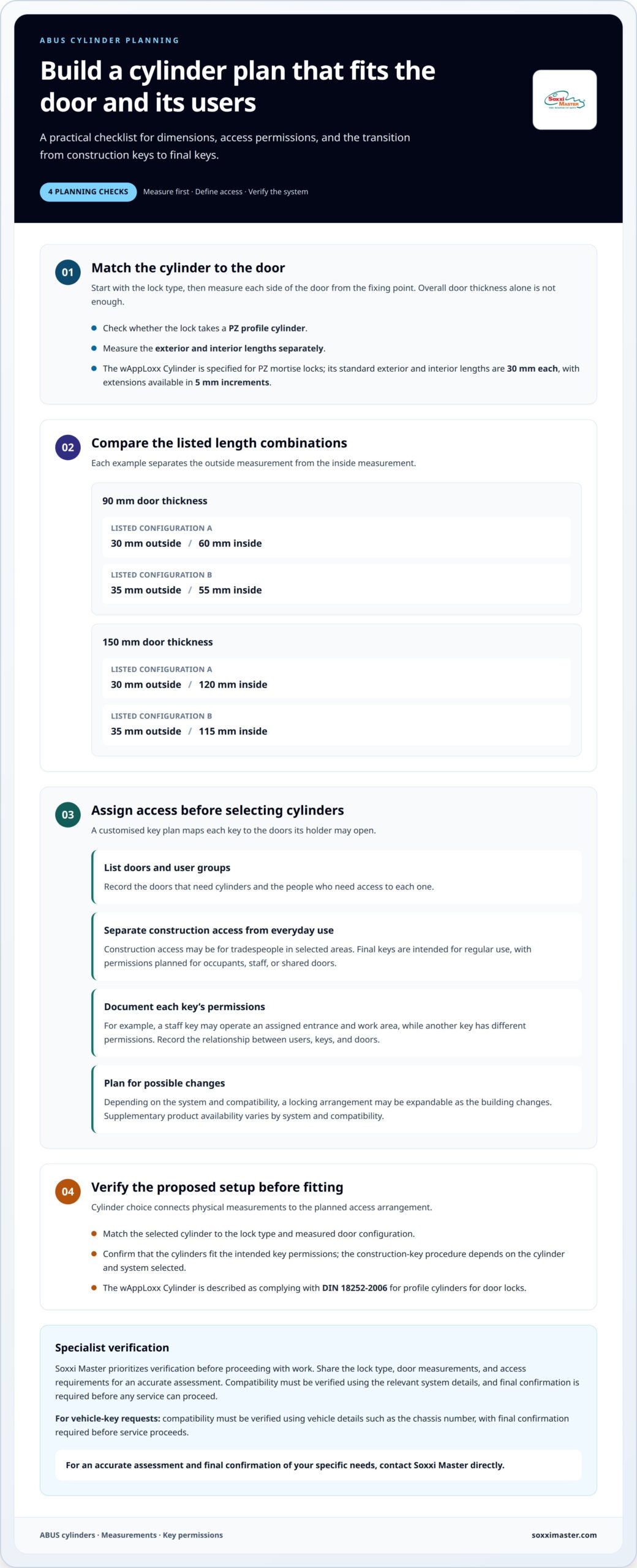
Choosing an ABUS cylinder starts with the lock type and the door’s dimensions. The wAppLoxx Cylinder is specified for doors with a PZ mortise lock. Its standard exterior and interior lengths are 30 mm each, with extensions available in 5 mm increments. The two sides must be measured separately because the cylinder needs to suit the door’s actual configuration.
For example, listed wAppLoxx configurations include a 90 mm door thickness with 30 mm outside and 60 mm inside, or 35 mm outside and 55 mm inside. For a 150 mm door thickness, listed combinations include 30 mm outside and 120 mm inside, or 35 mm outside and 115 mm inside. These examples show why the overall door thickness alone isn’t enough to select the cylinder.
- Identify whether the lock takes a PZ profile cylinder.
- Measure the exterior and interior cylinder lengths from the fixing point.
- Match those measurements to an ABUS cylinder configuration.
- Align the selected cylinder with the intended key permissions.
In an ABUS key system, cylinders can have different locking authorisations. A key can open the doors assigned to its user, rather than every door in the building. For example, a staff key might operate an assigned entrance and work area, while another key has different permissions. Define these access groups in the locking plan before selecting cylinders.
Use an ABUS cylinder installation guide to organise measurements and permissions, not as a substitute for matching the cylinder to the lock. Accurate sizing and a clear key plan connect the physical cylinder to the intended access arrangement.
The ABUS wAppLoxx Cylinder is described as complying with DIN 18252-2006 for profile cylinders for door locks. This provides another specification to consider alongside the lock type, measured cylinder lengths and planned key permissions when checking whether the selected cylinder fits the intended door arrangement.
Customised key-system solutions
A customised ABUS key system maps each key to the doors its holder may open. This allows a building to set different locking permissions for residents, staff, or service areas. For example, one key may operate an entrance and selected shared doors, while another works only with assigned rooms. Start with the doors and user groups, then match permissions to the cylinders.
Plan for change as well as current access. Depending on the system and compatibility, an ABUS locking system may be expandable when a building’s structure changes. A new office or access point may require additional cylinders and revised permissions. Planning ahead helps keep the key arrangement coherent as the property develops. The availability of supplementary products also varies by system and compatibility.
Practical details can make keys easier to identify. ABUS offers cylinder colours and coloured key caps, with an optional built-in transponder. These features can help distinguish keys, but colour should support, not replace, clear access records. Document the relationship between users, keys, and doors so changes can be managed accurately.
For a structured plan, define access groups, assign each group the doors it needs, and record possible future expansions. Then match the proposed cylinders and key options to that plan. This is the planning stage of an ABUS cylinder installation guide: the key system should reflect how the property is used, not simply how many doors it has. Soxxi Master will verify compatibility using the relevant system details and confirm requirements before proceeding with work. Contact Soxxi Master for an assessment of your specific needs.
Soxxi Master: ABUS cylinders
Soxxi Master supplies ABUS cylinders to help you select a cylinder suited to your door and planned key arrangement. Share the lock type, door measurements, and access requirements for an accurate assessment before choosing a cylinder.
For separate vehicle-key requests, compatibility must be verified using vehicle details such as the chassis number. Final confirmation is required before the service can proceed. This verification-first approach ensures the assessment reflects the specific vehicle.
Contact Soxxi Master to discuss your ABUS cylinder requirements and request an assessment.
Plan for access changes ahead
A key system should remain useful as people, rooms, and responsibilities change. Set a clear process for recording changes to authorised users and updating access records. Keeping the ABUS cylinder installation guide with those records provides a useful reference for future reviews.
Before ABUS cylinder work proceeds, Soxxi Master assesses the door and lock details against the intended key-system requirements. This helps ensure the proposed cylinder suits the installation plan.
A well-maintained record and a considered assessment provide a practical starting point for managing access as needs evolve.